Northern Ireland is witnessing escalating tensions as Sinn Fein, one of its leading political parties, comes under police investigation linked to recent protests. The unrest has intensified political divides and drawn sharp reactions from various factions, notably the Democratic Unionist Party (DUP).
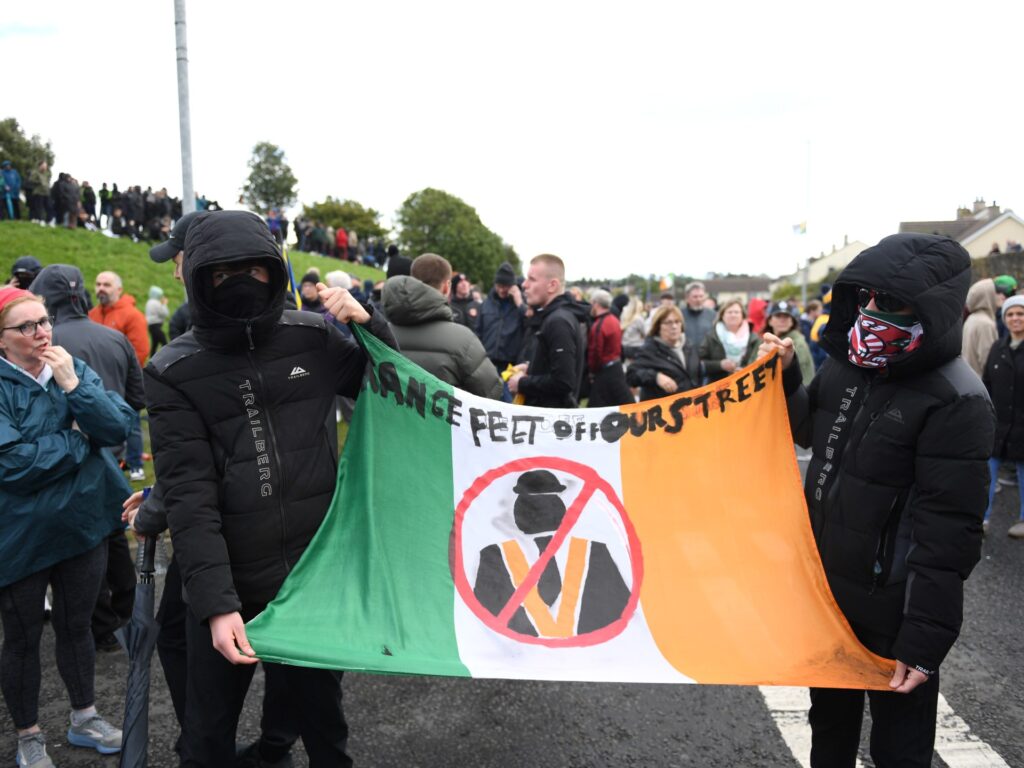
The controversy centers on protests that have recently taken place, involving Sinn Fein lawmakers who participated actively, according to reports. The DUP has voiced strong condemnation and is calling for the prosecution of those Sinn Fein representatives involved.
Sinn Fein is known for its nationalist stance and has been an influential force in Northern Ireland politics, advocating for Irish unity. The party’s participation in the protests highlights the deep-seated political and social issues that persist in the region, often rooted in identity and sovereignty disputes.
The Democratic Unionist Party (DUP), representing largely unionist and pro-British constituencies, views Sinn Fein’s actions as provocative and destabilizing. The DUP’s push for legal action against Sinn Fein lawmakers reflects ongoing frictions and a zero-tolerance approach to what they perceive as disruptive political behavior.
Police investigations have been launched to determine the extent of involvement and any breaches of the law related to the protests. Authorities are assessing the conduct of protesters and political leaders to maintain public order and uphold the rule of law.
These developments come at a delicate time when Northern Ireland continues to grapple with the implications of Brexit and the Northern Ireland Protocol, which have inflamed tensions between nationalist and unionist communities.
Analysts warn that the situation may further polarize the community and undermine fragile power-sharing arrangements that are central to Northern Ireland’s peace process.
Community leaders and political figures have urged calm and dialogue to prevent the situation from escalating. Peaceful resolution of grievances and respect for democratic processes are seen as crucial for the region’s stability.
The police probe into Sinn Fein’s involvement underscores the growing scrutiny faced by political actors amidst public unrest. It also highlights the challenges in navigating post-conflict governance and the balance between protest rights and law enforcement.
As the investigation proceeds, the political landscape in Northern Ireland remains tense, with high stakes for all parties involved. The outcome of this inquiry could have significant implications for inter-party relations and the broader peace framework.
Both Sinn Fein and the DUP have called for restraint among their supporters, emphasizing the importance of maintaining peace and order. However, the incident has undeniably exacerbated divisions and poses a test to Northern Ireland’s political maturation.
Observers note that how these tensions are managed might either pave the way for renewed cooperation or trigger further discord, impacting the region’s social fabric and political future.
Continuous monitoring of the situation and international attention reflect the critical nature of stability in Northern Ireland, a region with a complex historical backdrop and ongoing challenges.
This episode serves as a reminder of the delicate balance in regions with divided identities and the persistent need for effective conflict resolution mechanisms.
Northern Ireland’s journey toward lasting peace remains a work in progress, with recent events underscoring the fragile nature of this hard-won stability and the ongoing contest for political legitimacy and communal trust.