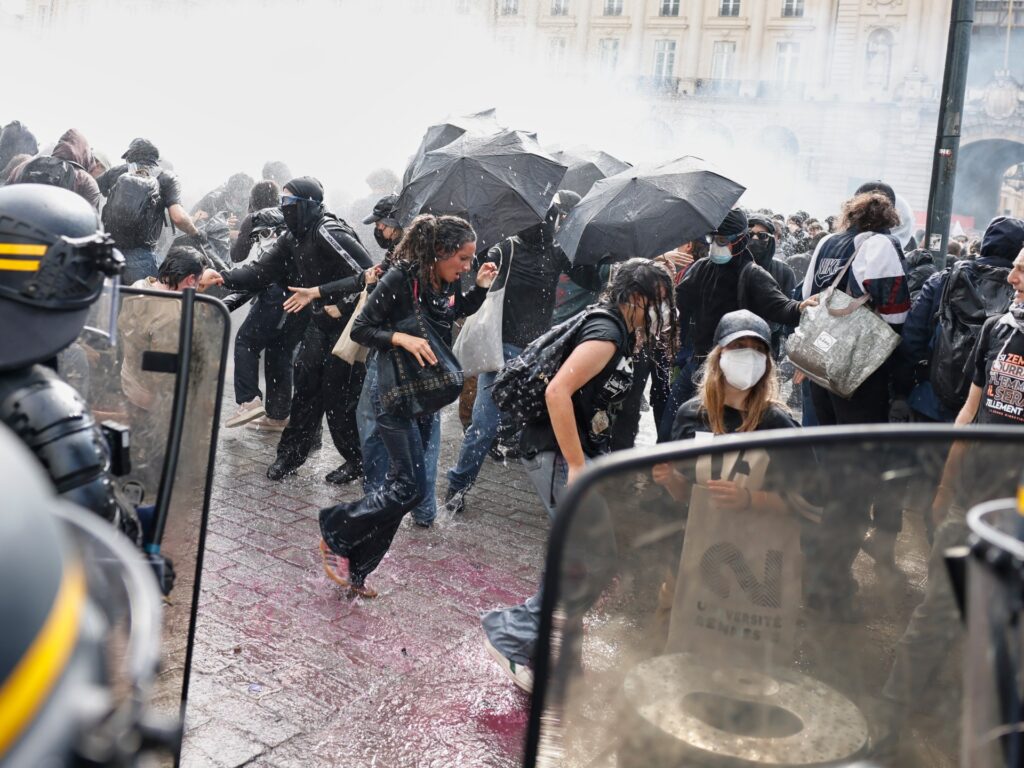
In recent times, France has witnessed significant student protests highlighting various grievances, primarily concerning education funding and reform. These demonstrations come during a period of scrutiny over how national budgets are allocated, especially in sectors crucial to public welfare like education, defense, and healthcare.
Analyzing France’s spending on education in comparison to other European countries provides a clearer picture of the nation’s commitment to its educational system. According to data visualised by media outlets such as Al Jazeera, France allocates a substantial portion of its national budget to education, but how does this compare continent-wide?
France’s expenditure on education as a percentage of its GDP is fairly robust, ranking among the middle to higher spectrum of European nations. Countries like Germany and the Scandinavian states (Sweden, Norway, Denmark, and Finland) generally outspend France, reflective of their broader welfare policies and smaller populations. For example, Scandinavian countries invest heavily in education, often exceeding 6% of their GDP, emphasizing early childhood education and lifelong learning.
Conversely, some large countries including the UK and Italy spend slightly less or roughly at par with France regarding educational expenditure, hovering around 5% of GDP. Eastern European countries typically allocate less, often due to smaller public budgets and different national priorities.
It’s important to consider the absolute spending along with GDP percentage. France, with its sizeable economy, translates this percentage into a significant investment in absolute terms, maintaining thousands of schools, universities, and vocational institutions. The budget covers teacher salaries, infrastructure, research, and student support services.
However, a critical comparison drawn by Al Jazeera’s visuals is between education spending and allocations for defense and healthcare. France, like many countries, balances these competing priorities. Defense spending tends to be higher, reflecting France’s strategic interests and global military commitments, often accounting for approximately 2% of GDP or more. Healthcare spending, very crucial especially post-pandemic, also commands a large share, sometimes competing directly with educational budgets.
The student protests in France are partly fueled by concerns that despite France’s significant investments, the quality and accessibility of education are under threat, with budget cuts or reform policies perceived as detrimental to the system. Protesters argue for increased funding, better pay for educators, improved facilities, and inclusive policies.
In summary, France’s expenditure on education is competitive within Europe, neither leading nor lagging drastically, but it faces a challenge common to many European nations: managing limited resources across multiple critical sectors. The balance between defense, healthcare, and education creates political and social debates about priorities in national spending.
As these debates and protests continue, stakeholders and policymakers will need to navigate these complex budgetary decisions to ensure that France’s educational system remains strong and accessible while addressing other essential national expenses.