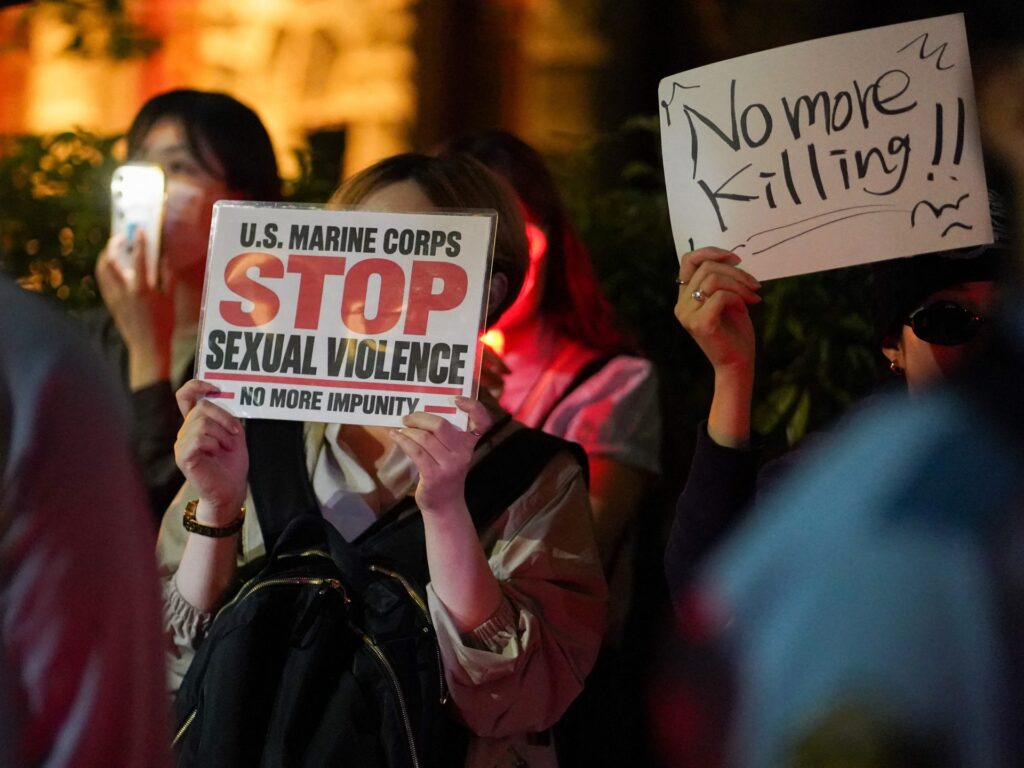
The governor of Okinawa has emphatically urged the Japanese government to take decisive action following the arrest of a US Marine, Devin Jacob Ballard, who is suspected of strangling Anna Yagi, a 39-year-old woman. This tragic incident has ignited growing anger and concern among the local population and raised tensions between Okinawa residents and the US military presence on the island.
Devin Jacob Ballard’s arrest has brought to light ongoing issues regarding the behavior of US military personnel stationed in Okinawa. For years, the local community has expressed frustration and fear over crimes committed by foreign military members, prompting calls for stricter regulations and oversight.
The Okinawa governor emphasized the need for Japan to reclaim authority and ensure justice is served swiftly and transparently. He highlighted that the incident is not just a criminal matter but a serious strain on the relationship between Okinawa’s residents and the US military, which has a significant footprint on the island as part of long-standing defense cooperation.
Locals have voiced their outrage, demanding enhanced protection measures and more stringent legal accountability for foreign military personnel residing in their communities. The governor’s call comes amid escalating demands for a reevaluation of the Status of Forces Agreement (SOFA), which currently governs the jurisdiction and legal processes involving US service members in Japan.
Anna Yagi’s death is a stark reminder of the risks and challenges the Okinawa community faces concerning safety and justice. Activists and community leaders are urging Tokyo to negotiate reforms that would ensure Japanese authorities have greater jurisdiction over crimes involving US military members.
The US military has expressed commitment to cooperating with Japanese authorities but has faced criticism for perceived leniency and slow responses in similar past cases. This incident may catalyze new discussions around the presence and conduct of US forces in Okinawa.
As the investigation continues, there is a surge in public demand for a transparent inquiry and assurance that such tragic events will not recur. The governor’s strong stance signals a push towards a more balanced and respectful coexistence between the Okinawan people and the US military community.
This development also adds to the ongoing debate about Okinawa’s role in regional security and the broader implications of the US-Japan alliance. The delicate balance between maintaining strategic defense partnerships and respecting the rights and safety of local populations remains at the heart of this issue.
In summary, the arrest of Devin Jacob Ballard and the suspected murder of Anna Yagi have not only heightened tensions in Okinawa but also sparked a critical dialogue on military conduct, legal jurisdiction, and community safety. The Okinawa governor’s call for Japan to take stronger action underscores the urgency of addressing these complex and sensitive challenges.