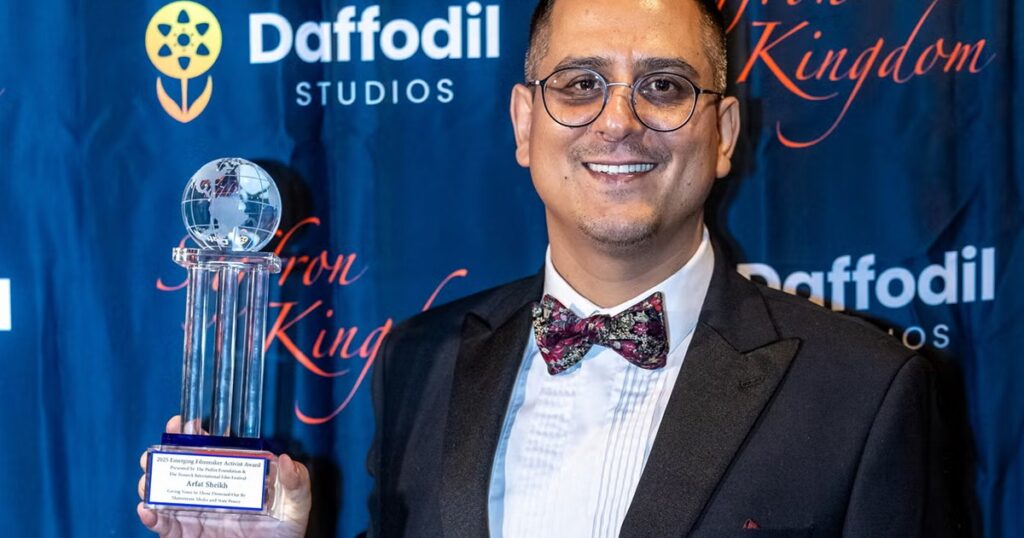
Arfat Sheikh, a Kashmiri filmmaker, has been detained by the US Immigration and Customs Enforcement (ICE) authorities at Washington Dulles International Airport. The arrest occurred on September 24, sparking immediate concern and backlash from advocacy groups and human rights organizations. Sheikh, known for his critical and evocative works highlighting the socio-political issues of Kashmir, was returning to the United States when he was taken into custody.
The detention has raised significant alarm among civil rights advocates, who argue that Sheikh’s arrest is politically motivated, targeting him because of the subject matter of his films and his outspoken stance on Kashmir-related issues. Many have called the action a violation of Sheikh’s rights as well as an infringement on artistic freedom and expression. Advocacy groups are demanding his immediate release and urging the government to reconsider its approach towards artists and individuals from conflict regions.
This incident has also drawn attention to the broader issue of the treatment of immigrants and travelers from politically sensitive regions at US airports, where heightened security measures sometimes intersect with political and diplomatic tensions. Sheikh’s case resonates with many who fear that human rights and freedom of expression are being compromised under the guise of immigration enforcement.
Friends, fellow artists, and supporters of Sheikh have organized protests and social media campaigns to raise awareness of his detention and to pressure authorities to provide transparency about the charges or reasons behind the arrest. They emphasize that Sheikh has been a lawful visitor with no prior criminal record and that his work contributes significantly to the discourse on Kashmir’s complex reality.
Legal experts stress the importance of due process and call for a fair review of Sheikh’s case, cautioning against politicizing immigration regulations. They highlight that detaining an artist for their political viewpoints could set a dangerous precedent and deter others from engaging in important cultural and political dialogue through their art.
The US government has yet to release an official statement regarding Sheikh’s detention. Meanwhile, advocates continue to lobby for his rights and safe release, underscoring the need for policies that respect human rights and cultural expression irrespective of ongoing geopolitical conflicts.
Sheikh’s detention has amplifed global discussions on the intersection of immigration enforcement, artistic freedom, and human rights. It underscores the complexities faced by artists from conflict zones who seek to share their narratives on international platforms without fear of retribution or unjust imprisonment.
As the situation unfolds, international human rights organizations and media outlets are closely monitoring the developments. The case of Arfat Sheikh serves as a critical reminder of the challenges faced by artists who navigate political sensitivities and the imperative of safeguarding freedom of expression in all its forms.