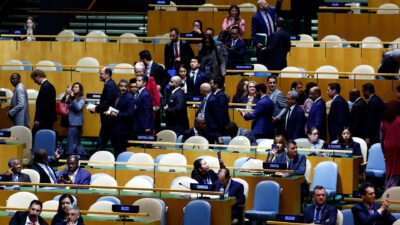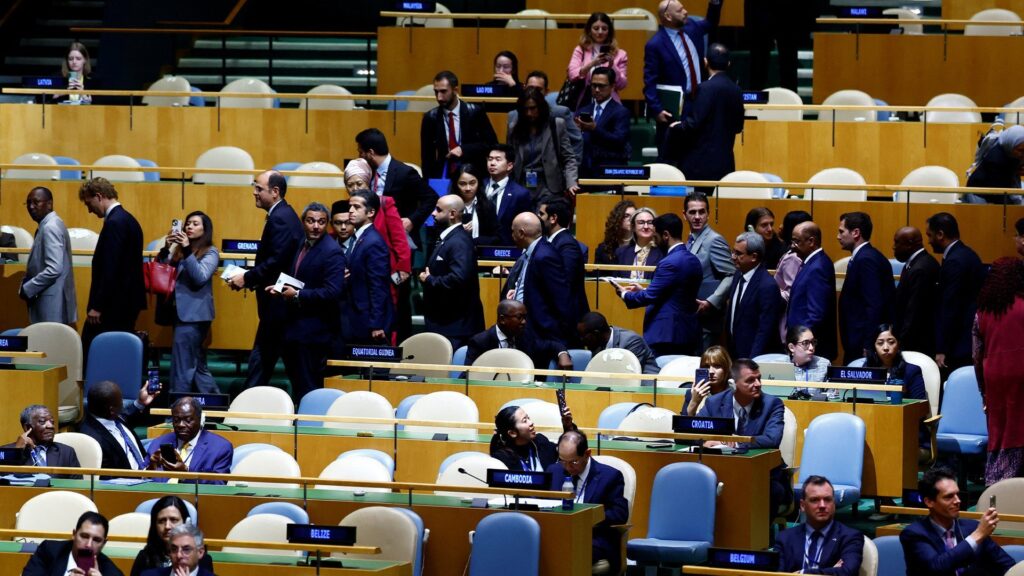
During a session at the United Nations General Assembly, dozens of delegates abruptly walked out as Israeli Prime Minister Benjamin Netanyahu began delivering his speech. This act of protest marked a significant moment of tension in the international forum, highlighting the deep divisions and contentious issues surrounding Israel’s policies.
Netanyahu’s address, expected to cover various geopolitical and security concerns including the Israeli-Palestinian conflict, drew immediate criticism from multiple delegates. The walkout was a clear sign of dissatisfaction and disagreement with the perspectives and rhetoric presented by the Prime Minister.
The United Nations has long been a stage for contentious debates, where member states express their differing viewpoints. The walkout during Netanyahu’s speech underscores the polarization that exists on matters related to Middle Eastern politics.
Many observers see this incident as reflective of broader regional and global divides over Israel’s actions and policies, especially concerning settlements, security operations, and peace negotiations.
Statements following the event noted that the walkout was organized by a coalition of countries opposed to Netanyahu’s positions. These nations argue that his policies undermine prospects for peace and exacerbate regional tensions.
Supporters of Netanyahu defend his right to speak and emphasize Israel’s security challenges, citing threats from hostile entities in the region. They view the walkout as an attempt to silence Israel’s voice on the international stage.
This episode at the UN General Assembly adds to a series of intense diplomatic exchanges and protests that often characterize discussions about the Middle East. The actions by the delegates highlight the continuing difficulty in reaching consensus on key issues.
The walkout is also expected to influence upcoming diplomatic negotiations and international relations surrounding the Israeli-Palestinian conflict. It serves as a reminder of the complex dynamics that shape global diplomatic interactions at the UN.
As the situation unfolds, many diplomats and analysts will be closely monitoring responses from various countries and international bodies to gauge the potential impacts on peace efforts.
In summary, the walkout during Prime Minister Netanyahu’s UN speech revealed the pronounced divisions among world leaders regarding Israel’s policies, signaling ongoing challenges in the pursuit of peace and stability in the Middle East. The event underscores the importance of dialogue and the difficulties inherent in reconciling divergent national interests within international forums.