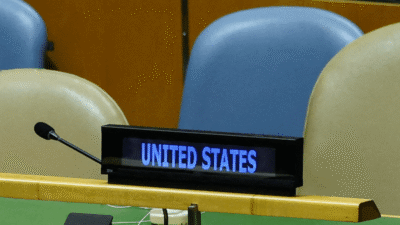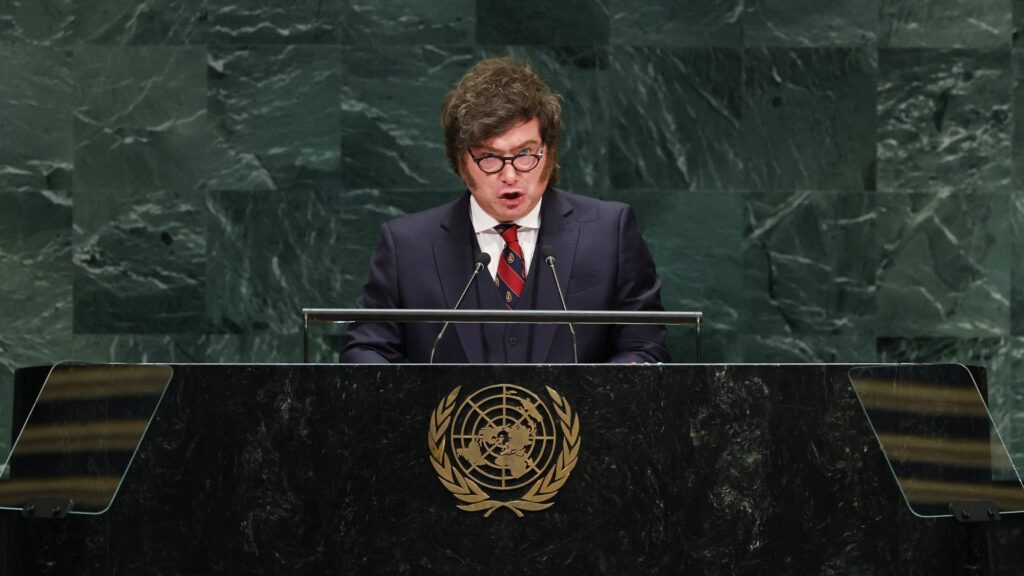
Argentina has emphatically declared the Falkland Islands a ‘national cause’ during a recent United Nations address, marking a significant moment in the ongoing dispute over the territory. President Javier Milei of Argentina stated that the “principle of self-determination does not apply” to the Falkland Islands, challenging the popular narrative that the islanders’ right to choose their sovereignty is inviolable.
The Falkland Islands have been a contentious issue between Argentina and the United Kingdom for decades. Located in the South Atlantic, these islands have been under British control since 1833, but Argentina has long claimed sovereignty, referring to them as the Malvinas.
President Milei’s statement at the UN signals a renewed vigor in Argentina’s diplomatic approach to the conflict, emphasizing the nation’s territorial claims and framing the issue beyond the islanders’ self-identification. His stance disputes the idea that the residents’ preferences should dictate sovereignty, highlighting instead Argentina’s historical and geographical ties to the islands.
The principle of self-determination, recognized widely in international law, generally supports the right of peoples to choose their political status. However, Argentina argues this principle should not be applied in the Argentinian claim over the Falklands, as they consider the islands an integral part of their national territory illegally occupied by the British.
This approach aligns with Argentina’s past efforts to bring the issue to international platforms such as the United Nations, where it seeks resolutions supporting negotiations for sovereignty based on its claim and historical context.
The United Kingdom’s position continues to defend the right of the islanders to self-determination, maintaining that the residents have overwhelmingly expressed a desire to remain a British Overseas Territory.
The Falklands dispute dates back to the early 19th century, with tensions peaking during the 1982 Falklands War when Argentina attempted to seize the islands by force but was repelled by British forces.
Despite the war, no permanent resolution was reached, and the dispute remains a delicate diplomatic issue. Both countries maintain a military presence, and the sovereignty question continues to influence their bilateral relations.
President Milei’s declarations at the UN have sparked reactions, with some countries supporting Argentina’s viewpoint while others back the UK’s stance on self-determination for the Falkland Islanders.
The renewed focus on the Falklands at the United Nations is expected to lead to further debates and possibly influence future negotiations or international mediation efforts.
Argentina’s framing of the Falklands as a ‘national cause’ underscores the deep national sentiment attached to the islands. This rhetoric may intensify public opinion within Argentina and sustain governmental commitment to the claim.
Meanwhile, the Falkland Islanders themselves remain steadfast in their identity and political preferences, largely opposing integration with Argentina.
Economic considerations also persist, as the islands’ fishing resources and potential oil reserves add another layer of complexity to the sovereignty dispute.
Environmental concerns have emerged as well, with both countries acknowledging the ecological importance of the South Atlantic region surrounding the Falklands.
The international community watches closely, understanding that the dispute has implications for territorial sovereignty, international law, and regional security in the South Atlantic.
In conclusion, Argentina’s recent statements at the United Nations mark a significant reaffirmation of its claim over the Falkland Islands, rejecting the application of self-determination and portraying the islands as a matter of national pride and territorial integrity. This development is poised to influence international debate and diplomatic efforts concerning the long-standing sovereignty dispute.