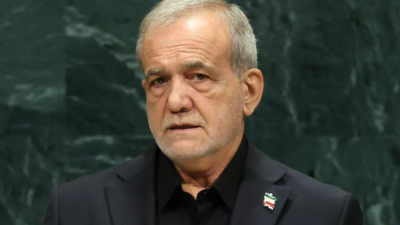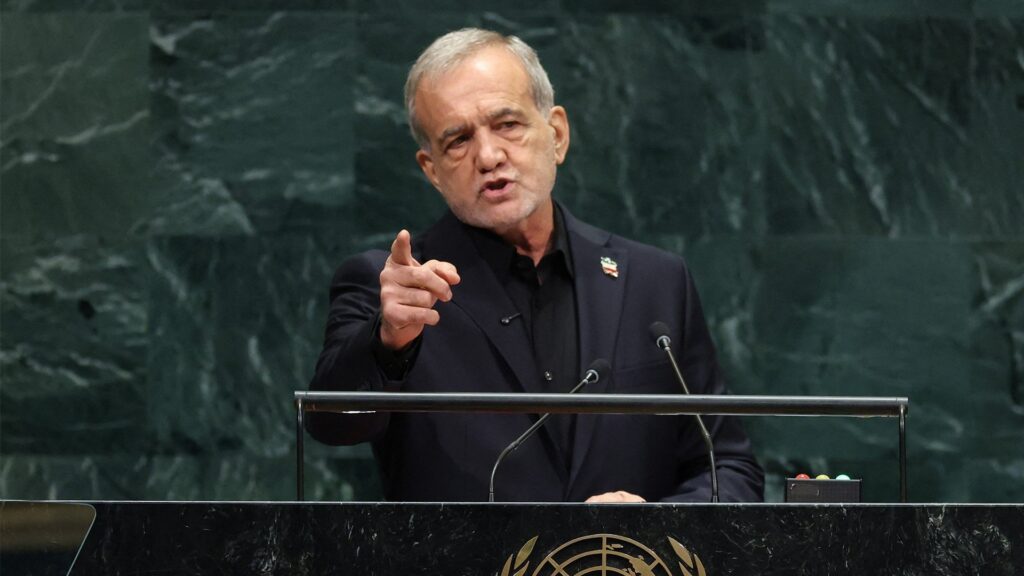
In a significant address to the United Nations General Assembly, Iranian President Masoud Pezeshkian emphasized the importance of peace and security in the Strait of Hormuz, a strategically critical waterway. Pezeshkian asserted that the Strait of Hormuz will not be used as a tool to impose insecurity on Iran, sending a strong message against external threats or actions aimed at undermining the nation’s sovereignty and stability.
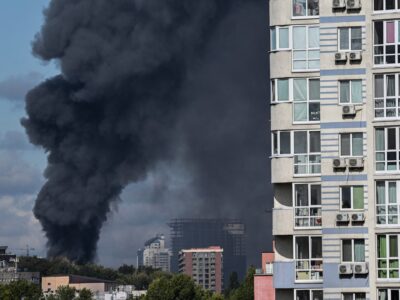
The President highlighted the broader context in which modern warfare transcends national boundaries, stating, “warfare knows no borders.” This comment underscores the complexities of international relations today, where conflicts can have far-reaching effects beyond immediate geographic limits.
Iran has long been at the center of geopolitical tensions surrounding the Strait of Hormuz, through which a significant portion of the world’s oil supply is transported. Control and security of this narrow passage are vital not only for Iran but also for global energy markets and international maritime navigation.
Pezeshkian’s statement can be viewed in light of ongoing regional challenges and the presence of foreign naval forces in the Persian Gulf area. It indicates Iran’s firm stance on defending its interests and ensuring that the Strait remains free from activities that could threaten its peace and security.
International observers note that Iran’s address calls for respect for national sovereignty and caution against provocations that could escalate conflicts in this sensitive zone. The message also resonates with broader UN principles emphasizing peaceful dispute resolution and the avoidance of escalation in contested regions.
The comments come at a time when global tensions related to energy security, maritime safety, and regional power dynamics are particularly acute. The Strait of Hormuz remains a flashpoint due to its importance in global trade and the military presence of various nations.
President Pezeshkian’s advocacy for peace and secure navigation through the Strait aligns with calls for diplomatic engagement and dialogue to reduce risks of conflict. His remarks at the UN General Assembly serve as a reminder of the interconnected nature of security and the need for collective international efforts to maintain stability.
In summary, Iran’s leadership reiterates its position that the Strait of Hormuz should not be utilized to threaten or destabilize the country, urging respect for sovereignty and the adoption of peaceful measures to ensure safety in this critical maritime corridor. This declaration adds to ongoing conversations about regional security, the role of international law, and the pursuit of lasting peace in a geopolitically vital region.