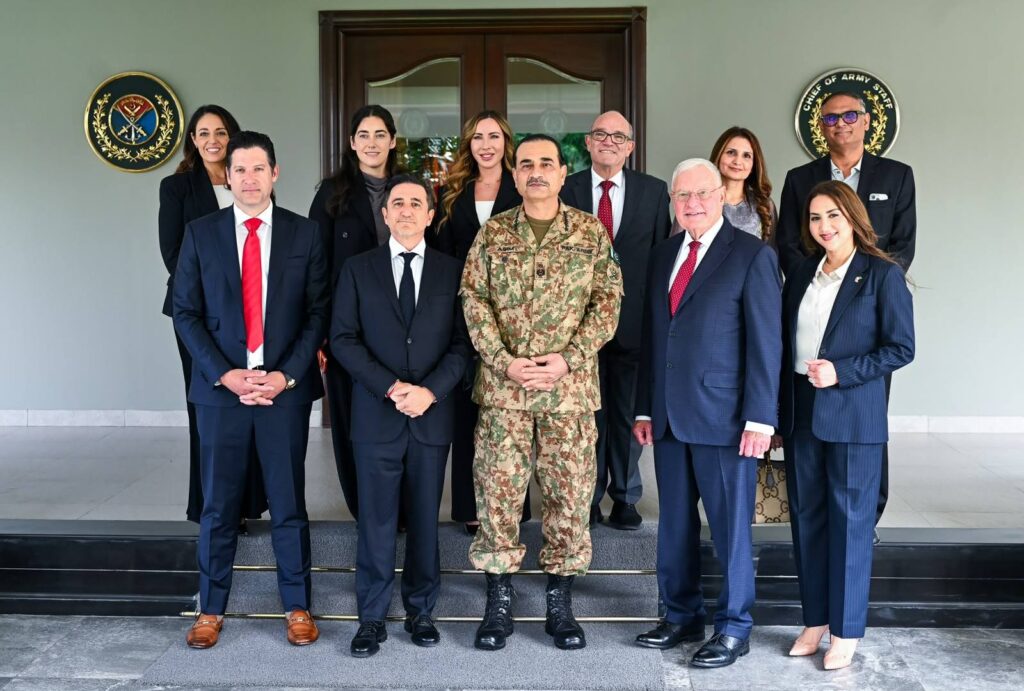
In a surprising move, Pakistan has entered into a new drone deal with a firm backed by former U.S. President Donald Trump. This development has sparked considerable attention and controversy given the geopolitical implications involved. The company at the heart of the deal is notable not only for its connection to Trump but also because its cofounder is a former Israeli soldier—an element that adds a complex layer considering Pakistan’s longstanding non-recognition of Israel.
The drone technology deal signals a significant step in Pakistan’s military procurement strategy, indicating a shift towards acquiring advanced unmanned aerial vehicles (UAVs) to bolster its defense capabilities. These drones are expected to enhance Pakistan’s surveillance and tactical strike capacities along its borders and in its counterterrorism operations.
What has intensified the debate is that the same company is also selling drones to India, Pakistan’s historical rival. India and Pakistan have a fraught relationship often marred by conflict, particularly over the Kashmir region. The fact that one firm supplies drone technology to both countries raises questions about the influence of private defense contractors in geopolitics, as well as concerns about the potential for intelligence leaks or technology misuse.
The news also underscores a complex web of international relations. Pakistan does not officially recognize Israel, given the broader solidarity with the Palestinian cause within the Muslim world. However, the Israeli origin of the firm’s cofounder complicates the optics of this deal and may provoke a range of domestic and international reactions.
Analysts suggest that Pakistan’s decision to engage with this company reflects a pragmatic approach focused on operational needs over political considerations. The military’s priority is to modernize its arsenal with the most effective technologies available, regardless of the political backdrop. This approach is not uncommon in international defense procurement, where countries often work with firms based in or linked to politically sensitive regions.
The involvement of a firm connected to Trump also adds a unique political dynamic, as Trump’s administration was known for its assertive U.S. foreign policy and strong ties to both Israel and India. This connection could signify deeper geopolitical shifts as regional players adapt to new global alignments and defense industry landscapes.
Critics argue that such deals could potentially destabilize the region further. Sharing technology with two adversaries might increase the risk of escalation or unintended consequences if drones are used aggressively or fall into the hands of militant groups. Drones have become pivotal tools in modern warfare, offering enhanced capabilities but also raising ethical and security concerns.
Yet, proponents believe that acquiring cutting-edge drone technology is pivotal for Pakistan to maintain a strategic balance with India and to safeguard its sovereignty. The drones could serve as force multipliers in intelligence gathering and tactical operations, especially in difficult terrains along the border.
This development also brings into focus the role of private defense firms in shaping international security policies. The firm’s business dealings reveal how commercial interests often transcend national political disputes and how companies operate in a globalized defense market.
In summary, Pakistan’s new drone deal with a Trump-backed firm, whose cofounder is a former Israeli soldier, represents a complex intersection of defense modernization, geopolitical sensitivities, and international business strategies. While it offers Pakistan a technological edge, it also raises questions about regional stability, political optics, and the increasing influence of private arms manufacturers in global conflicts.
As this story unfolds, key stakeholders in South Asia and beyond will be watching closely to gauge the impact of this controversial collaboration on the delicate balance of power in the region.