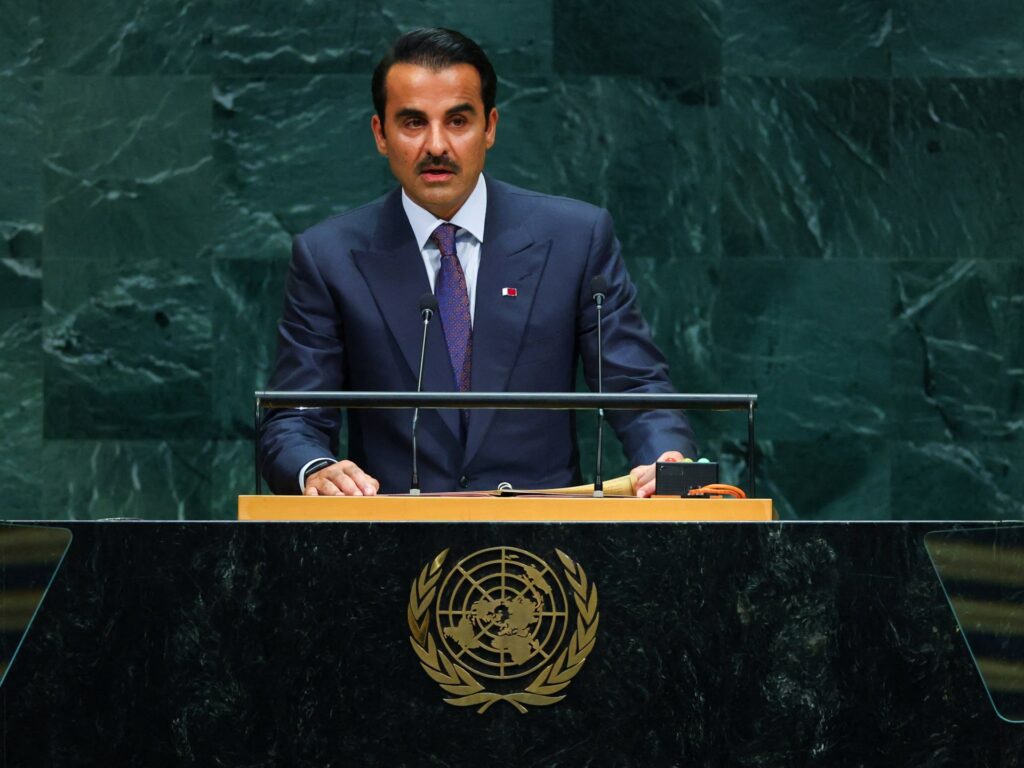
In a recent and urgent address, Sheikh Tamim bin Hamad Al Thani, the Emir of Qatar, highlighted the escalating dangers facing the Gulf region, describing it as entering one of “the most dangerous phases.” He emphasized the critical need for renewed diplomatic efforts to de-escalate tensions that threaten regional stability. Sheikh Tamim attributed the current precarious situation largely to years of delayed diplomacy, which he argued had indirectly contributed to the unfolding of the US-Israeli confrontation with Iran.
The Emir’s statement came at a time when the Gulf is witnessing heightened security and political challenges. As geopolitical rivalries intensify, the risk of broader conflict appears more imminent than before, a situation Sheikh Tamim warned could have devastating consequences, not just locally but globally.
Qatar, which has often played a mediating role in Middle Eastern conflicts, now calls on all involved parties to prioritize dialogue over military confrontation. Sheikh Tamim urged nations to return to the negotiating table to resolve their differences peacefully, highlighting that diplomacy remains the only viable path to stability and security.
This call for diplomacy is particularly significant against the backdrop of recent events where tensions between the United States, Israel, and Iran have escalated significantly. Sheikh Tamim criticized the approach of relying on military solutions, stressing that such strategies have only fueled mistrust and hostility, thereby increasing the risk of war.
The Emir’s remarks reflect Qatar’s enduring policy of promoting peaceful solutions and acting as a neutral party in the complex political landscape of the Gulf region. His appeal serves as a reminder of the urgency to address unresolved disputes through constructive engagement rather than force.
Regional experts and international observers have acknowledged the wisdom in Sheikh Tamim’s call for diplomacy, noting that the Gulf’s strategic importance and its role in global energy markets mean that instability here could have widespread repercussions. Economies dependent on Gulf oil and gas face potential disruption, while global security could be compromised if tensions escalate further.
The situation in the Gulf is a delicate balance of power involving multiple actors with competing interests. The Emir’s emphasis on dialogue seeks to encourage cooperation and mutual understanding, which are essential for lasting peace.
Moving forward, the international community is watching closely to see if the dialogue can be revitalized and if nations will heed Sheikh Tamim’s call to prevent further deterioration of relations.
In conclusion, Qatar’s Emir Sheikh Tamim bin Hamad Al Thani’s call for diplomacy at a critical juncture underlines the pressing need for peaceful solutions to avert conflict in one of the world’s most volatile regions. His message is a stark warning that the delays and failures in diplomatic efforts have contributed to the current crisis, urging immediate and sincere engagement to restore peace and stability in the Gulf.