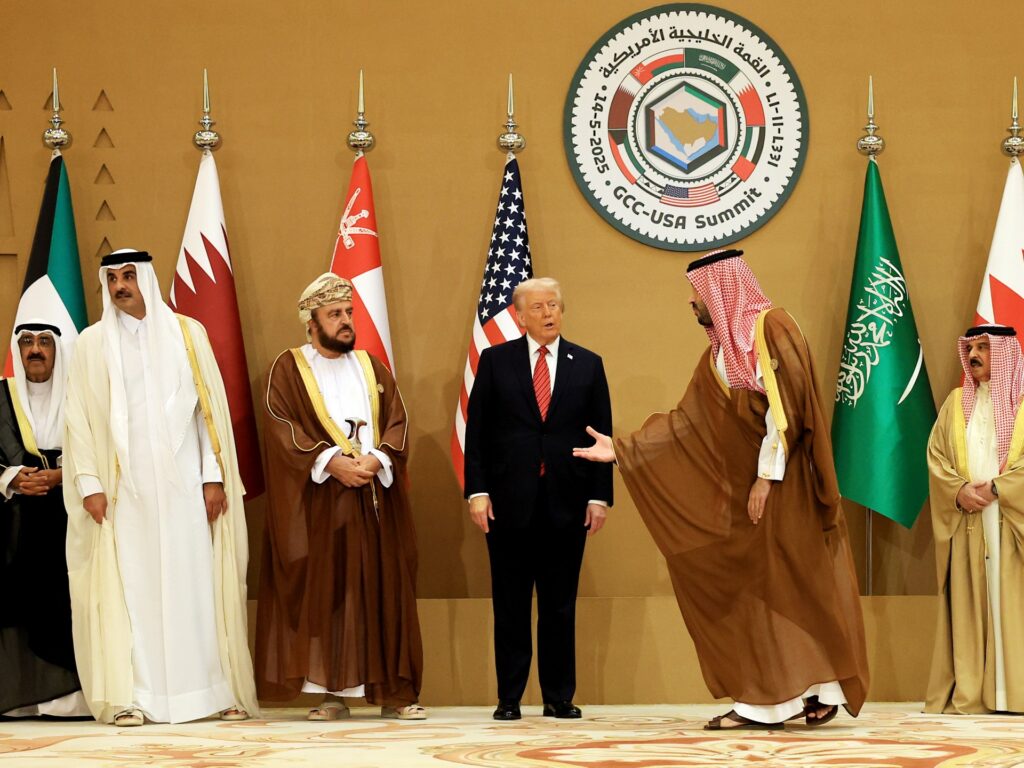
The upcoming Trump-GCC Summit in New York marks a significant diplomatic event where former U.S. President Donald Trump is scheduled to meet with leaders from the Gulf Cooperation Council (GCC) countries — Saudi Arabia, the United Arab Emirates (UAE), Qatar, Bahrain, Kuwait, and Oman. The summit, set to take place on the sidelines of the United Nations General Assembly (UNGA), is anticipated to address several pivotal issues affecting bilateral relations, regional stability, and broader geopolitical dynamics.
From the U.S. perspective, led by Donald Trump, the primary objectives appear to focus on strengthening alliances against common regional threats, boosting military and economic ties, and reinforcing U.S. leadership in the Middle East. Trump’s agenda is likely to emphasize counterterrorism cooperation, arms sales, and energy security. Additionally, the U.S. might seek to leverage these relations to counterbalance Iran’s influence in the region and to support ongoing initiatives for peace and stability in conflict zones.
On the other hand, GCC countries have a composite set of goals for the summit. Saudi Arabia and the UAE aim to secure continued U.S. support against regional adversaries, particularly Iran, and to enhance economic collaboration, including investments and trade. Energy diversification and innovation, especially in renewables, also feature prominently as these nations look to future-proof their economies.
Qatar and Kuwait may prioritize diplomatic support and conflict resolution efforts, especially considering Qatar’s recent normalization of ties with other Gulf states. Bahrain and Oman, meanwhile, might seek to address security concerns and foster greater cooperation in economic ventures.
Furthermore, all GCC members will likely explore counterterrorism strategies, cybersecurity collaboration, and efforts to ensure maritime security in the strategically vital Gulf waters. The leaders may also discuss aligning their approaches to regional conflicts such as those in Yemen and Syria, where U.S. involvement and Gulf interests intersect.
The summit is not only crucial for reaffirming existing partnerships but also serves as a platform to navigate emerging challenges, including navigating the global energy transition and responding to shifting geopolitical allegiances. Each side’s priorities reflect a blend of security imperatives, economic interests, and diplomatic objectives aimed at securing a stable and prosperous regional order.
In summary, the Trump-GCC Summit in New York is expected to highlight:
1. U.S. efforts to bolster military and security ties with GCC states.
2. GCC’s pursuit of economic diversification and sustained U.S. support.
3. Joint initiatives on counterterrorism and maritime security.
4. Dialogue on managing regional conflicts and diplomatic rapprochements.
5. Cooperation on energy security and innovation.
As this high-profile meeting unfolds, observers will keenly watch how the dynamics between the former U.S. president and the GCC leaders evolve, potentially shaping future policies and alliances in a rapidly changing Middle East landscape.