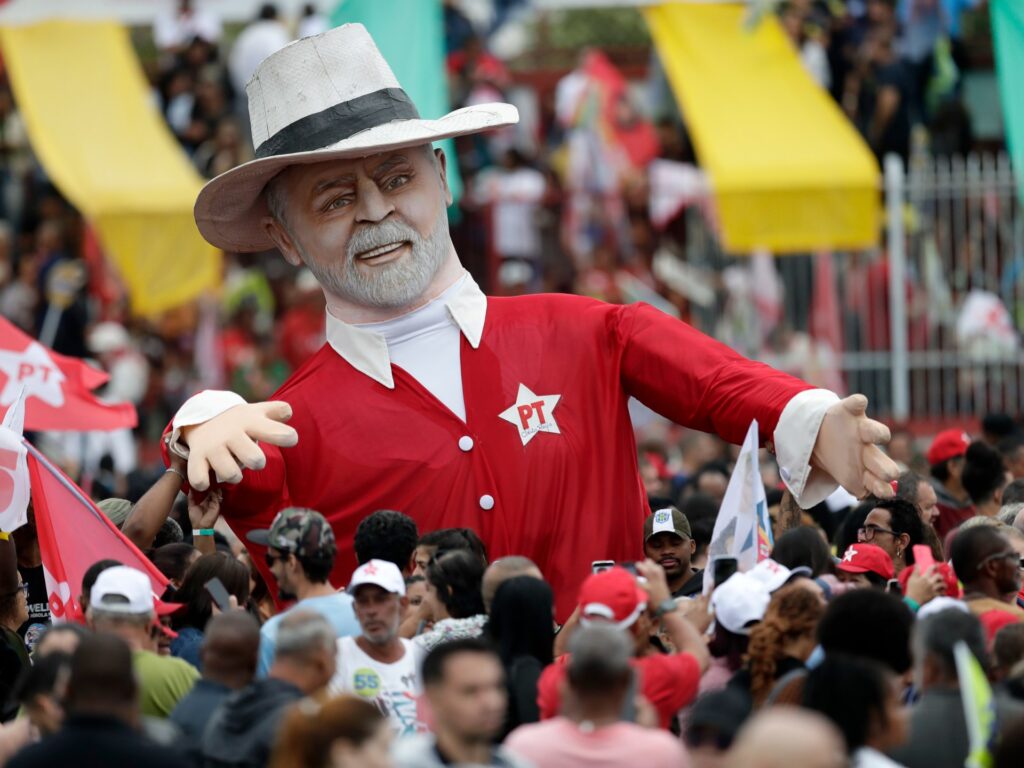
The upcoming Brazilian presidential election in October has become intensely competitive, as the latest polls indicate a dead heat between Luiz Inacio Lula da Silva and Flavio Bolsonaro. Lula, seeking a historic fourth non-consecutive term, continues to draw substantial support from various segments of the population, while Flavio Bolsonaro, son of the former president Jair Bolsonaro, has gained considerable traction as a formidable contender.
Luiz Inacio Lula da Silva’s bid to reclaim the presidency underscores his enduring political influence in Brazil. Having already served three terms, Lula’s campaign focuses on addressing social inequalities, improving economic conditions, and restoring Brazil’s international standing. His past leadership remains influential among many voters nostalgic for the economic growth and social programs implemented during his previous administrations.
On the other hand, Flavio Bolsonaro’s rise in the polls reflects shifting dynamics within Brazil’s political landscape. Capitalizing on his father’s legacy and appeal to conservative voters, Flavio’s campaign emphasizes law and order, economic liberalization, and traditional family values. His presence in the race has energized right-wing supporters and added complexity to the electoral contest.
Analysts observe that the tight polling figures suggest a polarized electorate, with voters divided over the direction the country should take amid ongoing social and economic challenges. Key issues influencing voter decisions include inflation, unemployment, public security, corruption, and environmental policies, especially regarding the Amazon rainforest.
The election’s outcome is poised to have significant repercussions beyond Brazil’s borders. As the largest economy in Latin America, Brazil’s leadership influences regional cooperation, trade, environmental initiatives, and geopolitical alignments. Lula’s return could signal a shift back towards left-leaning policies and international alliances, while a Bolsonaro victory might consolidate conservative governance and market-oriented reforms.
Campaign strategies have intensified in recent weeks, with both candidates engaging in vigorous debates, media appearances, and grassroots outreach. The competition is marked by contrasting visions for Brazil’s future, appealing to different demographics and ideological groups.
Observers note the importance of voter turnout, as mobilization efforts by various parties could tip the balance in such a closely contested race. Additionally, the role of social media and misinformation campaigns have been a focal point of concern, prompting electoral authorities to implement safeguards to ensure fair and transparent voting processes.
As the election approaches, political analysts, international observers, and Brazilian citizens alike remain keenly attentive to developments. The results will ultimately define Brazil’s political trajectory for the coming years, underscoring the significance of this momentous electoral contest.