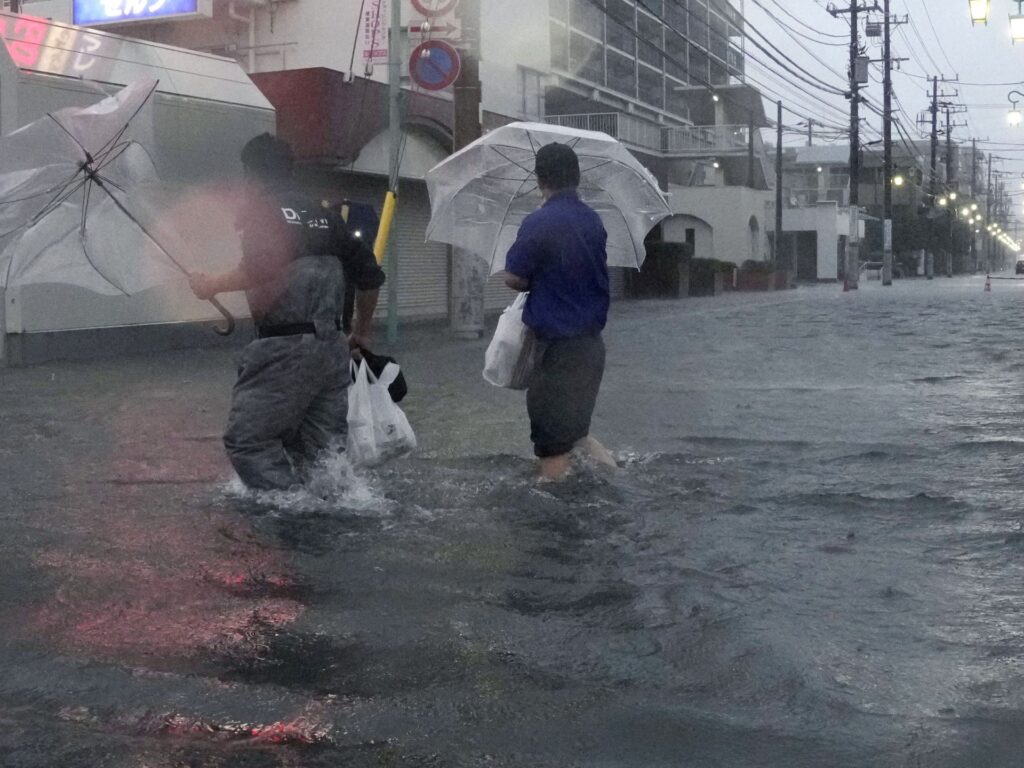
Typhoon Dujuan has wreaked havoc in Japan, claiming the lives of two individuals and causing significant travel disruptions near the Tokyo area. The powerful storm moved northeast, away from Japan’s eastern coastline, but not before leaving behind a trail of destruction.
Residents and authorities have reported severe weather conditions, including heavy rainfall, strong winds, and flooding, contributing to the damage and loss of life. Transportation services, including trains, buses, and flights, have been severely impacted, leading to cancellations and delays that have frustrated commuters and travelers alike.
Emergency services have been active across affected regions, providing aid and working to clear debris from roads and restore disrupted infrastructure. Local governments have issued warnings and urged people to stay indoors as the typhoon approached and passed through the area.
The Japan Meteorological Agency monitored Typhoon Dujuan closely, issuing timely updates and forecasts to help mitigate the impact. Despite the storm moving away, communities are still dealing with the aftermath, including power outages and damaged properties.
Typhoon Dujuan’s effects highlight the vulnerability of densely populated regions like Tokyo to severe weather events. With climate change contributing to more intense and frequent storms, experts emphasize the importance of preparedness and resilient infrastructure.
Authorities continue recovery efforts, focusing on restoring normalcy and supporting those affected by the typhoon. Repairing transportation networks is a priority, as they are crucial for daily commuting and economic activities in the region.
The tragedy of lost lives serves as a solemn reminder of nature’s power and the need for continued vigilance during typhoon seasons. Japan’s readiness and response capabilities were tested once again by Typhoon Dujuan, underscoring the importance of comprehensive disaster management strategies.
As communities recover, there is an ongoing assessment of damage and planning to strengthen defenses against future storms. Public awareness campaigns are also being reinforced to educate citizens on how to respond to similar emergencies.
In conclusion, Typhoon Dujuan caused two fatalities and widespread travel chaos near Tokyo, leaving Japan to grapple with recovery and heightened preparedness for impending typhoon seasons.