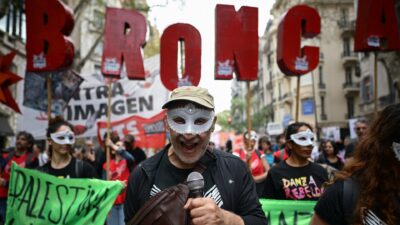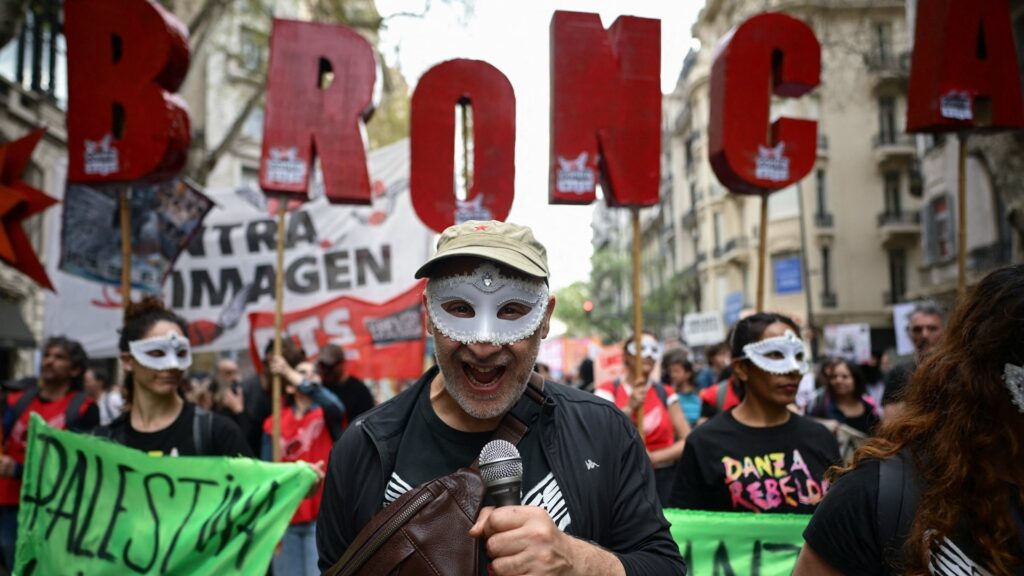
Thousands of protesters gathered in the streets of Buenos Aires to participate in what was called the ‘March of Anger.’ This large-scale demonstration was organized by various left-wing groups and unions in Argentina. The protest was a direct response to new austerity measures implemented by the government of Javier Milei, the country’s controversial economic leader known for his libertarian and free-market views.
Milei’s austerity plan includes significant cuts in public spending, reductions in social welfare programs, and a restructuring of the country’s finances aimed at tackling persistent inflation and economic instability. However, many Argentinians, particularly those on the left and vulnerable populations, view these measures as harmful, fearing they will exacerbate poverty, inequality, and unemployment.
The ‘March of Anger’ saw thousands from diverse backgrounds, including workers, students, and activists, take to the streets to express their dissatisfaction. Protesters carried banners and chanted slogans denouncing the government’s policies, calling for social justice and protection of workers’ rights.
The event highlighted deep divisions in Argentine society, as Milei’s supporters argue the austerity measures are necessary to stabilize the economy and attract investment. In contrast, his opponents warn that the social cost will be too high, risking social unrest and further economic hardship for many.
The protests were largely peaceful, though there were isolated incidents of clashes between demonstrators and police. Security forces maintained a heavy presence in key areas of Buenos Aires to prevent escalation and protect public property.
In the days leading up to the march, various labor unions had issued calls to action, warning that continued austerity could lead to nationwide strikes and further protests. This demonstration was among the first large-scale public displays of opposition since the new economic policies were announced.
Analysts believe the political fallout from the ‘March of Anger’ could influence upcoming elections and shape public discourse around economic policy in Argentina. The government faces the challenge of balancing fiscal responsibility with social welfare needs amidst a fragile economic environment.
International observers are also paying attention, as Argentina’s economic policies have implications for the broader region. The success or failure of Milei’s austerity plan could serve as a precedent for other countries grappling with similar economic issues.
As the situation develops, the country remains at a crossroads, with a populace divided over the path forward. The ‘March of Anger’ underscores the urgent need for dialogue and solutions that prioritize both economic stability and social equity in Argentina.