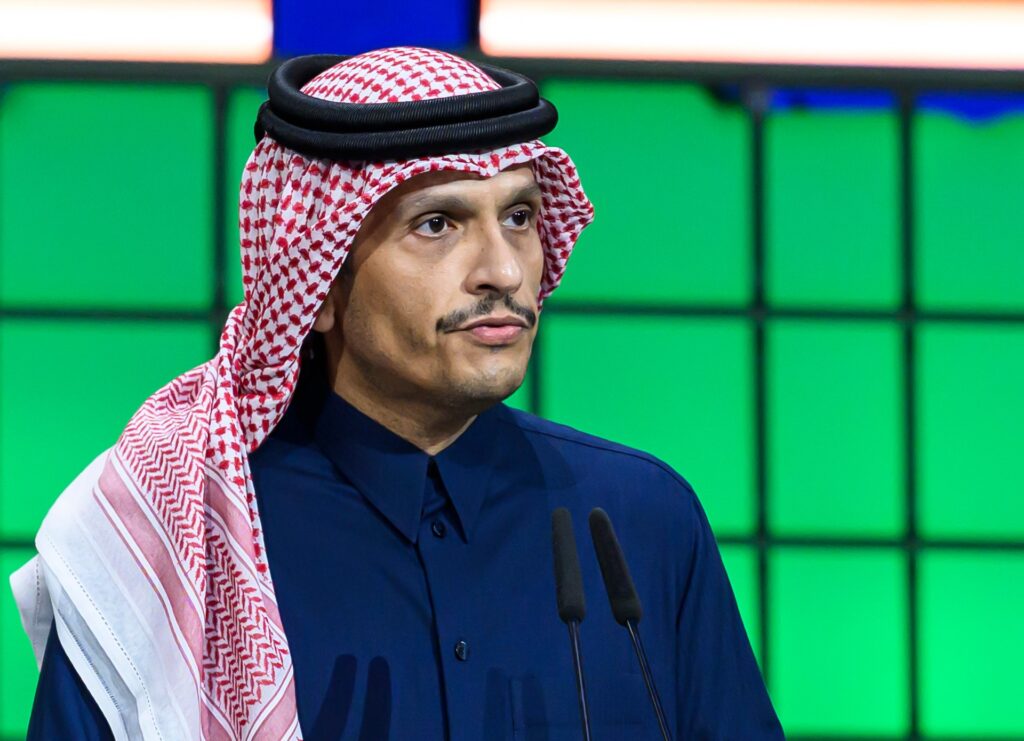
In a significant address to the United Nations General Assembly, Sheikh Mohammed bin Abdulrahman Al Thani, the Prime Minister of Qatar, delivered a stark warning about the regional consequences of the escalating conflict involving the US, Israel, and Iran. He described the fallout as an ‘earthquake’ that could reshape the geopolitical landscape of the Middle East and beyond.
Sheikh Mohammed expressed deep concerns regarding the intensification of hostilities between Israel and Iran, exacerbated by US involvement. He highlighted the potential for widespread instability, emphasizing that the region stands at a critical juncture where diplomacy and measured responses are crucial to prevent further escalation.
The Prime Minister underscored Qatar’s commitment to peace and the importance of dialogue, calling for international efforts to de-escalate tensions and foster lasting solutions. He stressed that the ramifications of continued conflict would not be confined to the immediate area but would ripple across global markets, international security, and humanitarian conditions.
In addition to addressing the conflict, Sheikh Mohammed announced a pivotal shift in Qatar’s investment strategy. The Prime Minister revealed plans to diversify the country’s economic portfolio by increasing investments in sustainable projects, technology, and infrastructure, both domestically and internationally.
He pointed out that Qatar aims to reduce its dependency on hydrocarbon revenues by exploring innovative sectors that align with global trends toward green energy and digital transformation. The new strategy seeks to position Qatar as a forward-thinking economic power capable of weathering geopolitical shocks.
Sheikh Mohammed’s UN speech reflected both concern over immediate regional risks and a vision for long-term economic resilience. By coupling calls for peace with bold economic reforms, Qatar is signaling its proactive stance amid an uncertain global environment.
Analysts suggest that Qatar’s emphasis on sustainability and technology investments aligns with broader Gulf Cooperation Council trends aiming to modernize and future-proof their economies against ongoing global volatility.
The Prime Minister’s description of the US-Israel war’s impacts as an ‘earthquake’ underscores the severe and unpredictable consequences such conflicts have on regional stability and economic certainty.
With his announcement on the investment shift, Qatar is poised to navigate the complex intersection of international diplomacy and economic reform, striving to safeguard its interests while contributing to regional stability.
The international community will be closely watching Qatar’s next steps, as they could signal a broader shift in Middle Eastern politics and economic strategies in response to ongoing conflicts and global challenges.