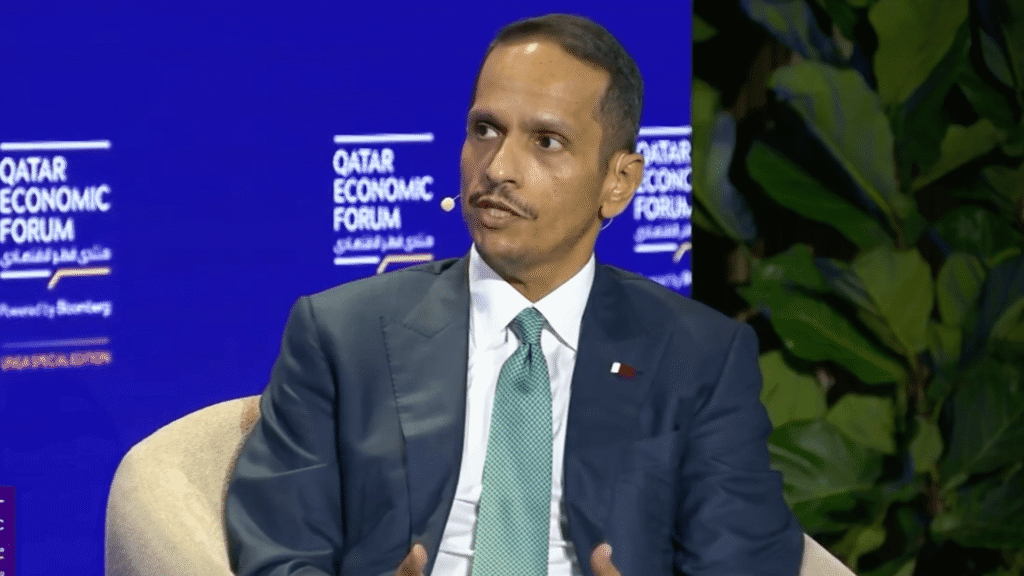
In a recent and significant statement, Qatar’s Prime Minister emphasized the urgent need for a comprehensive security framework within the Gulf region that includes Iran. He stated that the geopolitical landscape of the Gulf will remain unstable and unpredictable unless there exists a mutual understanding and guarantees that no party poses a threat to the others.
The Prime Minister’s remarks come at a time of heightened tensions and complex diplomatic relations in the Gulf, where regional security has been a persistent concern. The call for a structured security framework signals a move towards collaborative efforts to foster peace, stability, and mutual respect among Gulf countries.
The Prime Minister highlighted the importance of inclusivity in the security arrangements, noting that excluding Iran or any significant regional player could undermine the goals of lasting peace. By encouraging a collective security pact, Qatar aims to reduce mistrust, prevent conflicts, and advance economic and social cooperation across the Gulf Cooperation Council (GCC) nations and their neighbors.
Historically, the Gulf region has experienced a series of conflicts, proxy wars, and diplomatic stand-offs, often exacerbated by external influences and sectarian divides. The tensions between Gulf states and Iran have been particularly pronounced due to differing political ideologies, strategic interests, and alliances.
Qatar’s initiative seeks to bridge these divides by creating a framework where all parties can have confidence in the non-aggression and mutual respect of sovereignty. The Prime Minister’s call aligns with diplomatic efforts seen in previous dialogues and negotiations aimed at easing hostilities and promoting dialogue.
Regional analysts have underscored the importance of such a framework, contending that a comprehensive security agreement could lead to enhanced cooperation on issues like counterterrorism, maritime security, and economic partnerships. It also holds promise for reducing the risk of accidental conflicts that could escalate into broader confrontations.
Furthermore, the Prime Minister’s statement reflects Qatar’s broader foreign policy strategy, which often involves acting as a mediator and dialogue facilitator in regional disputes. Qatar has previously hosted negotiations between conflicting parties and sought to maintain dialogue channels open even during periods of acute tension.
The proposed security framework, if realized, would require significant diplomatic engagement, trust-building measures, and perhaps new mechanisms for conflict resolution. Transparency, confidence-building measures, and shared interests would need to underpin any agreement to ensure its success and longevity.
As Gulf nations grapple with internal and external challenges, including security threats, economic fluctuations, and regional rivalries, the idea of a collective security framework presents an opportunity for transforming the Gulf from a zone of risk to one of stability and cooperation.
The international community is likely to watch closely as Qatar and its neighbors potentially pave a new path toward security arrangements that include Iran, recognizing the strategic importance of the Gulf for global energy supplies and international trade.
In conclusion, Qatar’s Prime Minister’s call for a Gulf security framework incorporating Iran underscores a vision for a peaceful, secure, and cooperative future in one of the world’s most critical and complex geopolitical regions. While significant challenges remain, the initiative offers hope for reducing tensions and fostering an environment where all Gulf states can thrive without fear of conflict or aggression.