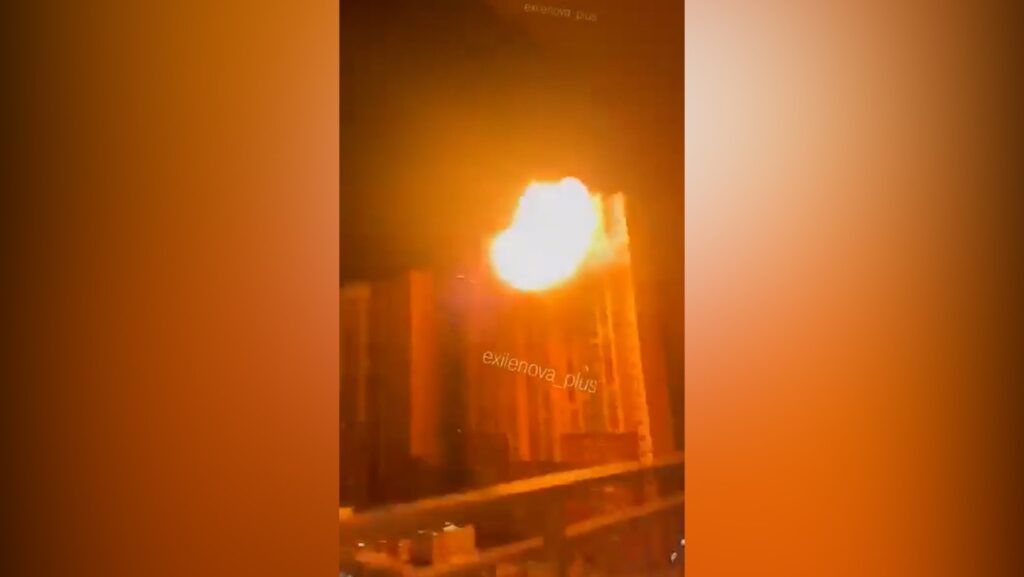
In a significant escalation of hostilities, Moscow was attacked by more than 1,000 drones alleged to be operated by Ukrainian forces. This unprecedented drone assault, marking a new chapter in modern warfare, targeted various locations across the Russian capital, including residential areas. A striking visual from the attack is a moment captured when a drone exploded upon hitting an apartment building in Moscow, highlighting the dangerous and destructive nature of this operation.
The use of drones in conflict zones has become increasingly prominent, but such a large-scale coordinated drone attack on a major capital city is rare and underscores the evolving tactics in the ongoing conflict between Russia and Ukraine. Drones offer strategic advantages including the ability to conduct surveillance, deliver precise strikes, and create psychological impacts without risking pilot lives.
According to reports, the drone offensive involved swarms of unmanned aerial vehicles that overwhelmed Moscow’s air defenses. The scale of the attack suggests a sophisticated level of planning and technological capability on the part of the Ukrainian military or affiliated groups.
The incident caused chaos and significant alarm among residents, with emergency services responding to multiple impacts across the city. Property damage was reported, particularly in residential areas, raising concerns about civilian safety and the broader humanitarian implications of drone warfare.
Experts note that this development might lead to heightened military readiness and accelerated efforts to improve drone defense systems in Russia. The Kremlin’s response is anticipated to be firm, with potential repercussions that could affect diplomatic relations and the trajectory of the conflict.
This drone attack marks a stark reminder of how modern conflicts continue to evolve rapidly, incorporating new technologies and tactics that can have profound effects on civilian populations and urban landscapes. As the situation develops, the international community watches closely, concerned about the escalation and the potential for further destructive actions.
The use of drones in warfare blurs the lines between traditional combat zones and civilian spaces, raising urgent questions about rules of engagement and the protection of non-combatants. Moscow’s experience serves as a cautionary tale about the risks of increasingly automated and remote-controlled weapons systems in densely populated areas.
This episode will likely influence military doctrines worldwide, prompting nations to reconsider their defensive strategies and investment in counter-drone technologies. Furthermore, it highlights the need for comprehensive measures to regulate the use of drones in armed conflicts and to mitigate harm to civilians.
As Moscow recovers from this unprecedented attack, the broader implications for security, technology, and international law will continue to unfold, underscoring the complexity and dangers of 21st-century warfare.