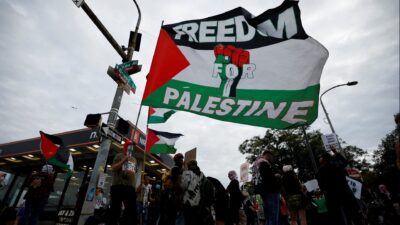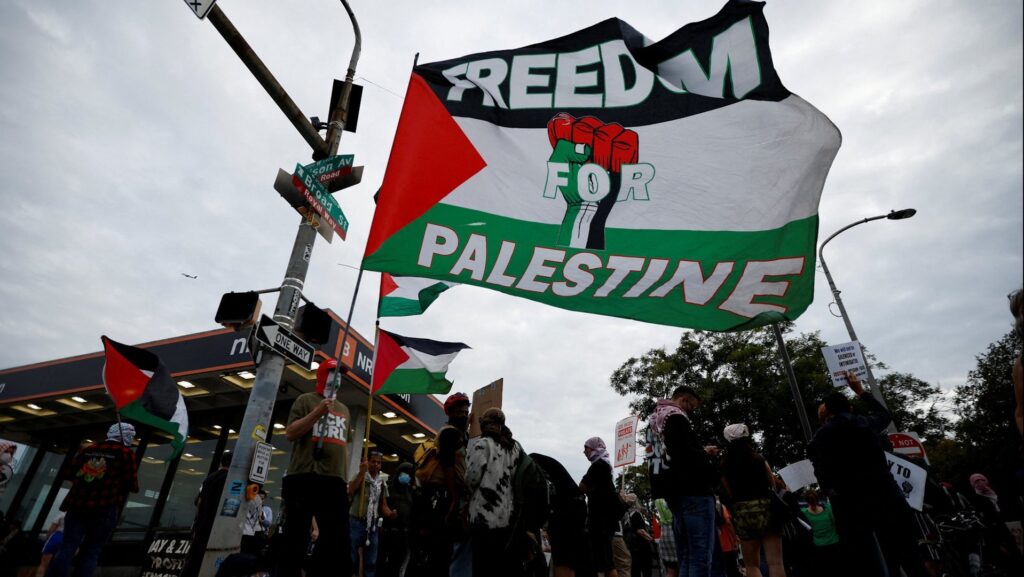
On a recent evening in Philadelphia, a group of pro-Palestine protesters gathered outside the venue hosting Ed Sheeran’s solo concert. The demonstration aimed to draw attention to the ongoing conflict and express solidarity with the Palestinian people.
The protest featured a variety of participants holding signs, chanting slogans, and sharing messages advocating for Palestinian rights. The protesters timed their rally to coincide with Sheeran’s concert, hoping to leverage the high profile of the event to gain broader visibility for their cause.
Ed Sheeran’s team and the concert organizers have not released any official statements about the protest. The event proceeded without interruption, and fans attending the concert reported a peaceful atmosphere inside the venue.
This incident adds to a growing trend of public demonstrations linked to the Israeli-Palestinian conflict, reflecting how the issue continues to evoke passionate responses worldwide. Many such protests occur in culturally significant urban areas and during major public events, where they garner more media attention.
Pro-Palestine rallies often call for increased humanitarian aid, an end to military actions, and support for the rights of Palestinians to self-determination. Critics of the protests argue that entertainment events should remain apolitical, while supporters maintain that artists and their audiences can play an important role in highlighting global issues.
The Philadelphia protest is part of a wider pattern seen in many countries where citizens engage in activism to influence public opinion and international policy concerning the Middle East.
Despite the tension surrounding the topic, the event outside Ed Sheeran’s concert was marked by respectful conduct from protesters, security personnel, and concertgoers alike. The police maintained a presence to ensure safety and order throughout the demonstration.
This rally underscores the increasingly frequent intersection of cultural events and political expression, demonstrating how spaces traditionally dedicated to entertainment are becoming platforms for advocacy and dialogue.
As the Israeli-Palestinian conflict continues to be a focal point of international debate, public demonstrations such as this one serve as a reminder of the global reach and complexity of the issue, inspiring conversations beyond geopolitical boundaries.