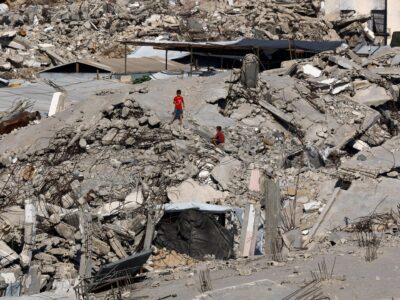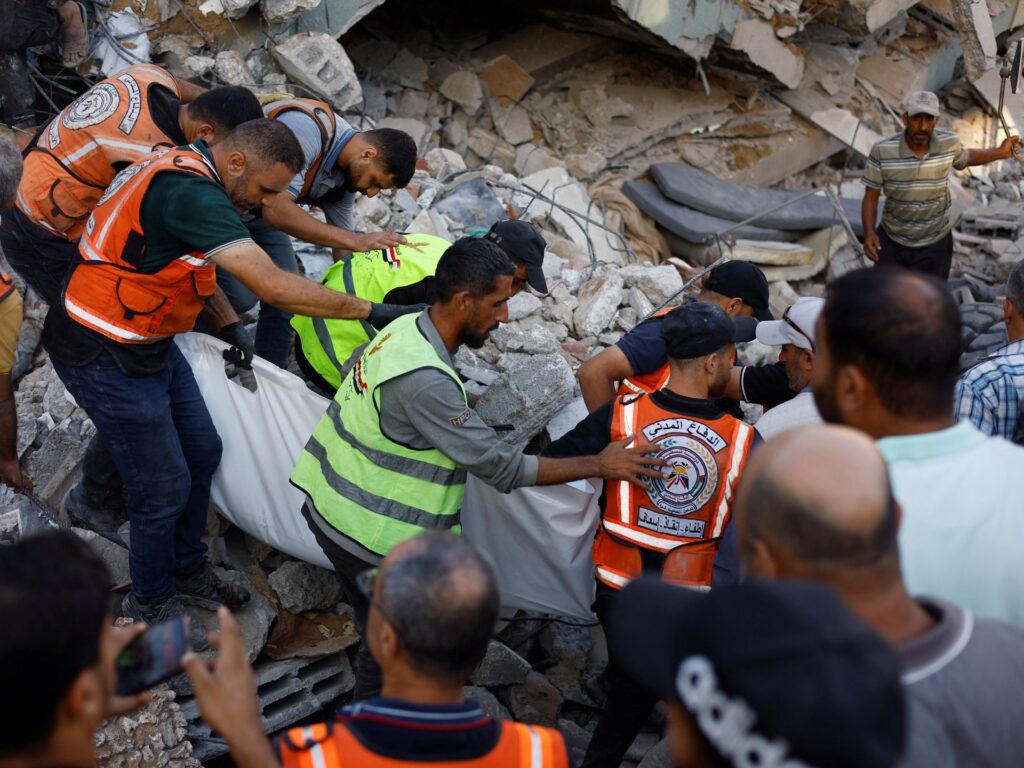
In a devastating incident overnight in Gaza City, a bombed-out apartment building suddenly collapsed, resulting in the death of at least 12 individuals and leaving dozens more trapped beneath the rubble. The collapse has added to the ongoing humanitarian crisis in the region.
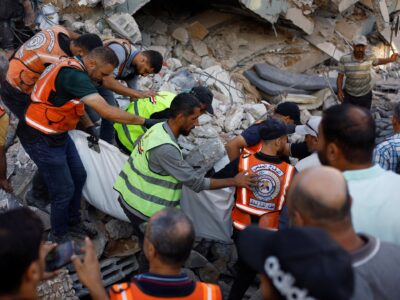
Rescue teams have been working tirelessly around the clock to comb through the wreckage in a desperate bid to locate survivors and recover bodies. The blackout conditions and instability of the structure have made the rescue efforts perilous and challenging.
Officials report that the building had been severely damaged by earlier bombings, which weakened its structural integrity. Residents who had sought shelter in the damaged building were caught unaware when it came crashing down.
Local emergency services, along with international humanitarian organizations, have responded swiftly to the disaster, providing medical aid, search and rescue support, and temporary shelter for those displaced by the collapse.
Eyewitness accounts describe scenes of chaos and heartbreak, with families anxiously waiting for news of their loved ones. The healthcare facilities in Gaza are reportedly overwhelmed by the influx of injured victims needing urgent attention.
This tragedy highlights the grave consequences of the ongoing conflict in Gaza, where civilian infrastructure and residential buildings continue to be affected by warfare. The incident has called for renewed efforts towards ceasefire negotiations and increased protection of civilian lives and properties.
Human rights groups have condemned the conditions that led to this disaster, urging all parties involved to respect international humanitarian laws and to ensure safe passages for civilians.
With the rescue operations ongoing, the full extent of casualties may increase, leaving the community in a state of mourning and uncertainty. Emergency responders remain committed to saving lives as they work against the clock.
This heartbreaking event serves as a stark reminder of the urgent need for peace and stability in the region, to prevent such tragedies from recurring and to protect the vulnerable civilians caught in the crossfire of conflict.