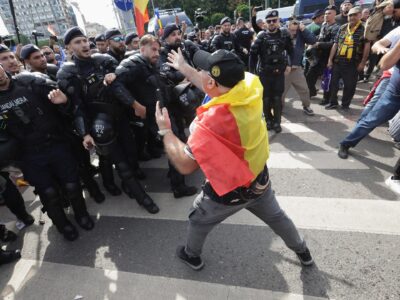
In a significant protest marked by tension and violence, around 2,000 Romanian farmers gathered to oppose the government’s decision to extend a livestock export ban. The demonstration escalated into clashes with police forces and led to dozens of injuries. The protest was notably supported by far-right groups, adding a political and ideological dimension to the farmers’ grievances.
The livestock export ban, originally imposed as a temporary measure to stabilize domestic meat prices and supply chains, has been extended by the government, much to the dismay of the agricultural community. Farmers argue that the ban hurts their livelihoods by reducing their ability to sell animals abroad, which traditionally has been an important source of income.
The protest took place in a major city with farmers bringing vehicles and livestock to symbolize their demands. As police attempted to control the crowd, tensions rose, and confrontations broke out, resulting in multiple injuries on both sides. The authorities responded with riot gear and measures aimed at dispersing the protesters.
Many farmers expressed frustration not only with the economic impact but also with what they perceive as a lack of dialogue and consideration from the government. They stress that livestock exports are vital for maintaining the financial stability of rural communities, which have been struggling with low incomes and rising costs.
The involvement of far-right groups has further complicated the situation. These groups have used the platform to push their political agenda, aligning themselves with the farmers to gain wider support. This alliance has raised concerns about the potential for increased political polarization and unrest.
The government, on its part, has emphasized the need for the ban to protect local supply and ensure food security amid fluctuating international markets. Officials have called for calm and have promised to engage in discussions with representatives from the agricultural sector to find a balanced solution.
Economic analysts note that the export ban, while stabilizing prices domestically in the short term, could have long-term negative effects on the competitiveness of Romanian agriculture in international markets. They warn that sustained restrictions might lead to a loss of market share and call for measures that address both domestic needs and export opportunities.
The clashes have sparked a nationwide debate on how best to support the farming community while ensuring the stability of the country’s food supply. There have been calls from various political and social groups urging both the government and the farmers to come to the negotiating table.
As Romania navigates these challenges, the outcome of this dispute will likely have a significant impact on the country’s agricultural policies and rural economy going forward. The incident highlights the delicate balance governments must maintain between protecting domestic interests and engaging in global trade.