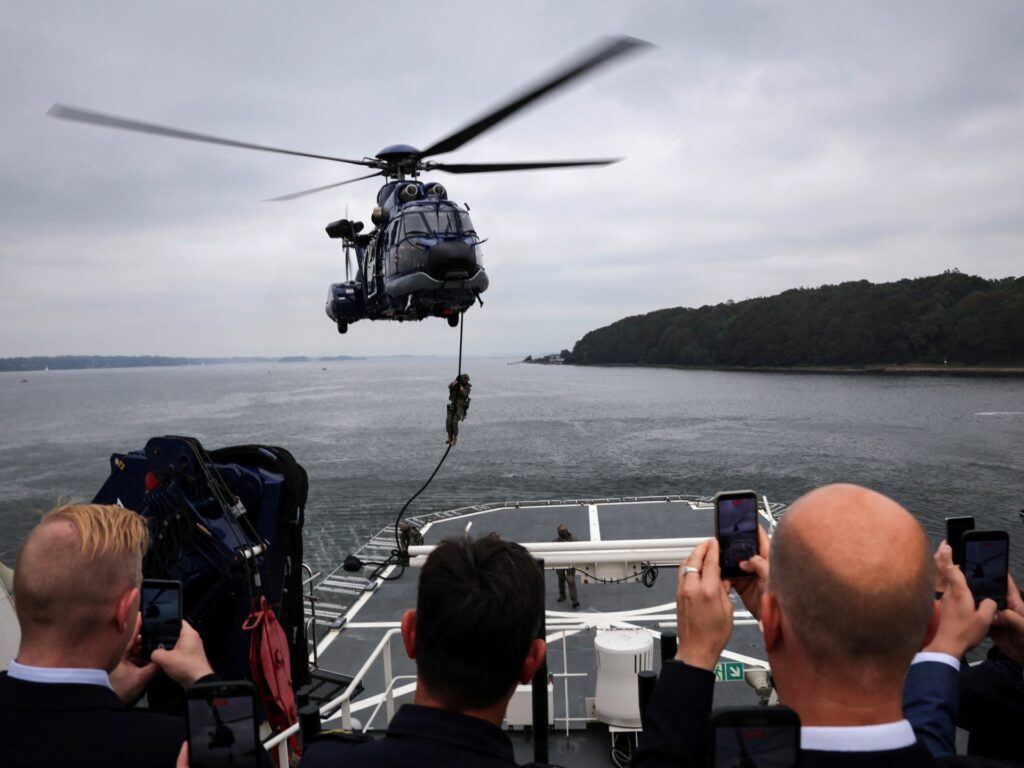
In a recent and tense maritime encounter in the Baltic Sea, a Russian frigate narrowly avoided a collision with a Danish helicopter, an incident which has spurred warnings from Russia to Denmark. The event unfolded when the Russian naval vessel reportedly deployed flares in close proximity to the Danish helicopter, intensifying concerns over safety and operational conduct in the region.
The Baltic Sea, a critical and strategically sensitive area bordered by several NATO countries and Russia, has witnessed increased military activities and encounters over recent years. This particular near miss comes at a time of heightened geopolitical tensions and has raised alarms about the potential for accidental escalations.
According to sources, the Russian frigate was conducting routine patrols when it detected the Danish military helicopter nearby. The situation escalated when the frigate released flares—a defensive measure commonly used to distract heat-seeking missiles but which in this case appeared to be used in a manner that brought the objects dangerously close to the helicopter.
Denmark has condemned the action as reckless and provocative. Danish military officials assert that the helicopter was performing its duties within international airspace and that the maneuvers by the Russian ship jeopardized the safety of its crew and the aircraft.
In response, Russia has issued a formal warning to Denmark, emphasizing that such encounters should be avoided to maintain security and peace in the Baltic region. Russian officials argue that their patrol was legitimate and accuse Denmark of encroaching on what Russia considers sensitive maritime zones.
The incident has sparked a wave of diplomatic activity, with NATO closely monitoring the situation. The alliance has reiterated its call for restraint and respect for international norms governing the conduct of military operations, especially in contested areas like the Baltic Sea.
Experts underscore that incidents of this nature underscore the fragile security environment in the Baltic region and the risks inherent in the proximity of military forces from different alliances and interests.
The Danish government has called for an international investigation to clarify the circumstances of the near miss and to establish measures to prevent similar incidents in the future. Meanwhile, Russia maintains its stance that it acted in accordance with international law and maritime protocols.
This episode adds to a growing list of naval and aerial encounters in the Baltic Sea, highlighting the ongoing strategic rivalry and the complex security dynamics that characterize the region. Both sides appear committed to standing firm on their positions, making diplomatic efforts critical to averting further escalations.
As the situation develops, global observers and international bodies are urging all parties involved to engage in dialogue and establish clear communication channels to reduce misunderstandings and promote stability in this vital maritime corridor.