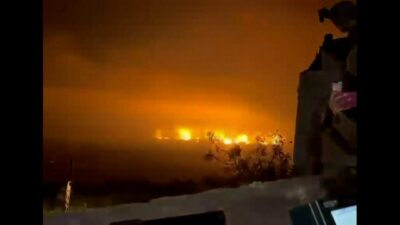
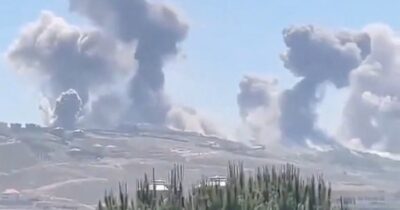
In the latest escalation of tensions between Israel and Hezbollah, Israeli forces have announced the destruction of a Hezbollah base situated in Lebanon’s Ali al-Taher ridge. This development comes just a week after Israel claimed to have established operational control over this strategically significant ridge.
The Ali al-Taher ridge holds considerable importance due to its geographic positioning, providing significant tactical advantages in terms of surveillance and control over surrounding areas. Israel’s recent assertion of operational control over the ridge marks a notable shift in the security dynamics along the Lebanon-Israel border.
According to Israeli military sources, the recent attack targeted infrastructure used by Hezbollah to facilitate operations and potentially launch future attacks against Israeli territories. The operation involved precision strikes intending to minimize collateral damage while effectively dismantling Hezbollah’s foothold in the area.
Hezbollah, the Lebanese Shiite militant group backed by Iran and Syria, has long maintained a presence in southern Lebanon, often clashing with Israeli forces in a conflict marked by sporadic violence and periodic escalations. The destruction of their base in Ali al-Taher ridge signals Israel’s intent to curtail Hezbollah’s capabilities and presence near its northern border.
Experts suggest that control over the Ali al-Taher ridge not only enhances Israel’s defensive posture but also allows more effective monitoring of militant activities across the border. The ridge’s elevation provides a vantage point to observe movements and intercept potential threats.
The attack has geopolitical implications beyond immediate military outcomes. Lebanon’s government has condemned the operation, describing it as a violation of sovereignty and an act that exacerbates regional instability. Meanwhile, international observers express concern over escalating tensions in an already volatile region.
Israel asserts that its operations are defensive in nature, aiming to maintain national security against groups it designates as terrorist organizations. The destruction of the base is portrayed as part of a broader strategy to deter future aggression and protect civilian populations near conflict zones.
Local residents near the affected area reported disturbances following the strikes, with some expressing fear of potential retaliatory attacks by Hezbollah. The security situation remains tense, with both sides reinforcing positions and monitoring for possible escalation.
The international community continues to call for restraint and dialogue to prevent the situation from spiraling into wider conflict. United Nations officials have urged all parties to respect Lebanon’s sovereignty and avoid actions that could undermine peace efforts.
This recent development underscores the fragile nature of peace and security in the Middle East. With persistent hostilities between Israel and Hezbollah, the region remains on edge as both sides navigate a complex landscape of military, political, and diplomatic challenges.
As Israel consolidates its control over the Ali al-Taher ridge, the coming weeks will be critical in determining whether this strategic gain translates into a lasting stability or fuels further confrontations. Analysts emphasize the need for cautious diplomacy to mitigate risks and foster dialogue in an area long plagued by conflict.
The destruction of Hezbollah’s base marks a significant moment in the ongoing conflict, highlighting the continued volatility and the complexities involved in achieving peace on the Lebanon-Israel border. Regional actors and the global community alike watch closely, hopeful for de-escalation but prepared for possible further confrontations.