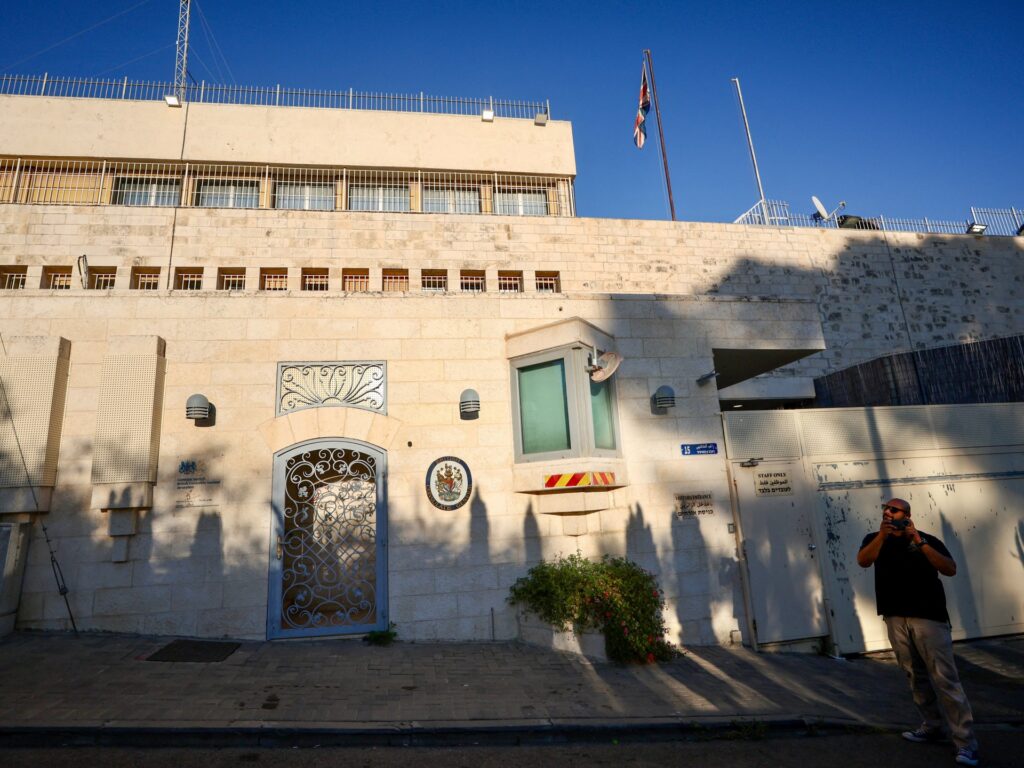
In a significant diplomatic escalation, Israel has instructed the United Kingdom to close its consulate in East Jerusalem within 30 days. This demand comes in response to the UK’s recent decision to impose sanctions on Israeli settlements in the West Bank, which the UK considers illegal under international law.
The East Jerusalem consulate has long been a sensitive and symbolic diplomatic mission. While not an embassy, it has served as a de facto mission to Palestinians, fostering UK engagement in the territory. Israel’s move to shutter the consulate signals its objection to what it sees as interference in its sovereignty and policy regarding the contested territories.
The UK government’s sanctions targeted individuals and entities involved in the expansion of settlements that are widely regarded as illegal by the international community but are supported by Israel. The move was part of a broader strategy by the UK to uphold international norms and protest ongoing settlement activities, which many believe undermine the peace process.
Israeli officials condemned the sanctions as unfair and politically motivated, asserting that the settlements fall within Israel’s legitimate territory. The closure order for the consulate is seen as a direct retaliation for the UK’s actions, marking a new low in UK-Israel diplomatic relations.
The UK Foreign Office expressed regret over Israel’s directive, reaffirming its commitment to a two-state solution and the upholding of international law. British officials have stated that they are considering their next steps but have not ruled out maintaining diplomatic presence through other channels.
The situation highlights the deep divisions that persist over the status of Jerusalem and the future of Palestinian statehood. East Jerusalem’s political status remains one of the most contentious issues in the Israeli-Palestinian conflict, with Palestinians viewing it as the capital of a future state, while Israel claims the entire city as its unified capital.
Analysts suggest that the closure of the consulate could further strain relations not only between Israel and the UK but also complicate broader international efforts to facilitate peace in the region. The move underscores the volatile nature of diplomatic engagement in contested territories and the challenges faced by countries attempting to balance their foreign policies with complex regional realities.
This development is likely to influence the geopolitical dynamics in the Middle East, potentially triggering reactions from other countries and international organizations advocating for Palestinian rights and a negotiated settlement.
Observers will be watching closely how the UK responds to Israel’s 30-day ultimatum and whether this will set a precedent affecting other foreign diplomatic missions in East Jerusalem.
The closure demand comes at a time when global attention is focused on renewed tensions and violence in the region, further complicating the prospects for peace and raising questions about the future status of Jerusalem and Israeli-Palestinian relations.