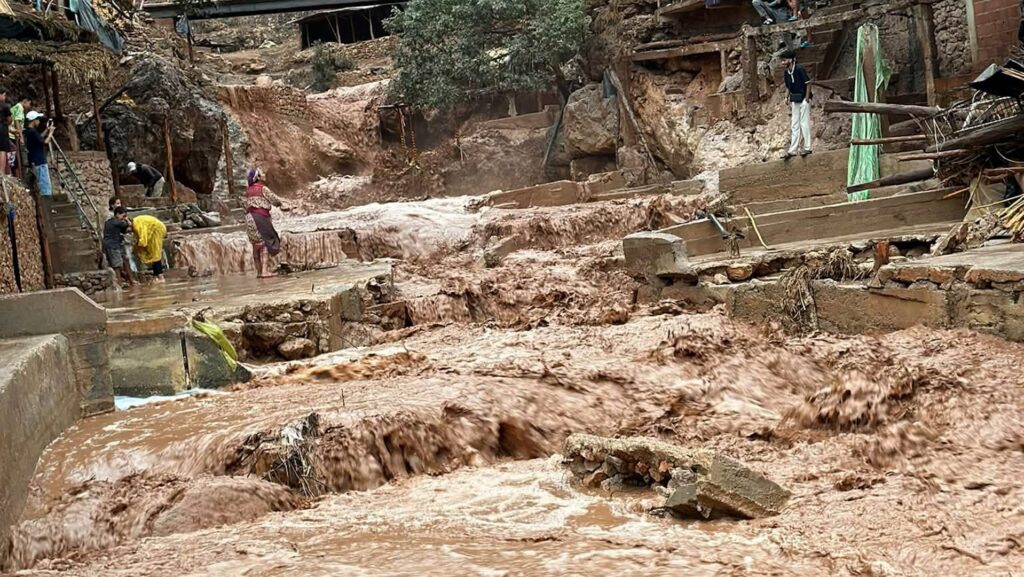
Morocco’s Atlas Mountains have recently experienced severe flash floods following heavy rainfall, with dramatic videos showing floodwaters surging through the region, particularly around the town of Khenifra. The sudden influx of water has caused significant disruption and damage, as the mountainous terrain channels rainwater rapidly into river valleys and low-lying areas.
According to local reports, the heavy downpour led to the overflowing of rivers and streams, transforming normally dry riverbeds into raging torrents. These flash floods swept through parts of the Atlas Mountains, sending debris and mud cascading into the valleys below.
Residents of Khenifra and nearby communities faced immediate dangers as floodwaters inundated homes, roads, and infrastructure. Authorities issued warnings to people in vulnerable zones to evacuate and avoid unnecessary travel. Emergency response teams have been mobilized to assist affected populations and manage the aftermath of the floods.
The Atlas Mountains, known for their rugged terrain and steep slopes, are particularly susceptible to flash flooding during periods of intense rain. The rapid runoff from the mountains exacerbates the flooding potential.
This event adds to the growing concerns over climate variability and extreme weather occurrences in North Africa, where sudden and intense precipitation can lead to hazardous natural disasters. Local officials are calling for enhanced preparedness measures and greater investment in flood management systems.
Efforts are underway to assess the full impact of the floods on the region’s communities, agriculture, and infrastructure. Early reports suggest damage to roads and bridges, disruptions to transportation, and threats to agriculture-dependent livelihoods.
Meteorologists continue to monitor weather patterns closely, forecasting additional rain in the coming days which could raise the risk of further flooding events.
The flash floods in Morocco’s Atlas Mountains serve as a stark reminder of the region’s vulnerability to rapid water surges and the importance of resilience planning to protect lives and property.