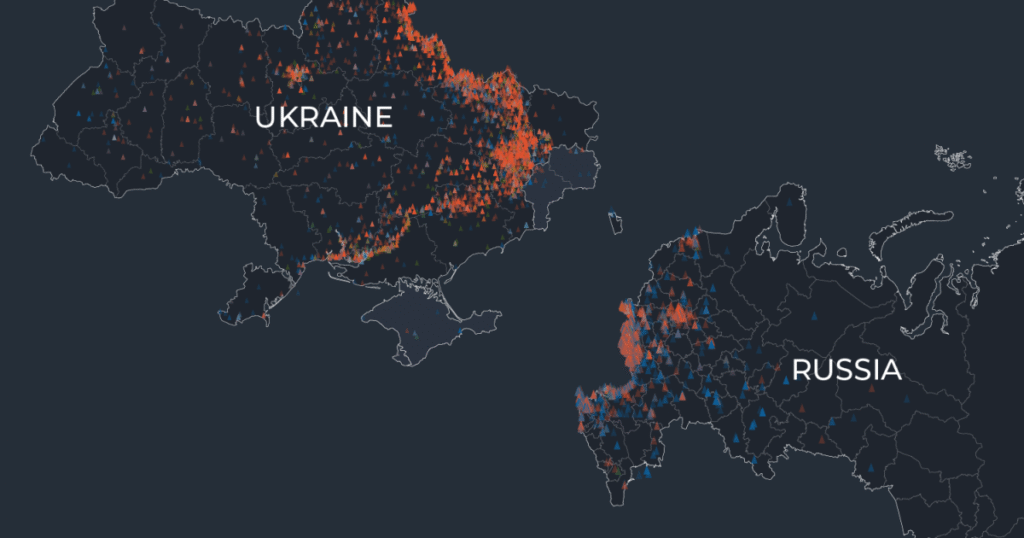
Since the beginning of the Russia-Ukraine war, attacks on civilian infrastructure have become an increasingly tragic and defining aspect of the conflict. According to detailed maps and charts visualized by Al Jazeera, the frequency of such attacks has more than doubled as the war has progressed, illustrating the growing toll on ordinary citizens and their communities.
The visualizations reveal that both Russian and Ukrainian forces have engaged in strikes targeting civilian areas, including homes, schools, hospitals, and utilities. Although the initial phase of the conflict featured fewer such attacks, over time the intensity and number of strikes on civilian infrastructure escalated dramatically.
Several key patterns emerge from the charts. Russian attacks are heavily concentrated in eastern Ukraine, particularly in contested regions where fighting is fiercest. These strikes often involve artillery bombardments, missile attacks, and aerial bombings aimed at weakening Ukraine’s logistical capacity and morale.
Conversely, Ukrainian counterattacks, while primarily focusing on military targets, have also resulted in damage to infrastructure in Russian-controlled territories. The maps underline the reciprocal nature of strikes, though civilian casualties and disruption in Ukraine appear more extensive due to the defensive posture and higher population density in impacted areas.
Experts cite strategic and psychological reasons for the increased assaults on civilian infrastructure. Destroying critical services like electricity, water supply, and healthcare aims to undermine civilian morale and exert pressure on opposing forces to reconsider their strategies or negotiate terms.
However, the humanitarian consequences are severe. The destruction of hospitals and medical facilities hampers urgent treatment for the injured. Attacks on water and electricity disrupt daily life and sanitation, increasing the risk of disease. Educational institutions hit by strikes cause long-term setbacks for children and families.
International observers have condemned these attacks, emphasizing the importance of adhering to international humanitarian law which prohibits targeting civilians and civilian infrastructure. Increasingly, satellite imagery and open-source intelligence are being used to assess damage, verify attacks, and hold violators accountable.
The Al Jazeera visualization integrates data from multiple sources such as news reports, government records, and independent monitors to present a comprehensive picture of the human cost of the conflict. It serves as a stark reminder that beyond the battlefield, civilians continue to bear the brunt of the war.
In summary, the maps and charts reveal how the ongoing Russia-Ukraine conflict has escalated in terms of attacks on civilian targets. With the number of such attacks more than doubling, the impact on civilian populations is profound and multifaceted, underscoring the urgent need for measures to protect non-combatants and restore peace.