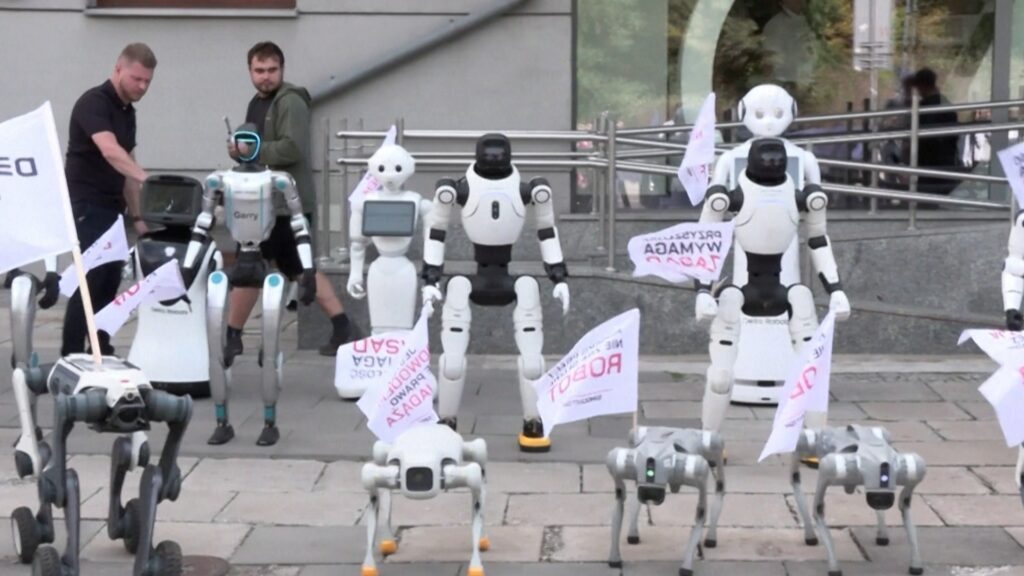
In a striking and symbolic demonstration, robots in Poland have taken to the streets to protest against proposed artificial intelligence (AI) regulations. This unusual event highlights growing concerns about the future of AI development and its regulation within the country and beyond.
The protest, which featured both real robots and human participants dressed as robots, took place in Warsaw, drawing attention not only from locals but also from international observers. The demonstrators aimed to convey a message about the potential risks of over-regulation, which they argue could stifle innovation and technological progress.
Poland is currently reviewing new AI regulations being considered by the European Union, which include strict rules on the use of AI in various sectors, including industry, healthcare, and public administration. The proposed legislation seeks to ensure AI systems are transparent, ethical, and respect privacy and human rights.
However, many technology experts and innovators in Poland believe the rules might be too restrictive. They warn that excessive regulation could hinder the development of AI technologies and put Polish businesses at a competitive disadvantage on the global stage. The protesters called for a balanced approach that promotes innovation while addressing ethical concerns.
The event also sparked discussions on the role of AI in society. Advocates emphasized the importance of AI as a transformative tool that can drive economic growth, improve healthcare outcomes, and enhance public services. At the same time, they acknowledged the necessity of safeguards against misuse and unintended consequences.
Organizers of the protest pointed out that robots “participating” in the demonstration symbolized the voice of AI systems themselves, which are often regarded as tools without agency. Through this act, they intended to humanize AI and highlight the complexities involved in regulating technologies that are becoming increasingly autonomous.
Several prominent AI researchers and industry leaders voiced support for the protest’s message, urging policymakers to consider the long-term implications of their decisions. They stressed the need for adaptable, forward-looking policies that can accommodate future technological advancements without compromising ethical standards.
The Polish government has responded by stating that it values input from all stakeholders, including the tech community and the general public. Authorities assured that the regulatory framework would be carefully crafted to balance innovation and protection, ensuring Poland remains a hub for AI development.
This robotic protest represents a novel approach to advocacy in the tech world, blending performance art with activism to draw attention to critical issues. It underscores the growing societal interest in AI’s impact and the importance of inclusive dialogue in shaping the future of technology governance.
As AI continues to evolve rapidly, the events in Poland may serve as a precedent for other countries grappling with similar challenges. The protest exemplifies the dynamic interaction between technology, policy, and public opinion in the digital age, marking a significant moment in the ongoing conversation about the responsible development and regulation of artificial intelligence.