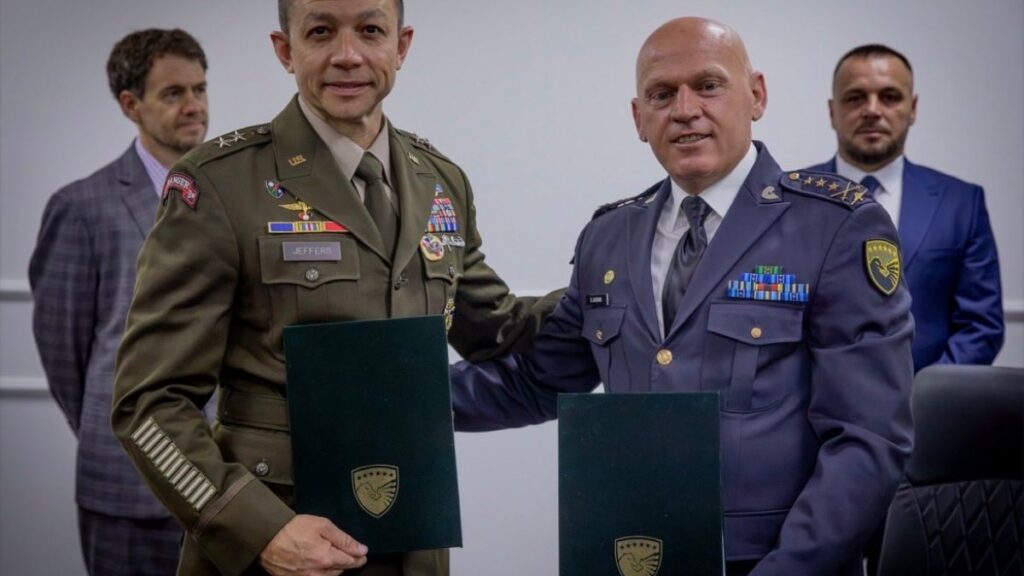
In a significant diplomatic move, Kosovo has agreed to join a US-led international force aimed at stabilizing Gaza. This decision places the Balkan state among a select group of countries that have committed to sending peacekeepers to the Palestinian enclave, which has been a hotspot of conflict and humanitarian concerns.
The Gaza Strip, a densely populated area home to over two million Palestinians, has experienced recurrent violence and political instability. The introduction of an international peacekeeping force is intended to help maintain security, facilitate humanitarian aid, and support efforts towards a lasting peace in the region.
Kosovo’s participation marks a notable development in its foreign policy, reflecting its willingness to engage in global peacekeeping initiatives despite its own complex geopolitical status. As a relatively young nation that declared independence in 2008, Kosovo has been steadily increasing its presence and influence on the international stage.
The US-led effort to assemble a stabilisation force in Gaza is an unprecedented move, reflecting growing international concern over the situation in the enclave. Countries participating in the mission are expected to coordinate closely to monitor ceasefire agreements, protect civilians, and contribute to rebuilding efforts.
Experts indicate that Kosovo’s involvement could bolster the legitimacy and operational capacity of the force. By joining this coalition, Kosovo signals its commitment to regional stability and international cooperation.
The peacekeepers’ mandate likely includes patrolling key areas, facilitating dialogue between conflicting parties, and working alongside UN agencies and non-governmental organizations to deliver humanitarian assistance.
While the details of Kosovo’s troop deployment remain confidential, officials have expressed optimism about the impact their involvement will have on peace prospects in Gaza.
The international community, including the United States, views this coalition as a critical step toward reducing violence and creating conditions for a durable peace settlement between Israel and Palestine.
As the situation evolves, Kosovo’s decision may encourage other nations to participate in similar peacekeeping efforts, broadening the coalition and enhancing the international response to the ongoing crisis.
In summary, Kosovo’s agreement to send peacekeepers to the US-led Gaza stabilisation force represents both a strategic diplomatic initiative for the Balkan state and a hopeful development for the peace process in one of the world’s most troubled regions. The coming months will be crucial in assessing the effectiveness of this coalition in promoting security and stability in Gaza.