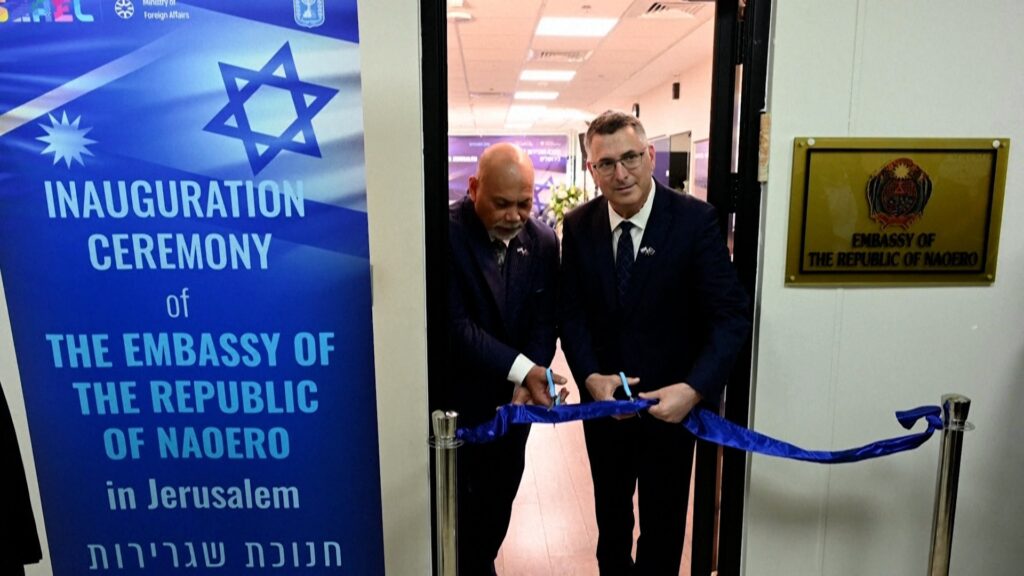
In a significant diplomatic move, the Pacific island nation of Nauru has officially opened its embassy in Jerusalem. This step positions Nauru as the ninth country worldwide to establish an embassy in the contested city, a move that carries substantial political and diplomatic implications.
Jerusalem is a city of profound historical and political significance, recognized as a key focal point in the Israeli-Palestinian conflict. Most countries traditionally locate their embassies to Israel in Tel Aviv, maintaining a more neutral stance on the city’s disputed status. However, the decision by Nauru to open its embassy in Jerusalem signals a notable shift in diplomatic alignments.
Nauru’s act can be seen as a show of strong bilateral relations with Israel and a reinforcement of its foreign policy direction. This move follows in the footsteps of a handful of countries that have moved their diplomatic missions to Jerusalem, an act that has stirred international debate and reactions from various global powers and neighboring regions.
The establishment of an embassy in Jerusalem by Nauru may further influence diplomatic relations in the Pacific region and beyond. It underscores Jerusalem’s continuing importance on the world stage and reflects the evolving nature of international diplomacy concerning the Israeli-Palestinian conflict.
As the ninth country to open an embassy in Jerusalem, Nauru joins a small but growing list of nations recognizing the city in this official capacity. This development could encourage other countries to re-evaluate their positions on embassy locations, especially amid changing geopolitical landscapes.
International responses to this move have been mixed. Supporters view it as a sovereign nation’s right to establish diplomatic missions according to its policy interests, while critics caution such actions could exacerbate tensions and complicate ongoing peace efforts in the region.
Nauru’s decision adds a new chapter to the complex narrative of Jerusalem’s status and highlights the intricate balance of diplomacy, national interests, and regional stability. The implications of this decision will likely unfold over time, shaping diplomatic relations and potentially impacting international dialogue surrounding the Middle East’s peace process.