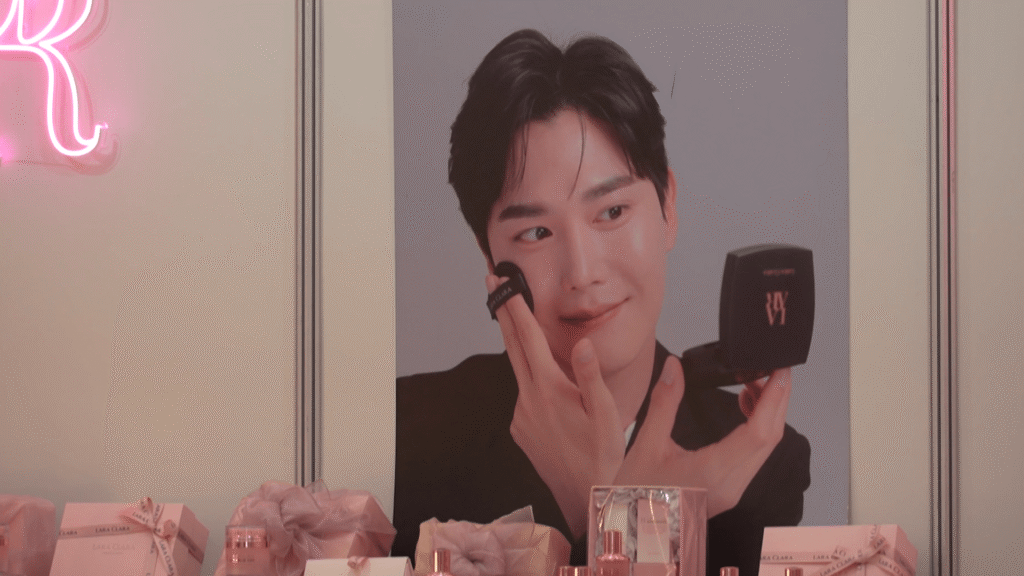
South Korea’s beauty industry has witnessed an unprecedented rise, recently surpassing the United States to become the world’s second-largest cosmetics exporter. This remarkable growth highlights the global allure and increasing dominance of K-Beauty products in the competitive cosmetics market.
The South Korean beauty market’s success stems from a combination of innovative product development, strategic marketing, and deep cultural influence. Known for its cutting-edge skincare technologies and high-quality ingredients, K-Beauty has captured consumers’ attention worldwide, particularly among millennials and Gen Z.
One key aspect driving K-Beauty’s rise is its commitment to research and development. South Korean companies invest heavily in formulating unique and effective products, such as cushion compacts, sheet masks, and essences that have revolutionized beauty routines globally. These innovations are often coupled with aesthetically pleasing packaging and affordable prices, making them accessible and desirable to a broad consumer base.
Another factor contributing to K-Beauty’s ascendancy is the power of social media and K-pop culture. Influencers and celebrities from South Korea have significantly boosted the international visibility of these products. Platforms like Instagram, YouTube, and TikTok allow K-Beauty brands to connect directly with consumers, fostering brand loyalty and driving trends.
The industry’s export performance reflects this global demand, with South Korea’s cosmetics export volume surpassing that of the United States. Currently, South Korea ranks just behind France, a country historically known as the leader in luxury beauty and skincare products. The question now arises: can South Korea overtake France to claim the top spot?
France maintains a stronghold on the luxury beauty segment, backed by prestigious brands like Chanel, Dior, and L’Oréal. These companies benefit from a long heritage, robust distribution networks, and a reputation for premium quality. However, the rapid growth and innovation of K-Beauty pose a significant challenge to this dominance.
South Korea’s ability to adapt quickly to consumer preferences and its focus on innovative and affordable products gives it a competitive edge. Moreover, trends indicate that consumers increasingly seek personalized and health-conscious beauty solutions, areas where K-Beauty excels.
Despite this momentum, several challenges remain for South Korea to surpass France entirely. French companies have considerable financial resources and global reach, allowing them to invest heavily in marketing and product development. Additionally, the luxury sector’s resilience during economic fluctuations could help France maintain its lead.
Trade regulations, supply chain logistics, and geopolitical factors also play critical roles in the cosmetics industry’s international landscape. South Korean companies must continue expanding their global presence and navigating these challenges to achieve sustained growth.
To sum up, the rise of K-Beauty marks a revolutionary shift in the global cosmetics industry. South Korea’s innovative approach, cultural influence, and export strength position it as a formidable competitor to France’s longstanding beauty industry leadership. Whether South Korea can overtake France in the near future remains to be seen, but it is clear that the country has reshaped the global beauty landscape significantly.