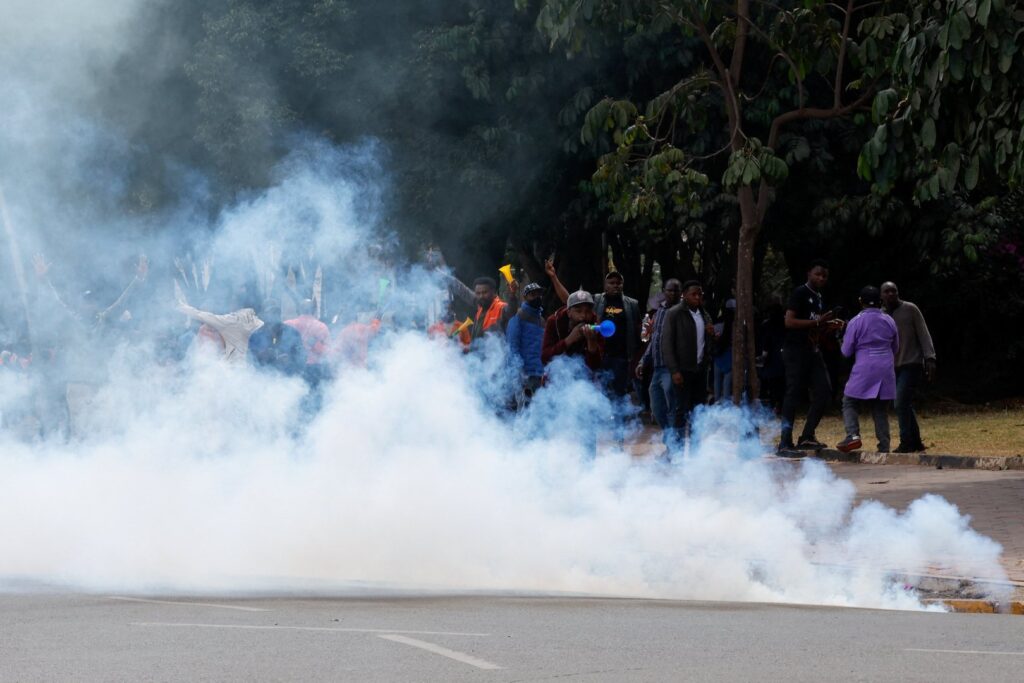
On a tense Friday in Nairobi, Kenyan police confronted local traders protesting against the government’s decision to impose higher taxes on imports. The traders, who gathered in the capital city, demanded a reversal of the tax hike, arguing that it would severely impact their businesses and increase the cost of goods for consumers. The protest escalated when police resorted to firing teargas to disperse the crowd amid rising tensions.
The Kenyan government recently announced an increase in import taxes as part of a broader revenue-raising strategy aimed at stabilizing the economy and funding public services. However, traders fear that these taxes will lead to increased prices and reduced trade volumes. The traders’ rally highlighted their frustration with what they perceive as insufficient consultation by the government on these fiscal measures.
The use of teargas by police drew criticism from human rights activists and observers, who called for restraint and dialogue between authorities and the protesting traders. Despite the confrontation, the traders vowed to continue their demonstrations until the government addresses their concerns.
This incident reflects the growing tensions between Kenyan authorities and economic stakeholders over financial policies amidst a challenging economic environment. It underscores the delicate balance governments must maintain when implementing fiscal reforms while ensuring the support of key sectors.
Authorities have urged calm and promised to engage with trader representatives to find amicable solutions to the dispute. Meanwhile, the streets of Nairobi bear the marks of recent unrest as the city’s business community grapples with uncertainty and the prospect of increased operating costs.
The situation remains fluid, with potential for further protests if the government’s tax policies remain unchanged. All eyes are now on the Kenyan government to see how it will navigate this socio-economic challenge while maintaining public order and economic stability.