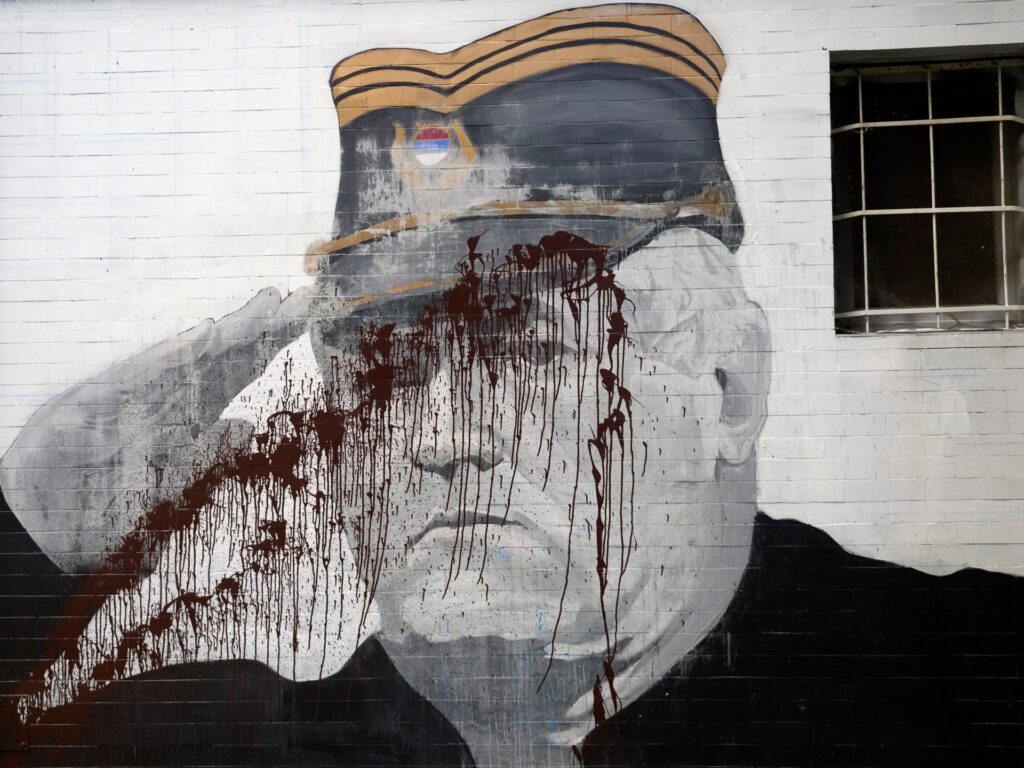
Ratko Mladic, a former Bosnian Serb general, was a central figure in the Bosnian War of the 1990s and was notoriously known as the ‘Butcher of Bosnia’ due to his role in orchestrating some of the conflict’s most brutal episodes. Mladic’s life and military career spanned several decades, culminating in his indictment for war crimes, genocide, and crimes against humanity.
Born in 1942 in Bosnia, Mladic embarked on a military career that saw him rising through the ranks of the Yugoslav People’s Army before becoming a key general for the Bosnian Serb forces during the breakup of Yugoslavia. His most infamous acts include directing the siege of Sarajevo and the massacre at Srebrenica in 1995, where thousands of Bosniak men and boys were systematically killed in what has been recognized as the worst massacre in Europe since World War II.
After the war, Mladic evaded arrest for many years, living in hiding despite being indicted by the International Criminal Tribunal for the former Yugoslavia (ICTY) in 1995. It was only in 2011 that he was finally apprehended in Serbia and transferred to The Hague to stand trial.
The trial was a prolonged process where Mladic faced numerous charges tied to his leadership during the war, including genocide, war crimes, and crimes against humanity. In 2017, he was convicted and sentenced to life imprisonment.
Mladic’s later years were marked by his imprisonment in The Hague, where he appealed for early release. Serbian authorities attempted several times to secure his early release to his home country, citing his advanced age and declining health. However, these requests were denied.
Ratko Mladic died in prison in The Hague, closing a significant chapter in the efforts to bring justice for the atrocities committed during the Bosnian conflict. His life remains a stark reminder of the devastating impacts of ethnic conflict and war crimes in the Balkans.