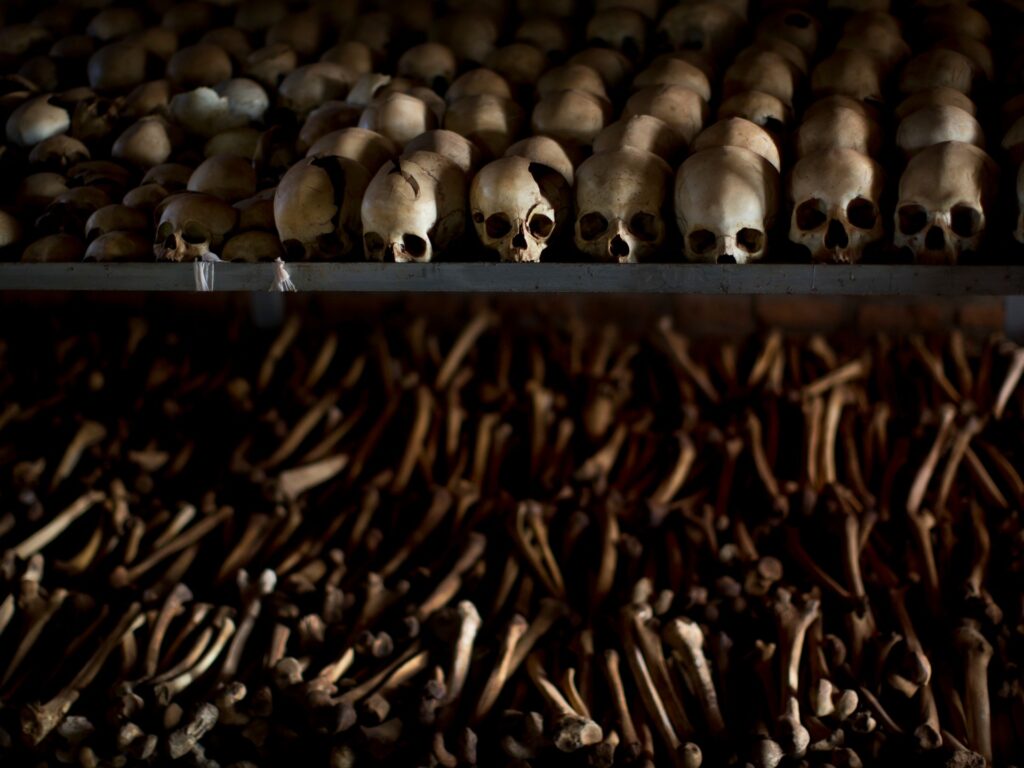
In a landmark ruling, a Dutch court has sentenced Eugene N., a Rwandan national, to life imprisonment for his involvement in a horrific genocide massacre that took place at a stadium in Rwanda. The massacre resulted in the brutal killing of approximately 3,000 Tutsi victims during the 1994 Rwandan genocide, a tragic event marked by widespread ethnic violence.
Eugene N. was found guilty of participating in this atrocity, which remains one of the darkest chapters in modern African history. The court’s decision underscores the continuing efforts by international and national judicial systems to bring perpetrators of genocide to justice, even decades after the events.
The massacre at the stadium, where thousands sought refuge, turned into a site of mass slaughter as primarily Tutsi individuals were systematically targeted and killed. This tragic event is emblematic of the wider genocide in Rwanda, where an estimated 800,000 people, mostly from the Tutsi minority, were killed in just 100 days.
During the trial, evidence presented showed Eugene N.’s active participation and complicity in the killings. Witness testimonies and forensic findings notably contributed to establishing his direct involvement. The Dutch judiciary acted under the principle of universal jurisdiction, allowing it to prosecute grave crimes committed abroad when local jurisdictions are unable or unwilling to do so.
The life sentence handed to Eugene N. not only serves as a significant moment in the pursuit of justice for the Rwandan genocide victims but also sends a strong message to those who commit crimes against humanity worldwide. The verdict reinforces the importance of accountability and the rule of law at an international level.
This case reflects the wider global commitment to confront genocide, war crimes, and crimes against humanity. It highlights the essential role of courts and international legal frameworks in ensuring that perpetrators cannot evade responsibility, regardless of where the crimes occurred.
Victims’ families and survivors have expressed a measure of relief and hope following the sentencing, hoping that this judgement will provide some closure and contribute to healing the deep wounds left by the genocide.
The Dutch court’s decision came after years of investigation and legal proceedings, illustrating the often slow but determined path to justice in cases of such magnitude.
As the international community continues to remember and learn from the Rwandan genocide, the conviction of individuals like Eugene N. is a testament to the enduring commitment to justice, reconciliation, and the prevention of future atrocities worldwide.
In conclusion, the sentencing of Eugene N. to life imprisonment by the Dutch court marks a pivotal chapter in global efforts to address the legacy of genocide, offering hope that accountability transcends borders and time.