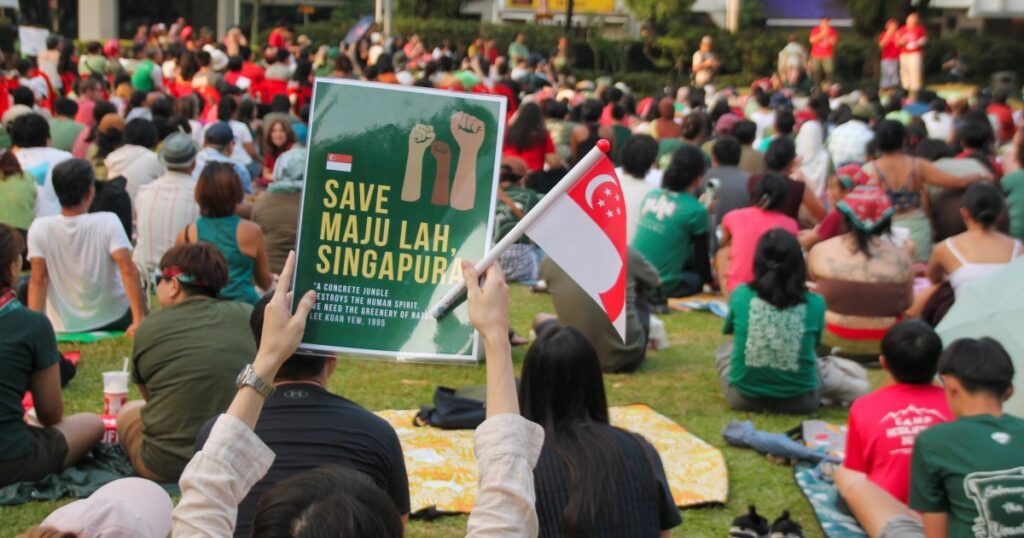
Singapore, a city-state known for its urban greenery and efficient city planning, is facing an unusual wave of public protests due to government plans to clear forested areas to make way for new housing developments. This rare public opposition highlights growing concerns among citizens and environmentalists about balancing urban growth with ecological preservation.
The government’s bid to rezone certain forested regions, traditionally preserved as green spaces, has prompted citizens to voice their worries over the loss of biodiversity, natural habitats, and the impact on Singapore’s overall environmental quality. This marks a significant moment in the typically harmonious relationship between the public and the state in Singapore regarding urban development.
Singapore’s rapid urban expansion necessitates new housing to accommodate its growing population, a challenge common to many densely populated cities worldwide. However, the clearing of forests, some of which are home to rare flora and fauna, represents a notable departure from past development practices that prioritized integrating greenery and conservation within urban spaces.
Community groups, environmental activists, and concerned residents have organized protests, vigils, and social media campaigns to draw attention to the issue. Their arguments emphasize the invaluable ecosystem services that forests provide, such as air quality improvement, climate regulation, and recreational spaces for people’s well-being.
The government has acknowledged these concerns but maintains that the rezoning is necessary to meet housing demand. Officials have assured the public that new green spaces and environmental safeguards will be integrated into the housing projects to mitigate ecological damage. They also stress that alternative solutions were thoroughly considered before deciding on forest land development.
This controversy has sparked broader conversations about sustainable urban growth, environmental stewardship, and community involvement in city planning. It reflects a global tension faced by many urban areas striving to accommodate population pressures without sacrificing natural landscapes.
Experts note that Singapore’s success in being a ‘‘Garden City’’ has hinged on careful planning and commitment to green policies. The current protests reveal an evolving public consciousness that increasingly values environmental preservation as equally important as economic and infrastructural development.
Moving forward, the government is expected to engage more actively with stakeholders to address concerns, potentially revising plans to reduce ecological impact. This episode may set a precedent for future urban development projects in Singapore and the wider region, highlighting the necessity for transparent dialogue and balanced decision-making.
In summary, Singapore’s proposal to clear forests for housing has triggered rare and significant public protests, shedding light on the complex challenges of urbanisation and conservation. It underscores the critical need to find innovative solutions that allow cities to thrive while preserving the natural environment that sustains them.