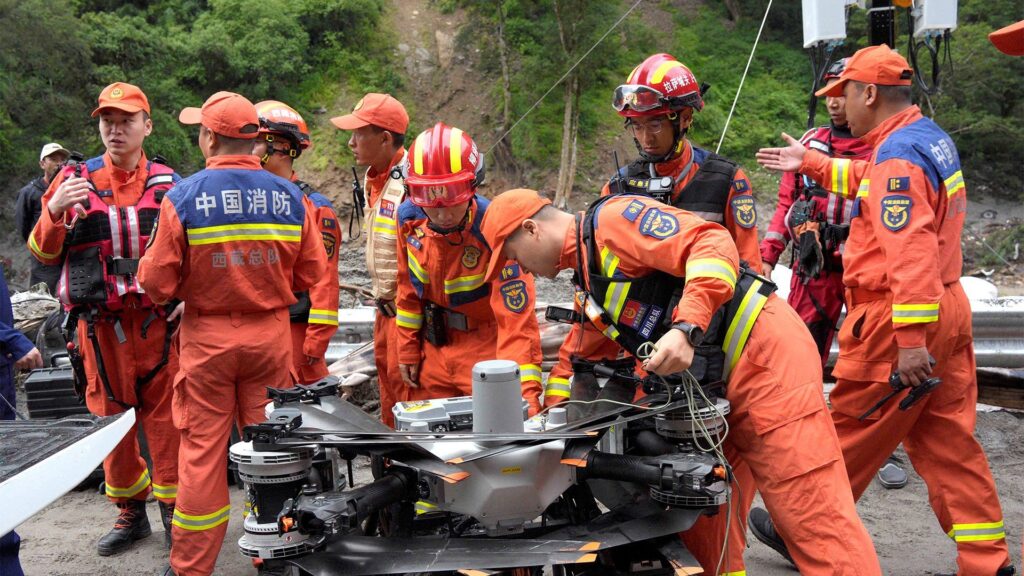
A severe mudslide originating from Nepal has caused significant destruction in areas of eastern China, particularly impacting the border town of Gyirong in Tibet. The catastrophic event has prompted an extensive emergency response from Chinese authorities.
Hundreds of military personnel have been deployed to the affected region to aid in rescue and relief operations. The Chinese army’s involvement underscores the seriousness of the disaster and the urgent need to assist the affected population.
Gyirong, located strategically at the border with Nepal, has become a focal point of rescue activities. The mudslide has not only caused substantial material damage but has also threatened the safety and lives of residents in the area.
Authorities are actively participating in search and rescue missions, attempting to locate missing individuals and provide immediate medical aid to the injured. The military’s logistical support is crucial for reaching remote and difficult-to-access areas impacted by the mudslide.
This natural disaster highlights the vulnerability of border regions to environmental hazards and the importance of coordinated emergency responses. It also emphasizes the need for enhanced monitoring and preventive measures in areas prone to landslides and other natural calamities.
Local government officials have issued warnings and are conducting risk assessments to mitigate further damage. Humanitarian agencies are coordinating relief efforts to supply necessary resources, including food, water, and shelter, to those displaced by the disaster.
The cross-border nature of the mudslide event, originating in Nepal and severely affecting Chinese territory, calls for cooperation between the two nations to improve disaster management strategies and aid delivery.
The incident is a somber reminder of the challenges posed by climate change and geological instability in mountainous regions. As rescue and recovery efforts continue, there is a concerted push to strengthen infrastructure resilience and enhance community preparedness against future incidents.
In summary, China’s rapid military deployment to Gyirong signifies a robust response to a tragic natural disaster caused by a mudslide originating in Nepal. The ongoing efforts showcase a commitment to ensuring the safety and recovery of affected populations while underscoring the critical need for cross-border collaboration and proactive risk management in vulnerable regions.