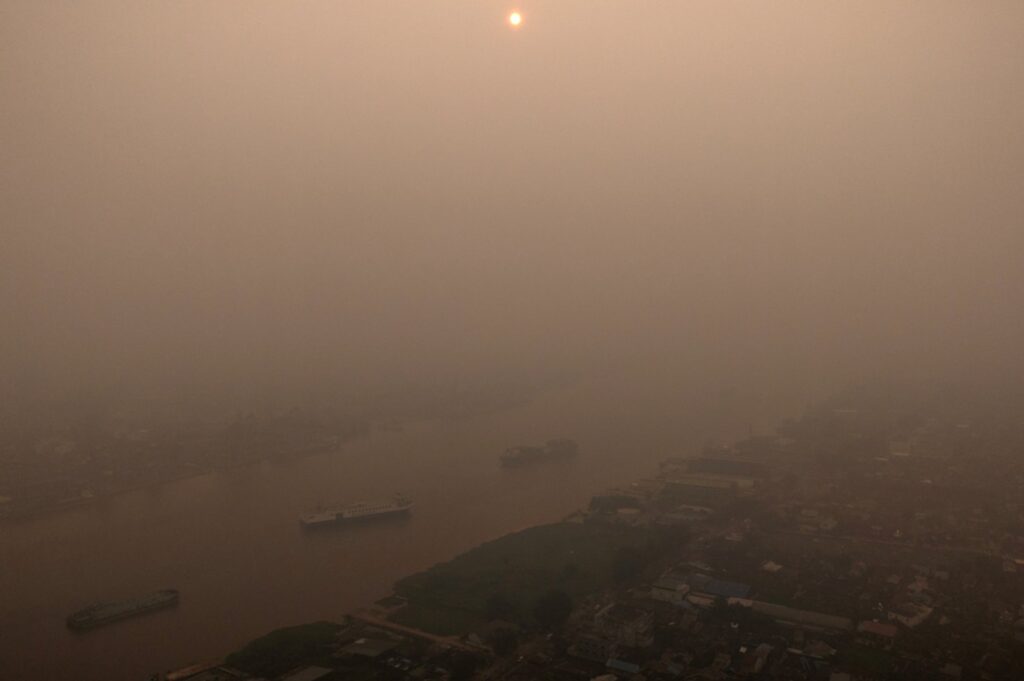
Al Jazeera’s Jessica Washington recently reported from an Indonesian clinic where children are receiving treatment due to respiratory difficulties caused by the ongoing wildfires. The wildfires have produced thick smoke that blankets large areas, severely impacting air quality and putting vulnerable populations, particularly children, at significant health risk.
In her report, Washington describes the distressing scenes inside the clinic where healthcare workers are overwhelmed with young patients struggling to breathe. The clinic is located in one of the regions most affected by the wildfire smoke, highlighting the urgent need for attention to this environmental and public health crisis.
Wildfires in Indonesia have been a recurring issue, often exacerbated by dry conditions and land-clearing practices. The resulting haze from the burning forests and peatlands spreads across vast areas, choking skies and creating hazardous conditions for millions.
Children are particularly susceptible to the smoke because their lungs are still developing, and they tend to have higher breathing rates than adults. Exposure to smoke and particulate matter can lead to severe respiratory problems including asthma attacks, bronchitis, and other lung infections.
Washington interviewed medical professionals who detailed the challenges they face, including a lack of adequate facilities and medical supplies to manage the surge of respiratory cases. Many children require immediate oxygen support and constant monitoring to prevent more serious health complications.
Local officials have been criticized for slow responses and inadequacies in addressing the wildfires and their consequences. Efforts to suppress the fires have been hindered by difficult terrain and ongoing dry weather conditions, complicating containment efforts.
Environmentalists warn that ongoing deforestation and peatland drainage contribute to the intensity and frequency of these fires. The haze not only affects Indonesia but also neighboring countries, leading to regional diplomatic tensions regarding cross-border air pollution.
Communities thus face a double burden: the health impacts from poor air quality and the economic toll from disrupted daily activities and reduced productivity. Schools in affected areas have been temporarily closed to protect children from exposure, but many children still suffer from smoke-related illnesses at home.
Washington’s on-the-ground reporting humanizes the crisis, showing real faces behind the statistics and highlighting the urgent need for coordinated regional action. She underscores that while emergency medical aid is vital, long-term solutions must focus on sustainable land management and stronger environmental protection laws.
The Indonesian government has pledged to enhance firefighting capabilities and strengthen policies to reduce land clearing by fire. International support and cooperation are also critical to combat this recurring environmental disaster.
This alarming situation serves as a reminder of the broader impacts of climate change and environmental degradation, disproportionately affecting vulnerable populations such as children. Increased awareness and action are essential to prevent further health crises linked to wildfire smoke.
Jessica Washington’s report shines a light on the human cost of Indonesia’s wildfires, calling for urgent attention to protect future generations from the devastating impacts of environmental neglect.