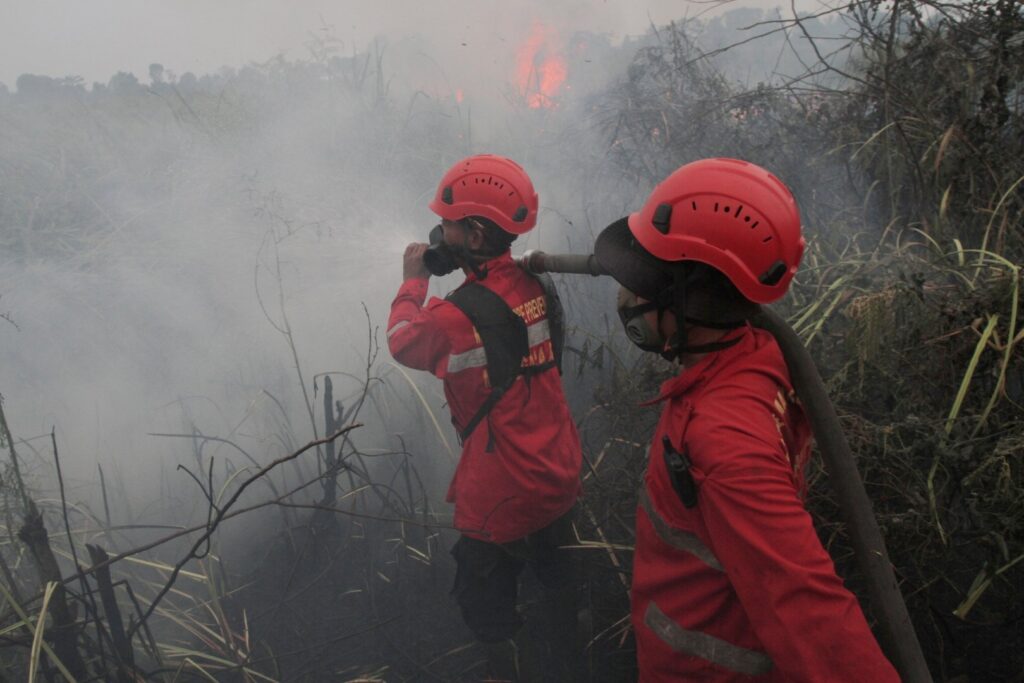
Indonesia’s Borneo Island is currently facing a severe environmental crisis as widespread wildfires engulf the region, turning the air toxic and posing significant health risks to local communities. These fires have resulted in plumes of thick smoke that have enveloped entire towns and villages, making it difficult for residents to breathe and carry out their daily activities.
The wildfires, which are believed to have been sparked by a combination of dry weather conditions and human activities such as slash-and-burn farming, have spread rapidly across the island’s forests and peatlands. Peatlands, which are rich in organic materials, produce dense, hazardous smoke when burned, exacerbating the air pollution problem.
Local health officials have reported a surge in respiratory issues among the population, including asthma, bronchitis, and other lung-related illnesses. Schools and businesses have closed temporarily in some areas as a precautionary measure to reduce exposure to the hazardous air.
Environmentalists warn that the damage to the island’s ecosystems could be long-lasting, with wildlife habitats destroyed and biodiversity threatened. The smoke from these fires also contributes to global carbon emissions, worsening the effects of climate change.
The Indonesian government has deployed firefighting teams and sought international assistance to control the blaze. However, the efforts face challenges due to the difficult terrain and the ongoing dry season, which has made the fires more persistent.
Meanwhile, communities are urged to take safety precautions such as wearing masks and staying indoors as much as possible to avoid the toxic haze. Aid organizations are working to provide medical support and distribute clean air masks to those most affected.
The situation highlights the urgent need for sustainable land management practices and stronger policies to prevent such disasters in the future. With the health and safety of millions at stake, coordinated action from the government, environmental groups, and local residents is critical to mitigating the impact of these devastating wildfires on Indonesia’s Borneo Island.