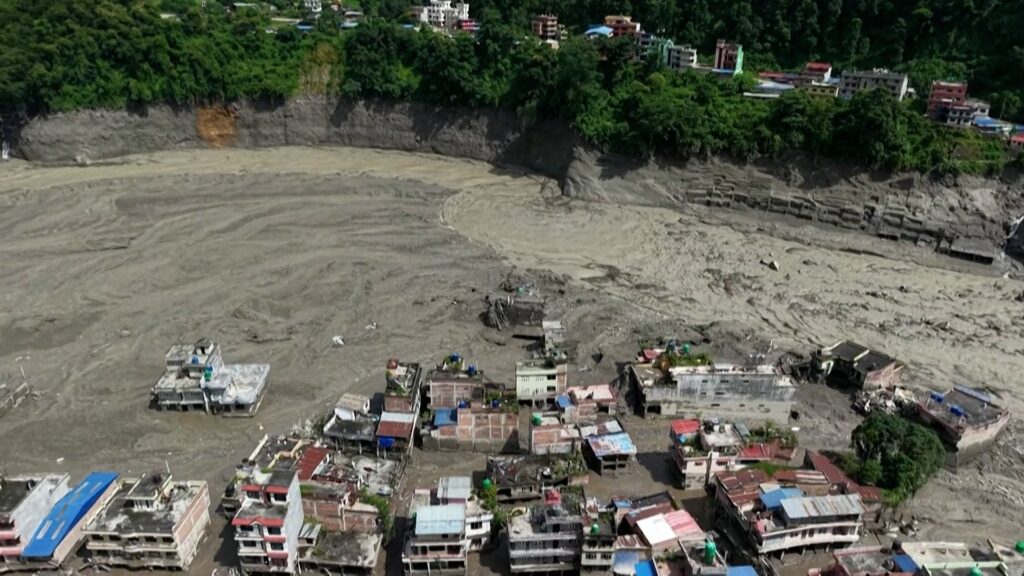
In a devastating natural disaster, flash floods struck parts of Nepal recently, causing widespread destruction and loss. Survivors of the flash floods have shared heart-wrenching accounts of how their homes were suddenly swept away as the landslide struck with little warning, leaving communities shattered.
Eyewitnesses describe the terrifying rush of water and mud cascading down the hillsides, engulfing everything in its path. Many residents recall the chaos of fleeing for safety, often with only moments to escape before their houses were demolished.
The affected areas experienced severe damage to infrastructure, homes, and farmland, compounding the challenges faced by survivors. Relief efforts are currently underway, with emergency teams working tirelessly to reach isolated communities and provide necessary aid.
Authorities have warned about the risks of monsoon-related landslides and flash floods, emphasizing the importance of early warning systems and community preparedness. Local governments are coordinating with national agencies to assess the damage and plan reconstruction.
The human stories emerging from this tragedy highlight the resilience of Nepalese communities in the face of natural calamities. Despite losing their homes and possessions, survivors express hope and determination to rebuild their lives.
This disaster underscores the urgent need for enhanced infrastructure and disaster management strategies in flood-prone regions of Nepal. Experts advocate for improved forecasting technologies and sustainable land-use planning to mitigate future risks.
As rescue operations continue, the international community has pledged support to aid the affected populations. Humanitarian organizations are mobilizing resources to deliver food, shelter, and medical supplies to those impacted.
The flash floods serve as a grim reminder of the vulnerability of mountainous regions to sudden environmental hazards, prompting calls for increased investment in resilience and adaptation measures.
Moving forward, it is crucial for all stakeholders to collaborate in developing comprehensive approaches to disaster risk reduction, ensuring that communities are better equipped to withstand such events. The stories of the survivors will remain central to guiding these efforts, inspiring action and solidarity across Nepal and beyond.