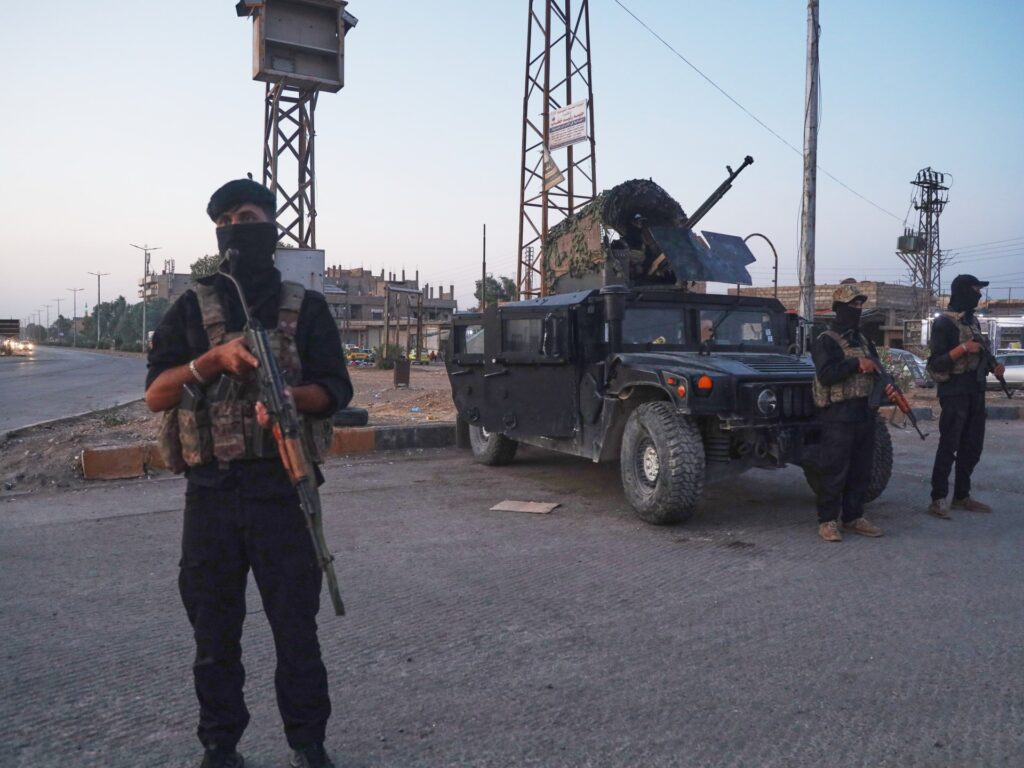
The recent dissolution of the Kurdish-led Syrian Democratic Forces (SDF) marks a significant milestone in Syria’s ongoing efforts to restore national unity and consolidate military command under Damascus. This move has been hailed by the Syrian government as a major victory, symbolizing progress in overcoming the fragmented military landscape that has characterized the country amidst years of conflict.
The SDF, which has been a dominant armed coalition primarily composed of Kurdish fighters, has played a pivotal role in the fight against ISIS and in controlling large swathes of northeastern Syria. Their dissolution is seen not only as a political win for the Syrian regime but also as a potential step towards reasserting control over previously semi-autonomous Kurdish regions.
However, the reality on the ground presents a more complicated picture. Despite the formal disbanding of the SDF, several critical questions remain about the actual unification of Syria’s military forces. Central among these is who controls these formerly SDF-held troops and whether they have been effectively integrated into the Syrian Arab Army’s command structure.
Reports indicate that while the SDF disbandment signals a nominal alignment with Damascus, many fighters may retain significant autonomy, complicating the chain of command. The deployment strategies and loyalty of these fighters also remain ambiguous, raising concerns about the Syrian government’s true ability to wield exclusive military authority in the northeast.
Moreover, the Kurdish political leadership and affiliated groups have expressed wary optimism, emphasizing that operational and political autonomy are crucial for their communities’ safety and governance. Hence, the transformation from a de facto independent military force to a faction within the Syrian national army is not without friction and imperfections.
The implications of these developments go beyond military command. They touch on ethnic, political, and territorial issues in a multi-faceted post-conflict Syria where diverse groups seek security guarantees and representation. Integration of the SDF forces is seen as a test for the Damascus government’s broader strategy to reintegrate war-torn regions and restore sovereign control.
In addition, there are concerns about how external players, including the United States and Turkey, who have historically supported or opposed the SDF, will react to the changing dynamics. Their influence could affect the stability of agreements and the future security landscape.
In conclusion, while the Kurdish-led SDF’s dissolution is undeniably a symbolic milestone favoring Syrian government efforts at military unity, real operational challenges persist. The formal disbanding does not yet equate to full military unification or command integration. Much remains to be seen about how effectively Damascus can manage these forces and through what mechanisms ultimate military and political harmony can be achieved across Syria’s diverse society and regional factions.