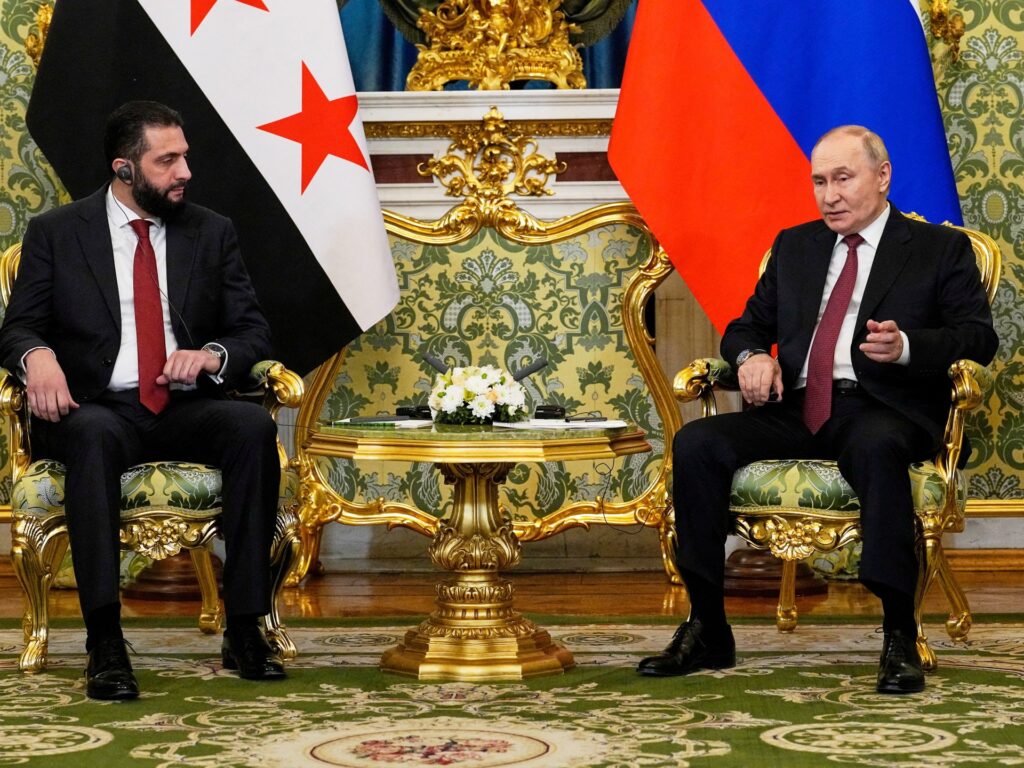
In recent developments concerning the geopolitical landscape of the Middle East, Russian President Vladimir Putin and Syrian Deputy Prime Minister Walid al-Sharaa engaged in high-level discussions about the bilateral relations between Russia and Syria. The main focus of the talks was on the status and future of Russia’s military bases in Syria, specifically the Khmeimim airbase and the naval facility at Tartous.
These two military installations have played pivotal roles in Russia’s support of the Assad regime during the Syrian civil conflict. The bases have not only facilitated Russian military operations but also acted as strategic footholds for Russia in the Mediterranean region. Since the outset of Russia’s involvement in Syria in 2015, Khmeimim and Tartous have allowed Moscow to extend its influence and aid the Syrian government militarily.
The ongoing negotiations aim to define the terms and conditions under which these bases will continue to operate. Syria seeks to secure arrangements that respect its sovereignty while benefiting from Russia’s military presence. At the same time, Russia is eager to maintain and possibly expand its access to these bases to sustain its regional influence.
Analysts highlight that these talks are crucial for the future dynamics of Russia-Syria relations, especially amid the changing political and military situation in the region. The fate of the Khmeimim and Tartous bases will likely impact Syria’s ability to stabilize under Assad’s rule and Russia’s ability to project power into the Middle East.
This dialogue also underscores Russia’s commitment to remain a key ally of Syria, signaling that Moscow continues to back the government against various opposition forces. The strategic importance of these bases cannot be overstated, as they serve as essential hubs for Russian military logistics, training, and air operations.
The discussions come at a time when Syria is recovering from years of conflict, with efforts focused on reconstruction and the reestablishment of authority across the country. The agreement on the bases will be a significant step toward strengthening the Syria-Russia alliance, potentially leading to increased economic and military cooperation.
Observers note that the dialogue might also set a precedent for how Russia manages its foreign military assets around the globe, balancing influence with respect for host countries’ sovereignty. Both leaders are expected to reach a comprehensive deal that solidifies Russia’s military commitment while aligning with Syria’s strategic interests.
In summary, the talks between Putin and al-Sharaa mark a pivotal moment in Russia-Syria relations, addressing the future of key military installations that have been instrumental in supporting the Assad regime. The agreements reached will have far-reaching consequences for regional stability and Russia’s strategic posture in the Middle East.