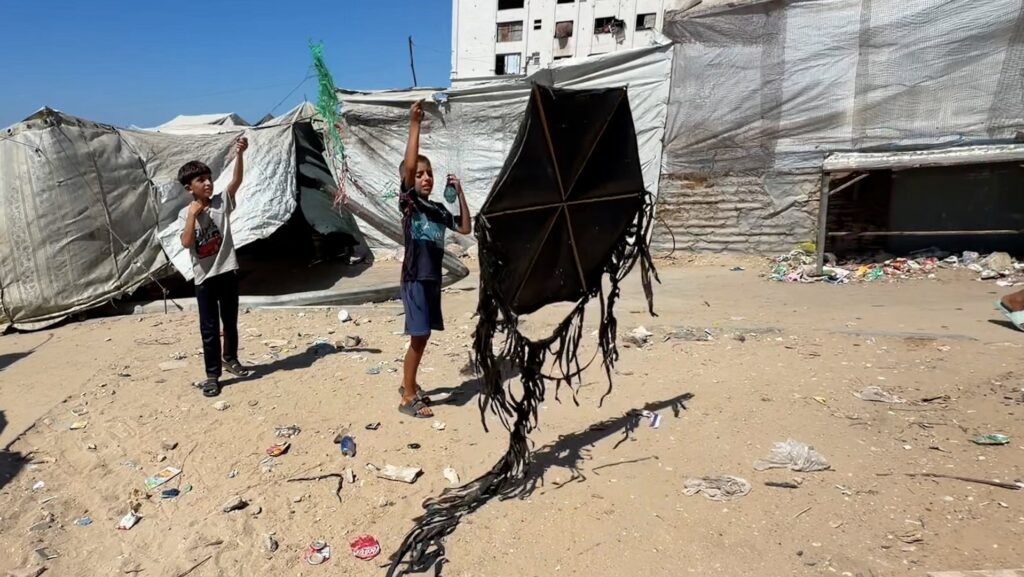
In the Gaza Strip, a place where childhood often struggles against the backdrop of conflict, a simple joy like flying kites has become fraught with fear and uncertainty. Children like a 10-year-old boy who traditionally spends his days crafting colorful kites now find themselves scared to engage in this innocent pastime. This shift comes after Israeli authorities issued warnings that flying kites could be treated as acts of war, drastically altering the perception and consequences of what was once a harmless activity.
The boy, who has been making kites for several years, described his fear and confusion. Kite flying, a cherished tradition among many children in Gaza, symbolizes freedom and hope — elements increasingly scarce amid the ongoing tensions in the region.
The Israeli threat to classify kite flying as a hostile act stems from concerns that kites have been used in past protests and could potentially carry incendiary devices, causing fires and damage across the border in Israeli communities. However, this stance has sparked significant anxiety among Gaza’s populace, especially children who do not understand the political implications and simply seek moments of normalcy.
Families in Gaza report that children’s everyday activities are heavily impacted, with parents vigilantly discouraging their children from kite flying despite the enrichment it provides in their lives. This caution highlights the broader climate of fear and uncertainty pervading civilian life in Gaza, where basic freedoms are curtailed amid ongoing conflict.
Human rights advocates and international observers have expressed concern over the militarization of such a common and peaceful activity. They argue that labeling kite flying as an act of war exacerbates tensions and further restricts the rights of Gaza’s residents, particularly its youth, who are disproportionally affected by the conflict.
Despite the threats, some children and families continue to find ways to keep kite flying alive, using it as a symbol of resilience and defiance in the face of adversity. Community groups have occasionally organized safe spaces and events where children can fly kites under supervision, emphasizing the importance of maintaining cultural traditions even amidst hardship.
This development sheds light on the broader challenges in Gaza, where daily life is continuously interrupted by political and military struggles. The situation draws attention to the need for renewed dialogue and solutions that consider the welfare and rights of Gaza’s civilian population, particularly its youngest members.
Experts suggest that protecting children’s right to play and engage in cultural traditions is crucial for mental health and community cohesion, especially in conflict zones. Suppressing these activities, intentionally or unintentionally, can deepen the trauma experienced by young generations growing up in such difficult environments.
As this fearful climate around kite flying unfolds, it symbolizes a deeper loss of normal childhood experiences for the youth in Gaza. The simple act of flying a kite, once a source of joy and creativity, has become a poignant reminder of the impact of conflict on everyday life and the innocence of childhood lost amid decades of strife. Addressing these small but powerful facets of life in Gaza is essential for any meaningful progress toward peace and stability in the region.