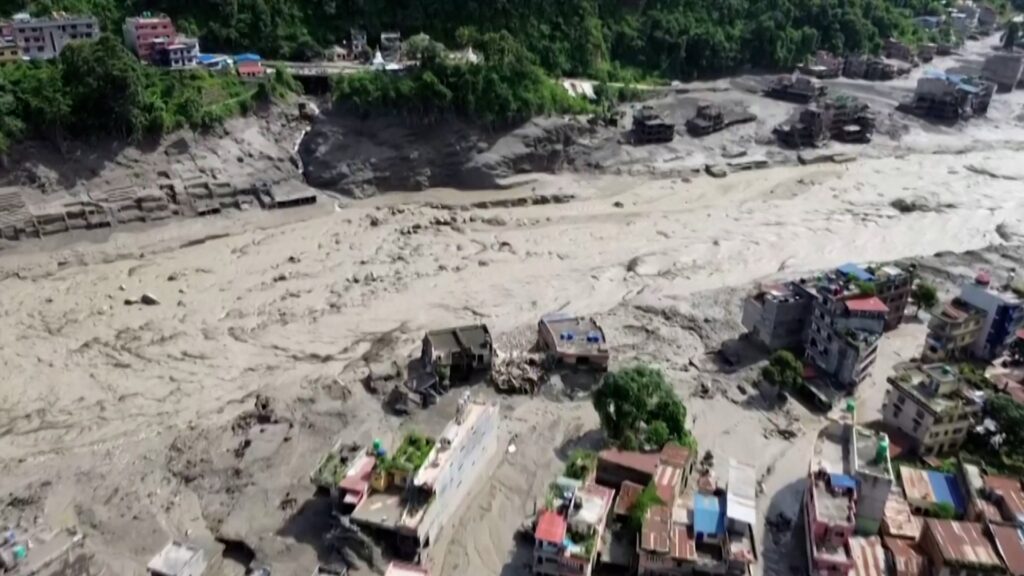
Northern Nepal has been hit by devastating flash floods, resulting in the tragic loss of at least eight lives and the destruction of numerous homes. These sudden and intense floods have caused widespread damage across the affected areas, leaving communities struggling to cope with the aftermath.
The flash floods were triggered by heavy and continuous rainfall, which overwhelmed rivers and drainage systems, leading to rapid water surges through valleys and settlements. Residents in low-lying regions were particularly vulnerable, with the torrents sweeping away houses, infrastructure, and agricultural lands.
Emergency services and local authorities are actively engaged in rescue and relief operations. They are working to reach stranded individuals, provide medical assistance to the injured, and deliver essential supplies to those displaced by the floods. However, challenging terrain and ongoing rainfall have hampered these efforts.
This incident highlights the increasing risks posed by extreme weather events in mountainous regions like northern Nepal. Climate change is believed to be intensifying the frequency and severity of such disasters, making preparedness and disaster management more crucial than ever.
Authorities are urging residents to stay alert and follow safety advisories. They also emphasize the need for long-term measures to improve infrastructure resilience and early warning systems to mitigate future disasters.
As rescue teams continue their work, the focus remains on saving lives and providing immediate relief to affected communities, while the government and aid organizations plan for rehabilitation and reconstruction in the flood-hit areas.