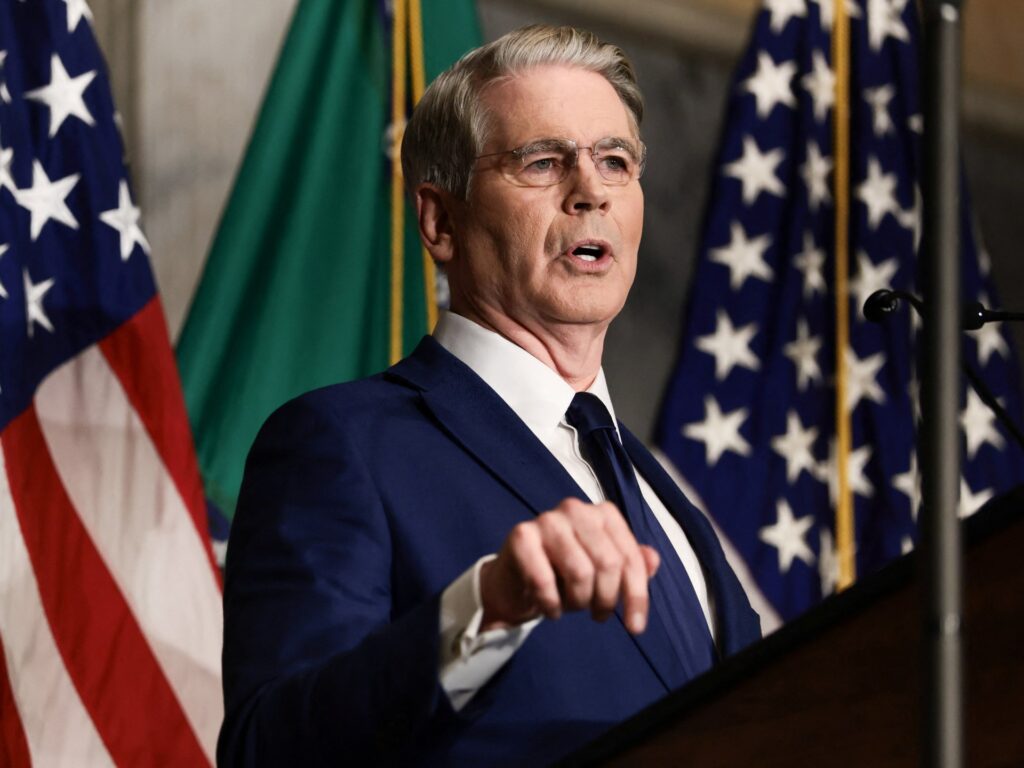
In a decisive move aimed at crippling Iran’s economic capabilities, the United States has launched what Treasury Secretary Scott Bessent has dubbed ‘D-Day sanctions.’ These measures represent a significant escalation in the US government’s ongoing efforts to choke off Iran’s revenues and isolate the country economically on the global stage.
The sanctions, announced in a high-profile statement, are designed to target Iran’s primary sources of income, including oil exports, financial transactions, and key sectors that sustain its economy. By implementing these stringent financial restrictions, the US aims to exert maximum pressure on Iran’s leadership, thereby limiting the country’s ability to fund activities deemed destabilizing in the region.
Secretary Bessent emphasized that this phase of sanctions would intensify the chokehold on Iran’s economic lifeline. “We are committed to using all available tools to cut off the flow of revenue to Iran, forcing a change in its behavior and isolating it from the international community,” he declared.
The ‘D-Day sanctions’ terminology underscores the tactical significance of this operation, suggesting a coordinated and comprehensive approach resembling a military campaign in its scale and intent. It reflects the urgency and gravity with which the US views Iran’s economic activities in connection with security concerns.
These measures are expected to impact not only Iranian state-owned enterprises but also foreign companies and financial institutions that conduct business with Tehran. The US Treasury has warned these entities of severe consequences should they continue engagements that violate the new sanctions regime.
International reaction to the sanctions has been mixed, with some allies expressing support for the US’s assertive stance, while others caution about the potential economic repercussions and the need for diplomatic solutions.
Analysts suggest that while the sanctions may significantly strain Iran’s economy, their success largely depends on multinational cooperation and Iran’s response to these pressures. The Iranian government has previously condemned US sanctions as unlawful and vowed to circumvent them.
The economic ramifications for the Iranian populace are also a concern, with reports indicating rising inflation and shortages of essential goods as direct consequences of tightened sanctions.
This latest chapter in US-Iran relations underscores a pattern of confrontation, with economic sanctions as a primary tool for influencing Tehran’s policies. The ‘D-Day sanctions’ represent a strategic escalation, signaling the US’s intent to leave no avenue open for Iran to sustain its economic interests without repercussions.
As the situation develops, global markets and geopolitical analysts will closely monitor the effectiveness of these sanctions and their broader implications on regional stability and international relations.
In summary, the US’s launch of ‘D-Day sanctions’ against Iran marks a pivotal step in its strategy to isolate Iran economically and curtail its revenue streams, heightening tensions while reinforcing the US commitment to a tough stance on Iranian economic and security activities.