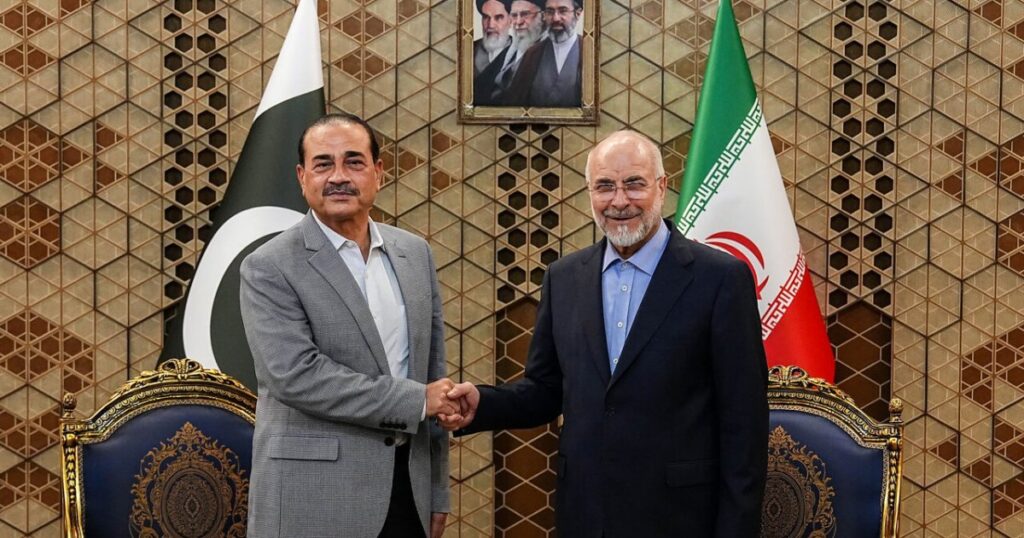
Pakistan’s army chief has resumed his crucial visit to Iran, aiming to act as a mediator in the ongoing deadlock in peace talks involving Tehran and Washington. This diplomatic move comes as both sides struggle to find common ground amidst heightened regional tensions and long-standing political disagreements.
Pakistan has positioned itself as a potential communication bridge between Iran and the United States, leveraging its unique geopolitical stance and longstanding relations with both countries. The move to send the army chief, known for his strategic expertise and influence, signals Islamabad’s commitment to fostering dialogue and exploring avenues for conflict resolution.
Experts, however, present mixed views regarding Pakistan’s actual influence over the two major players. While some believe that Pakistan’s bilateral ties could facilitate dialogue and reduce misunderstandings, others argue that the complex nature of Iran-U.S. relations limits Islamabad’s ability to effect meaningful change.
The deadlock in peace talks largely revolves around issues related to nuclear agreements, economic sanctions, and regional security dynamics. Each party has voiced skepticism over the other’s intentions, with diplomatic negotiations frequently interrupted by political developments and mistrust.
Pakistan’s role in this matrix is multifaceted; it shares borders with Iran, has historical cultural ties, and maintains military and economic connections with both Iran and the U.S. This positions Pakistan uniquely, especially as a trusted intermediary who could potentially help de-escalate tensions.
During the army chief’s visit, the focus lies on establishing a communication channel that might bypass traditional diplomatic hurdles. Islamabad hopes to encourage Tehran and Washington to reengage constructively, potentially easing sanctions and opening new negotiations on contentious points.
However, analysts caution that the path to peace is fraught with challenges. Iran’s strategic interests and United States’ foreign policy objectives are deeply entrenched, making swift progress unlikely without significant concessions from both sides. Moreover, external influences from other regional actors add layers of complexity to the process.
The visit also underscores Pakistan’s broader strategic goals in the region. By stepping into a mediator role, Pakistan seeks to enhance its regional diplomatic profile and assert itself as a peace broker in an unstable environment.
Beyond the immediate peace talks, the initiative could pave the way for stronger regional cooperation on issues like counterterrorism, trade, and energy security, benefiting all parties involved.
In conclusion, while Pakistan’s army chief’s visit to Iran marks a hopeful attempt to break the peace talks deadlock, the ultimate outcome hangs in balance amid deeply rooted geopolitical tensions. Whether Pakistan can leverage its position to foster meaningful dialogue remains to be seen, but its involvement certainly adds a nuanced dynamic to the complex regional landscape.