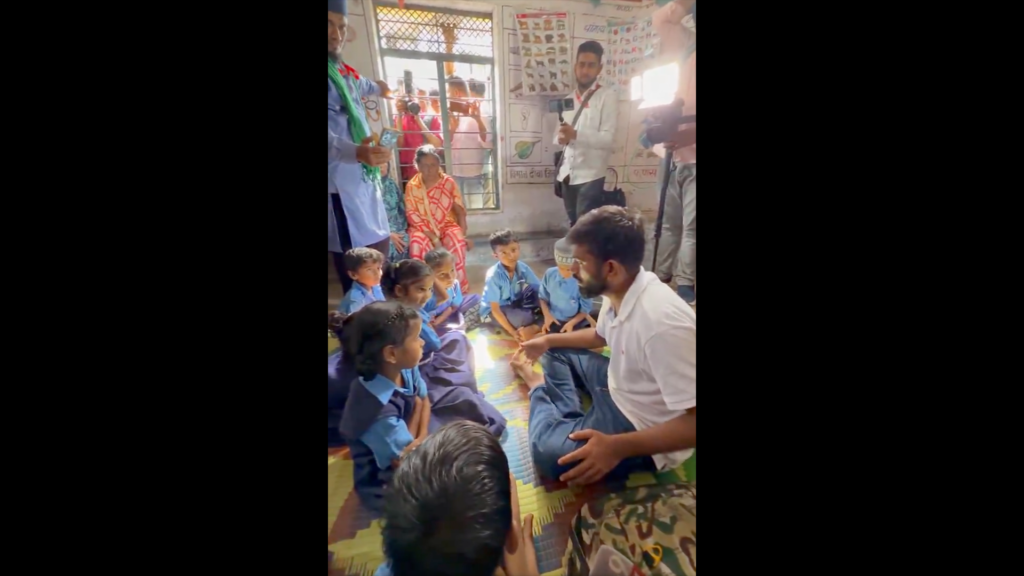
In India, the Cockroach Janta Party’s (CJP) ‘Fix the Schools’ campaign has triggered significant backlash from the ruling Bharatiya Janata Party (BJP) and its supporters. This movement, which advocates urgent reforms in the country’s education system, has gained traction among citizens concerned about deteriorating school conditions and the quality of education provided.
The campaign highlights multiple issues plaguing Indian educational institutions, including insufficient infrastructure, teacher shortages, outdated curricula, and the uneven distribution of resources between rural and urban schools. By amplifying the voices of students, parents, and educators demanding better facilities and learning environments, the CJP seeks to push the government toward meaningful change.
However, the campaign’s growing popularity has not been welcomed by the BJP leadership, who view it as a political challenge and a threat to their narrative of progress under Prime Minister Narendra Modi. BJP members have dismissed the CJP’s efforts, labeling them as disruptive and politically motivated antics designed to undermine the government’s achievements.
Supporters of the BJP have actively engaged in online and offline campaigns to discredit the Cockroach Janta Party and its activists. Social media platforms have seen increased polarization, with pro-government voices accusing the campaigners of spreading misinformation and fomenting dissent.
The conflict underscores the broader struggle between grassroots movements pushing for social and systemic reform and the political establishment’s efforts to maintain control over the national discourse. While the BJP emphasizes its initiatives aimed at improving education, critics argue that such measures are superficial and fail to address deep-rooted problems.
Educational experts suggest that genuine reform requires bipartisan cooperation and a commitment to transparency and accountability. They call for increased investment in public schools, teacher training programs, and curriculum updates that reflect contemporary needs.
As the ‘Fix the Schools’ campaign continues, it reflects a growing frustration among Indian citizens who demand tangible improvements in the education sector. Whether the government’s resistance will lead to constructive policy dialogue or further suppression of dissent remains to be seen.
This tussle between the Cockroach Janta Party and the BJP signals a critical moment in India’s democratic fabric, where issues of education, governance, and citizen participation are fiercely contested. The outcome could set a precedent for how social movements and government interact in the world’s largest democracy moving forward.