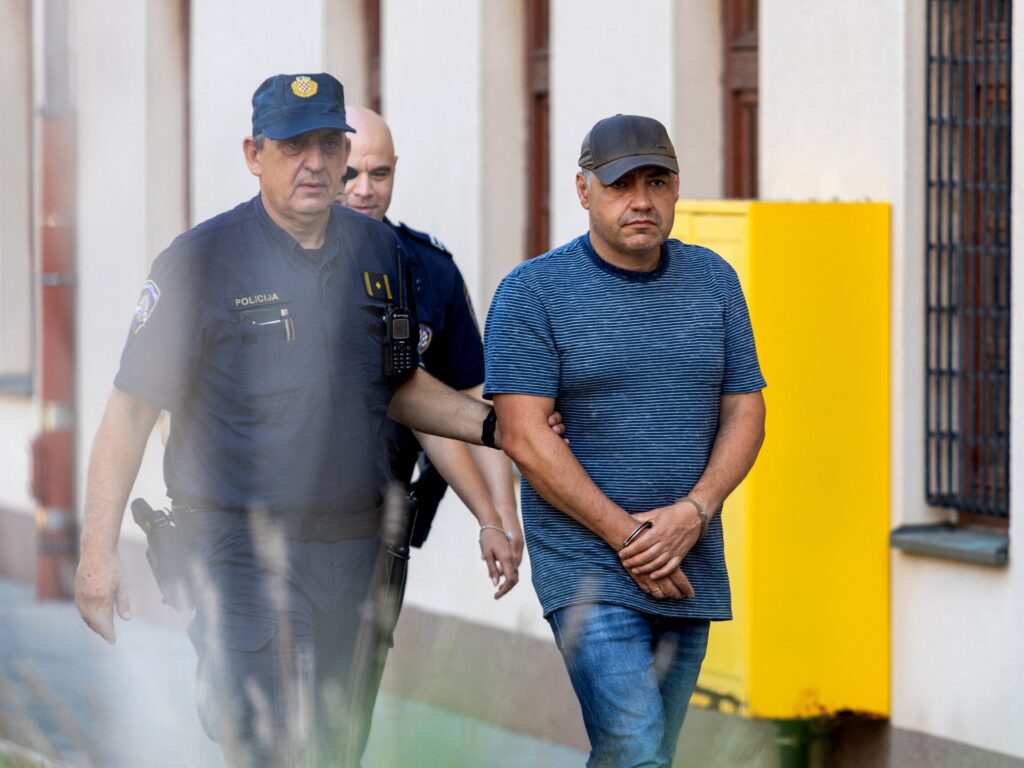
The recent allegations by German authorities have thrust Volodymyr Zhuravlev, a Ukrainian scuba diver, into the global spotlight. Accused of involvement in the Nord Stream pipeline explosions, Zhuravlev’s background and the charges against him raise many questions about the complex geopolitical undercurrents that surround this case.
Volodymyr Zhuravlev is reportedly a professional scuba diver from Ukraine. According to German investigations, he is suspected of playing a pivotal role in the sabotage of the Nord Stream pipelines, which are critical conduits for transporting natural gas from Russia to Europe. The explosions, which caused significant damage to the underwater infrastructure, have escalated tensions between various nations and sparked diplomatic controversies.
The Nord Stream pipelines are vital to Europe’s energy supply, carrying billions of cubic meters of natural gas annually. The series of explosions disrupted the supply and threatened energy security across the continent, prompting a thorough investigation by multiple countries. German authorities have pointed to Zhuravlev as a key suspect, citing intelligence and evidence linking him to the underwater acts of sabotage.
Beyond being identified as a scuba diver, public knowledge of Zhuravlev’s personal and professional life remains scarce. Reports indicate that he has some connections with Hollywood, referring to him as a fixer in that milieu. This detail adds a curious layer to his profile, suggesting he might have operated in diverse environments, from underwater missions to the entertainment industry.
Experts believe that Zhuravlev’s skills as a diver would have been critical for navigating the challenging underwater terrain where the sabotage took place. The explosives were placed strategically on the pipelines, an operation requiring both professional diving expertise and operational planning).
The geopolitical implications of the Nord Stream sabotage are profound. The pipelines symbolize not only an energy link but also a geopolitical instrument influencing relations between Russia, Ukraine, and Europe. The accusation against a Ukrainian diver fuels further speculation about the involvement of state or non-state actors, potentially destabilizing an already volatile situation.
German investigators continue to gather evidence and cooperate with international agencies to clarify Zhuravlev’s exact role. Meanwhile, his alleged participation in the sabotage has cast a shadow over his personal narrative, transforming him from a relatively unknown professional diver into a figure at the crossroads of espionage, international conflict, and energy politics.
In summary, Volodymyr Zhuravlev is at the center of one of the most significant sabotage investigations in recent European history. From a skilled Ukrainian scuba diver to a suspect in a high-profile attack on the Nord Stream pipeline, his story is intertwined with global tensions and complex international relations. As the investigation unfolds, the world watches closely, hoping for clarity on what remains one of the most puzzling incidents affecting Europe’s energy infrastructure.