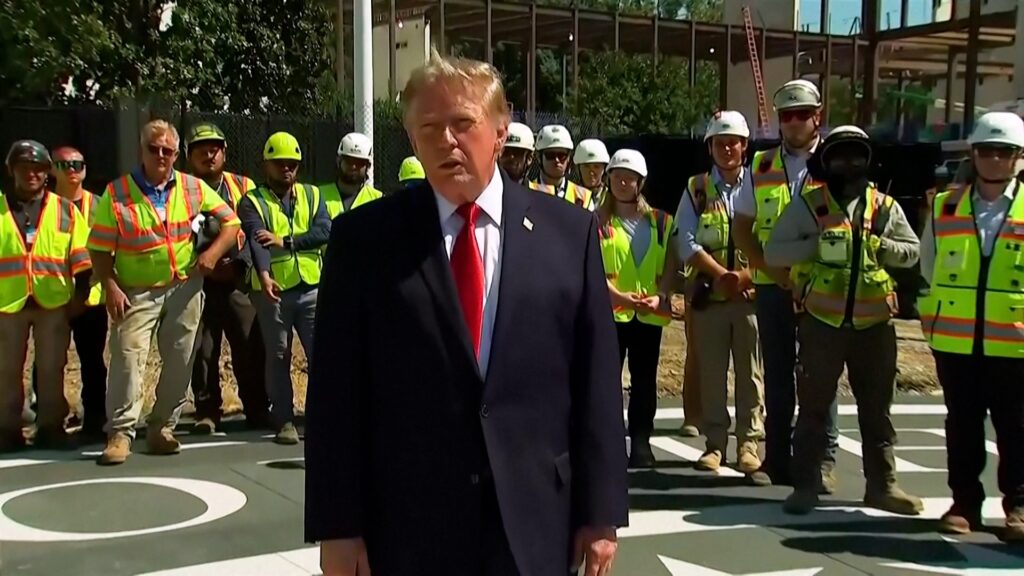
US President Donald Trump has publicly expressed his intention to meet with North Korean leader Kim Jong Un later this year. Trump praised the relationship he has built with Kim, indicating a continued effort toward diplomatic engagement between the United States and North Korea. This announcement marks another significant moment in the evolving interactions between the two nations, which have historically been marked by tension and conflict.
The prospect of a meeting between President Trump and Kim Jong Un signals ongoing attempts to address critical issues such as North Korea’s nuclear program and regional security. Both leaders have, in past summits, highlighted the importance of dialogue and negotiation, aiming to reduce hostilities and potentially pave the way for peace and stability on the Korean Peninsula.
Trump’s comments underscore a notable shift in US foreign policy toward North Korea, focusing on direct communication at the highest levels of government. This approach contrasts with prior strategies that relied heavily on sanctions and international pressure.
The international community is watching closely as these developments unfold, hopeful that the dialogues will lead to meaningful progress in denuclearization efforts and improved bilateral relations. However, challenges remain, including verifying commitments made by North Korea and ensuring that any agreements reached are sustainable and enforceable.
As the year progresses, anticipation builds around the timing, location, and agenda of the proposed meeting. Both countries have much to gain from a successful summit, but also face significant hurdles that will require careful negotiation and mutual trust.
This planned engagement exemplifies a broader trend toward using diplomacy and person-to-person leadership interactions to resolve complex geopolitical issues. Regardless of the outcomes, President Trump’s announcement is a clear message of intent to keep channels of communication open with North Korea and to seek peaceful solutions through dialogue rather than conflict.