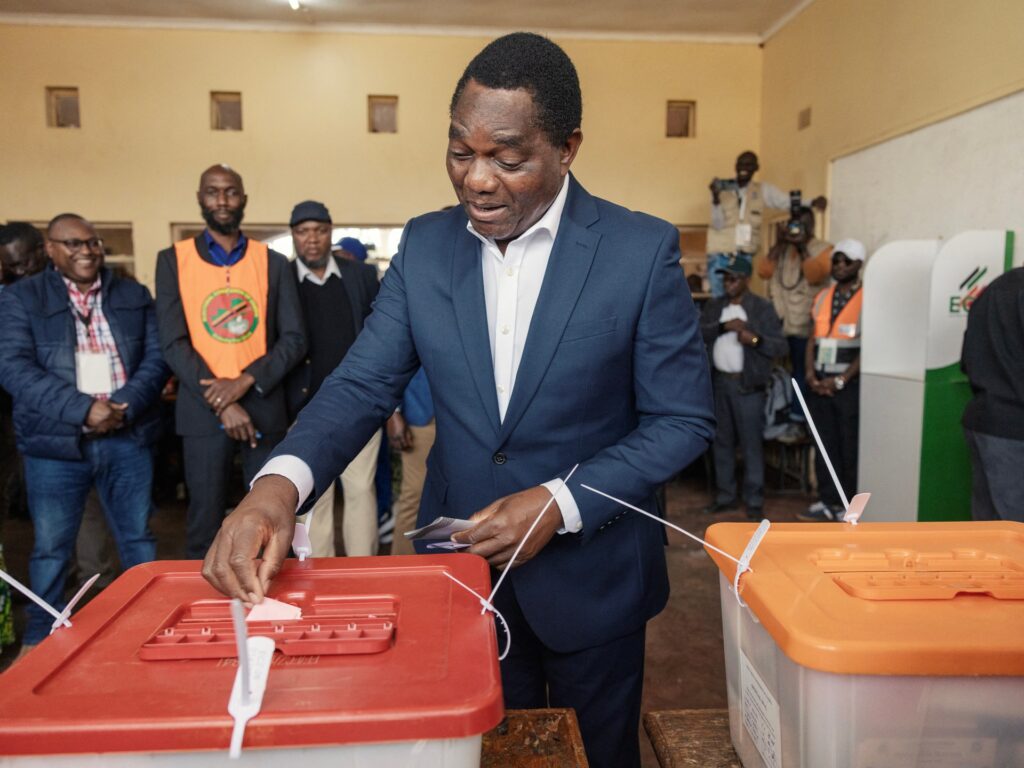
Zambia’s President Hakainde Hichilema has secured a decisive victory in the recent presidential election, winning a second term in office. According to the official results, Hichilema received around 60 percent of the votes, while his main challenger garnered only about 38 percent. This outcome demonstrates significant support for Hichilema’s leadership and policies among the Zambian electorate.
The election underscored the country’s ongoing democratic process, with citizens turning out in large numbers to express their choice. President Hichilema, who first took office in 2021, has been recognized for his efforts to stabilize Zambia’s economy and promote good governance. His administration has focused on combating corruption, encouraging foreign investment, and improving public services.
The challenger’s 38 percent share shows a considerable minority of voters favored an alternative direction, indicating a competitive political environment within Zambia. However, the wide margin of victory suggests that most voters are aligned with President Hichilema’s vision for the country’s future.
President Hichilema’s re-election marks a continuation of his agenda to foster national unity and enhance Zambia’s economic resilience amid global challenges. Observers note that his government has taken steps to improve fiscal discipline and infrastructure development, which have contributed to positive economic signals.
Political analysts see this electoral result as a mandate for sustained reforms and consolidation of democratic gains in Zambia. The peaceful election process and acceptance of results by opposition parties further reaffirm the country’s commitment to democratic norms.
President Hichilema’s second term is expected to focus on deepening social welfare programs, expanding job opportunities, and strengthening diplomatic relations in the region. The administration aims to tackle poverty and inequality through inclusive policies that benefit all Zambians.
International reactions to the election have largely been positive, with congratulatory messages emphasizing the importance of continuity and political stability. Donor agencies and regional partners have expressed optimism about continued collaboration under President Hichilema’s leadership.
Looking ahead, the government faces challenges such as managing public debt and navigating economic uncertainties. Nonetheless, the clear electoral mandate provides a solid foundation for strategic planning and policy implementation.
In summary, Zambia’s presidential election results confirm Hakainde Hichilema’s popular standing and open the door for another five years of his administration’s initiatives. His victory is seen as a vote of confidence in his leadership and a hopeful sign for Zambia’s progress and development.