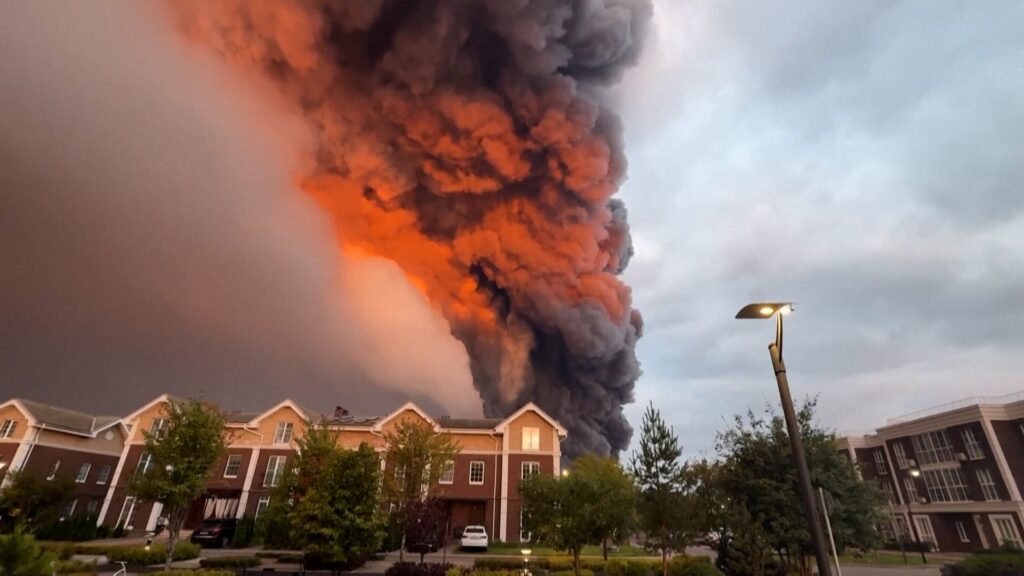
In a significant escalation of drone warfare, Ukraine launched one of its largest drone attacks on Russia, sending hundreds of drones across Russian airspace. According to Moscow, Russian air defense systems successfully intercepted and shot down 822 drones during this massive offensive.
The scale of the attack is unprecedented, marking the largest known drone strike by Ukraine against Russian targets to date. The drones targeted strategic locations, including military installations and critical infrastructure. Among the key impacts was an attack on a Wildberries logistics hub, a major supply chain node within Russia.
The assault resulted in at least six confirmed fatalities, highlighting the deadly potential of unmanned aerial assaults in modern conflicts. Damage to infrastructure and logistical operations was significant, disrupting supply chains and causing operational challenges.
Russian defense officials emphasized the effectiveness of their air defense capabilities, with Moscow’s statement noting the high interception rate of the incoming drones. Despite this, the sheer number of drones involved indicated a considerable logistical and technological effort from Ukraine.
The use of drones signals a shift in warfare tactics, with unmanned vehicles playing an increasingly pivotal role in reconnaissance, targeted strikes, and psychological warfare. These attacks have intensified tensions, with Russia vowing to bolster its defenses against future drone incursions.
Ukraine’s deployment showcased their growing drone technology and demonstrated their strategic intent to disrupt Russian military and economic assets beyond traditional battlefield engagements. Analysts suggest that this drone offensive might represent a new phase in the conflict, emphasizing asymmetric warfare capabilities.
The international community has expressed concern over the escalation, urging restraint and calling for dialogue to prevent further civilian casualties and infrastructure damage. Both sides appear to be preparing for continued drone-related confrontations, setting the stage for a technological arms race in aerial combat domains.
This incident underscores the evolving nature of warfare, where drone technology is becoming a critical component of military strategy. The large-scale drone attack and the corresponding defense response will likely influence future conflict dynamics in the region and beyond.