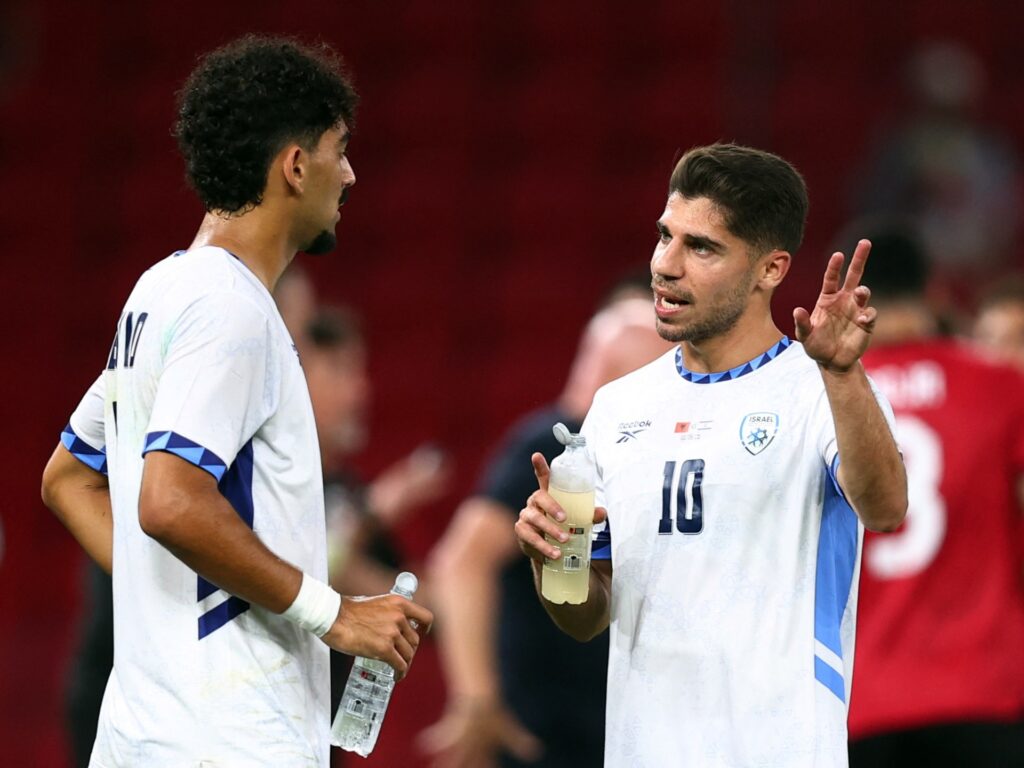
In recent football news, West Ham United’s decision to sign Manor Solomon, a 27-year-old Israeli player, has sparked significant controversy among pro-Palestine football fans. Solomon, who has been vocal in defending Israel during the ongoing conflict in Gaza, finds himself at the center of a heated debate that transcends sports.
Manor Solomon is an accomplished footballer known for his skills on the pitch. However, his public stance on the Israel-Gaza conflict has provoked strong reactions from various segments of the global football community, particularly among fans who support the Palestinian cause. These fans view Solomon’s signing as a political statement or at least a move that ideologically misaligns with their views on the existing humanitarian crisis.
The situation arises amid reports of escalating violence in Gaza, where thousands of lives have been affected. Pro-Palestine advocates see the conflict as a severe humanitarian crisis, often using terms such as “genocide” to describe the events occurring in the region. Solomon’s explicit defense of Israel has thus been perceived as dismissive of this perspective.
West Ham’s management has faced pressure from supporters and activists urging the club to reconsider the signing or at least publicly address the concerns related to Solomon’s political statements. The club has so far maintained that football should remain separate from politics, focusing instead on Solomon’s contributions as a player.
This debate highlights the broader intersection of sports and politics, a space where athletes’ views and affiliations can lead to divided public opinion. Throughout history, football clubs and players have often found themselves negotiating the complexities of global issues, from political conflicts to social justice movements.
Some fans have taken to social media platforms to express their dismay, organizing campaigns and hashtags that call attention to Solomon’s support for Israel amid the Gaza crisis. They argue that sports figures have a responsibility to be mindful of the impact of their public statements in such sensitive times.
Conversely, other supporters of West Ham and neutral observers contend that personal political beliefs should not overshadow professional abilities, urging fans to separate the athlete’s role on the team from their political opinions.
The controversy surrounding Manor Solomon exemplifies the challenges football clubs face in navigating player signings amidst geopolitical tensions. As the conflict in Gaza continues to dominate international headlines, the sports world finds itself involuntarily drawn into these discussions.
West Ham’s decision spotlights how athlete activism and political expressions are increasingly influencing fan dynamics and club reputations. It also raises questions about the extent to which sports entities should engage with or distance themselves from political issues.
In conclusion, the signing of Manor Solomon by West Ham United is more than just a sports transfer; it mirrors ongoing global conflicts and the ways in which sports and politics intertwine. The reactions from pro-Palestine fans underscore the power of football as a platform not only for entertainment but also for expressing broader social and political concerns. As this situation evolves, it remains to be seen how West Ham and Solomon will address these complex and sensitive issues moving forward.