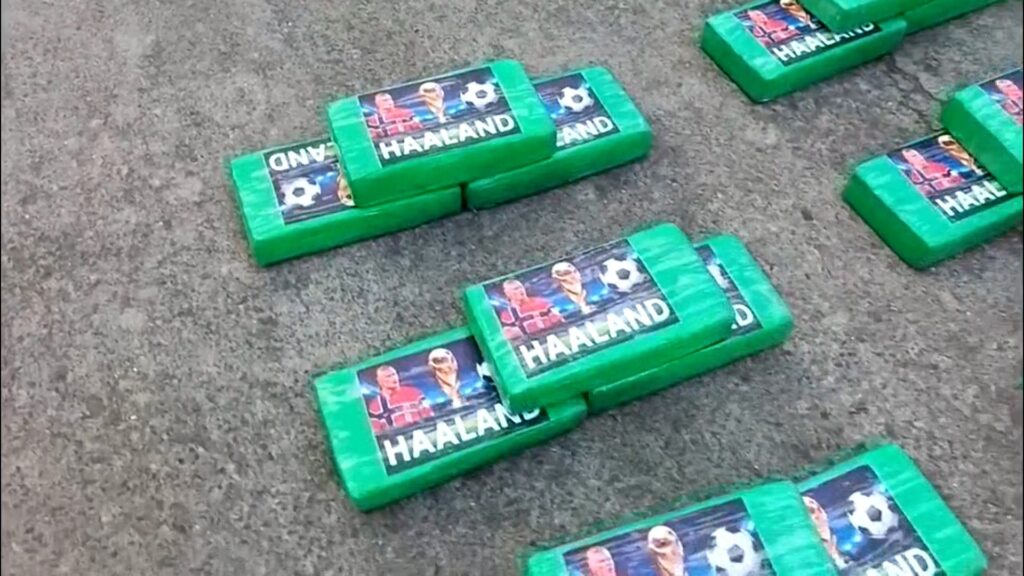
In a startling revelation, Ecuadorian police have seized nearly half a tonne of cocaine carrying the name and image of world-renowned football star Erling Haaland. The incident shed light on the growing trend of drug traffickers using famous personalities to brand their illicit products, thereby attracting attention and possibly signaling the potency or high quality of the drug.
The seized package contained hundreds of cocaine bricks, each stamped with Erling Haaland’s name and likeness. This branding tactic is not new in the world of narcotics; drug cartels often use symbols, logos, or images to differentiate their products and enhance market recognition. However, associating the cargo with a high-profile athlete like Haaland has raised eyebrows and garnered widespread media coverage.
Erling Haaland, known for his prolific goal-scoring abilities and currently playing for one of the top European clubs, has no connection with the illegal trade. The use of his image without consent highlights the challenges celebrities face in protecting their likenesses from misuse by criminal enterprises.
Ecuadorian authorities are pursuing investigations to uncover the source of the cocaine shipment and the networks involved. The drug bust is part of Ecuador’s ongoing efforts to combat drug trafficking, a serious issue that has impacted the country’s social and economic fabric.
Experts believe that the use of Haaland’s image on cocaine bricks might be an attempt to capitalize on the footballer’s rising global profile to intimidate rivals or allure buyers by suggesting elite status of the product. This tactic reflects the creativity and ruthlessness of drug cartels in their marketing strategies.
The incident has sparked discussions around the ethical implications of using celebrity images in illegal activities and the importance of stronger legal protections against such exploitations. It also raises awareness about the broader issues related to drug trafficking in Latin America, a region that continues to grapple with narcotics production and distribution.
Despite the negative connotations, the case has brought further attention to Erling Haaland off the field, highlighting the unintended consequences of fame in today’s digital and criminal landscapes. Legal experts suggest the football star may take steps to legally challenge the unauthorized use of his image.
The Ecuadorian police continue to work tirelessly to dismantle trafficking rings and prevent the export of narcotics from their country. Each shipment intercepted is a step forward in their fight against the global drug trade.
As investigations proceed, the international community watches with interest, hoping such high-profile seizures will deter future trafficking and encourage stricter controls. Meanwhile, Erling Haaland remains focused on his football career, aiming to leave an indelible mark on the sport, distinctly separate from the criminal misuse of his persona.