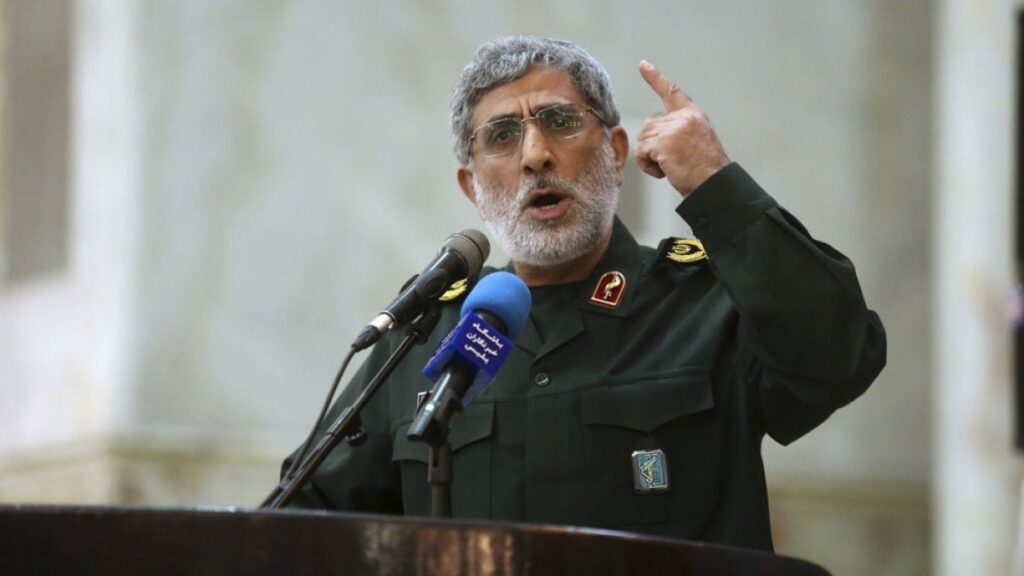
In a significant move towards regional stability, Esmail Qaani, a top Iranian commander, recently visited Iraq to engage in high-level talks concerning the disarmament of armed groups within the country. According to a source close to the discussions, Qaani’s visit focused on addressing the Iraqi government’s plan to disarm various militia factions and bring all weapons under centralized state control.
Esmail Qaani, known for his influential role in Iranian foreign military operations, met with key Iraqi officials and representatives of armed groups to deliberate the feasibility and framework of this disarmament plan. The initiative reflects Iraq’s ongoing efforts to strengthen its sovereignty and reduce the influence of non-state armed entities that have played complex roles in the country’s recent conflicts.
The meetings underscored the importance of cooperation between Tehran and Baghdad to ensure that the disarmament process is managed efficiently and peacefully. Qaani’s involvement indicates Iran’s vested interest in the political and security landscape of Iraq, particularly regarding the integration of armed groups into the state apparatus or their complete disarmament.
Iraq has faced challenges with multiple armed factions operating independently of the state, which has complicated efforts to maintain law and order and facilitated external influences in the region. The government’s disarmament plan aims to consolidate the monopoly of force within the official security forces, curbing the power of militias that have sometimes acted autonomously.
Experts view the Iranian commander’s visit as a positive sign that Iran supports a controlled disarmament process, which could help stabilize Iraq and reduce regional tensions. However, the success of this initiative depends heavily on the willingness of armed groups to disarm and the Iraqi government’s capacity to provide security guarantees and inclusive political solutions.
Qaani’s discussions also touched on the broader implications for Middle Eastern geopolitics, emphasizing the delicate balance of power and the need for dialogue to prevent further conflict escalation. The dialogue highlighted that a stable and unified Iraq could serve as a pillar for regional peace and cooperation.
While the details of the agreements remain confidential, the source confirms that significant progress was made during the meetings. Both parties reportedly agreed on launching a phased approach to disarmament, which would involve monitoring mechanisms and the inclusion of international observers to ensure transparency.
The visit marks a milestone in Iran-Iraq relations and may pave the way for future cooperative security arrangements. It also sends a message to other regional actors about the importance of respecting state sovereignty and the rule of law in managing armed groups.
As Iraq continues its journey towards political stability and security reform, the cooperation with Iran and the involvement of key commanders like Esmail Qaani could be instrumental in shaping a peaceful and disarmed future for the nation.